West Pak relies on key relationships to keep avocados moving
West Pak relies on key relationships to keep avocados moving
The California avocado industry as a whole is expecting a lighter crop this year following two heavier crop years in 2013 and 2012.
Not all avocado trees are on the same alternate fruit-bearing cycle, and even though this is in an off-crop year as a whole, “some of our key growers are experiencing on-crop years,” said Scott Bauwens, vice president of sourcing for West Pak Avocados Inc. in Murrieta, CA. So even though overall industry volume will be down, “going into this crop year we are estimating our volume will not be down the same percentage as the industry estimate. We have been increasing our sourcing market share in both the southern and northern growing regions in California,” Bauwens said March 18.
The California harvest has begun in a light way with some growers “doing minimal picking for cultural reasons,” he said. “You will start to see more consistent size picking” later in March, April and May, with June, July and August being the peak harvest months.
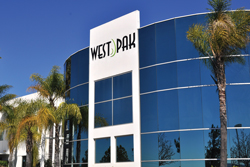 The West Pak facility in Murrieta, CA. (Photo by Brian Woods)Quality is “very good” and “the size curve is average for this time of year,” he said. “We are expecting, even though we are off from last year, very good things for California fruit — good quality, good arrivals, good sizing throughout the peak period for our core markets.”
With regard to the coming marketing season, “we have been engaged in consistent communication to our customers on the upcoming crop,” said Doug Meyer, vice president of sales and marketing. “Our focus here as we get closer to our peak harvest period is making sure that we are supplying them with accurate and timely information about the crop, about the availability, and about the sizing curve that the crop is going to bring us this year. It is through those partnerships between West Pak and our customers that we are really finding a lot of good flexibility to manage their expectations with what we can provide.”
West Pak’s customers realize, he said, “that in a lighter crop year for California, we have to be flexible.” That involves flexibility with regard to sizes, and “with supply from other countries of origin.”
The important thing “right now,” he said, “is relaying timely information and making good decisions to keep our customers supplied” with product “when they need it,” as well as working together with customers on solutions to meet their needs.
In late 2012, West Pak relocated to its present facility in Murrieta from a previous facility in nearby Temecula. “We are continuing to make additional capital expenditures in sour facility to keep on the leading edge of innovation and technology,” said Meyer.
As one example, new for this California season is a fully automated bin-washing system. “As bins of avocados are set onto the packingline,” the empty bins are “taken away by a conveyor system” to the automated bin-washing system where each bin will be fully sanitized before “it goes out into the field again to be filled with avocados coming back to West Pak,” he said. “This is another huge advancement within our facility.”
“Food safety is a huge part of our culture,” Bauwens said. “As growers make more investment on their end for GAP and their food-safety efforts,” sanitation at the packinghouse level closes the loop. The facility, employees and trucks “are all fully food safety-compliant and food safety-certified. But washing each bin after every use is something that is critical to food safety, and now we will have it as a fully automated process.”