U.S.-bound shipments of Peruvian citrus continue to grow
U.S.-bound shipments of Peruvian citrus continue to grow
LIMA, PERU — Since the U.S. market opened to Peruvian citrus in 2006, shipments have increased approximately 20 percent per year, due in part to the quality of the product but also to the work of the association charged with promoting the category to foreign markets.
"We participate in several expos and information sessions to educate our growers, and that's one of the advantages of being an association — being able to work with our growers to improve production," said Emilia Belaunde of ProCitrus, based in Lima.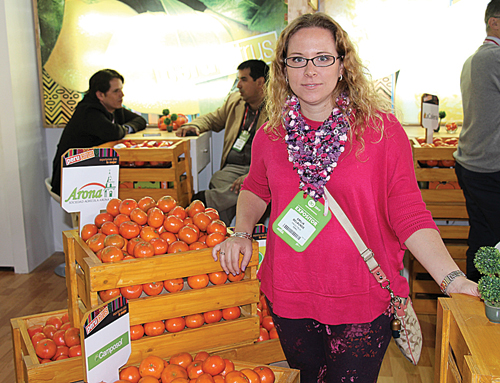 Emilia Belaunde of ProCitrus, a growers association representing the interests of 95 percent of Peru's citrus exporters, at the recent Expoalimentaria trade fair in Lima. (Photo by John Groh) "We reserve our best quality fruit for the export markets, and clients have been very happy with the fruit we have been sending and we have seen increases every year."
ProCitrus is a growers association representing the interests of 95 percent of Peru's citrus exporters. ProCitrus coordinates with the government of Peru on a range of issues to access new markets and works on programs to ensure food safety.
Growers that produce for the association have earned a number of top certifications, including Global GAP, Tesco Nature's Choice, US GAP, BASC and ETI. Safety and traceability are two important attributes of Peruvian citrus, and the fruit is grown in compiance with the best labor practices, according to ProCitrus.
Peru's domestic market is huge, and it exports only 10 percent of its citrus production. In all, Peru ships citrus to 29 different countries, with the top export markets being the United Kingdom (33 percent), the Netherlands (23 percent), the United States (20 percent) and Canada (12 percent). Belaunde said citrus has been in demand on the domestic market due in part to the focus on health and wellness, and reaching kids at an impressionable age to help that develop good eating habits.
"We are the only association within Peru that is making an effort to increase consumption," she said.
Volume this year has been up 15 percent over last season, and Belaunde said ProCitrus is looking for new markets to supply. It will be attending trade fairs in Russia and Asia to look for new export partners.
Tangerines and other easy-peeler varieties have been seeing the biggest increases, said Belaunde, who added that 60 percent of all citrus grown is the soft citrus variety.
Peak season of production is April through September. The Peruvian coast is an arid desert area that provides unique characteristics that creates a "natural greenhouse" and conditions that are ideal for growing citrus.
"We do the best job we can and let the fruit speak for itself," said Belaunde.