In the Trenches: Source-packed cut produce offers significant savings in time, labor and waste
In the Trenches: Source-packed cut produce offers significant savings in time, labor and waste

In today’s fast-paced world, shoppers want to get in and out of stores quickly. With changing lifestyles and eating habits, customers now look for food options that are not only healthier, but also more convenient, making their shopping experience faster and more efficient.
Among the most dynamic and profitable segments in the produce department are fresh-cut fruits and vegetables. These visually appealing displays can boost sales and provide a notable increase to overall profits. However, preparing the cutting and packing at the store level is very time consuming and costly.
Fresh-cut produce involves peeling, washing, slicing, chopping, dicing and packaging fruits and vegetables into convenient containers like trays, clamshells or cups. Clear see-through packaging showcases the vibrant colors of items such as melon cubes, assorted berries, grapes, mango, peach, nectarine and kiwi slices. Multiple sizes are available to suit different customer needs.
Is your produce operation still relying on employees hand-cutting and packaging produce in the backroom? Is this leading to unnecessary prep time and lower efficiency?
Does your fresh-cut display need frequent restocking to fill empty spots? Are you sure every package meets local and state food-safety regulations? If there’s a need for product traceability, would you be ready to address any violations or concerns?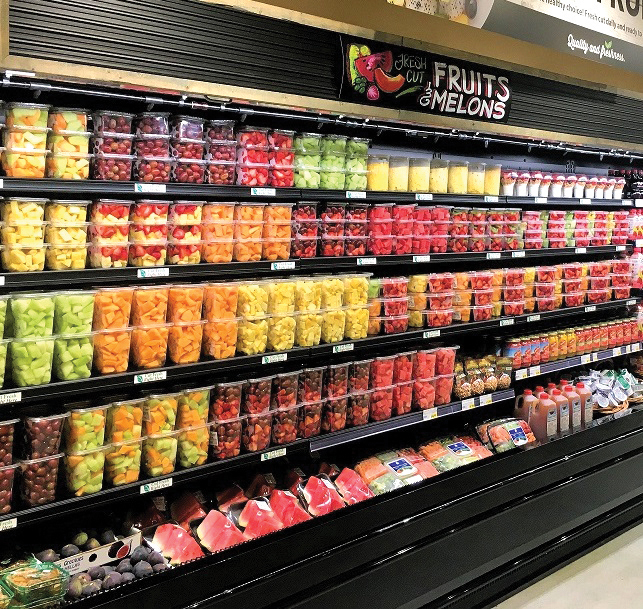
Why risk issues related to hygiene, sanitation, temperature-control, knife-safety and equipment cleanliness in backroom prep areas? Direct contact between hands and produce can easily spread bacteria during processing, increasing the risk of contamination.
Even a single lapse that causes customer illness can result in negative publicity and potential lawsuits. That’s why it makes sense to partner with suppliers that process fresh-cut produce in facilities that strictly follow best practices.
Rising operating expenses in grocery stores are eroding profits, leading to ongoing reductions in produce department staffing. Despite these challenges, the fresh-cut produce section must remain stocked and operational. Understanding how this section continues to thrive is essential. Trying to keep up with preparing and stocking the section takes much longer to maintain at the store level. It would require a minimum of two workers to sustain the consistency of the program.
One of the main drawbacks of preparing cut produce in-store is the high labor cost and reduced productivity. Many businesses underestimate the intensive work required, leading to overspending of 30–40 percent more than necessary.
Beyond labor, there are additional costs for equipment, packaging materials and the produce itself. Careless product cutting increases waste and extra employee costs arise from benefits, payroll taxes, vacation and sick leave.
For these reasons, outsourcing fresh-cut produce preparation eliminates in-store processing costs and enhances customer-safety. This shift can improve your company’s profitability from day one.
Here are several reasons why outsourcing packed cut produce is a better choice than in-store processing:
- Products are processed in sanitized, certified and modern facilities with strict quality controls.
- Saves time and labor. No store prep is required, just open the cartons and stock the display shelves.
- Professional processing reduces cutting waste, minimizing shrinkage.
- Each container is filled with consistently cut, high-quality produce.
- Bright, colorful displays in refrigerated cases have strong visual presentation.
- Appeals to health-conscious shoppers seeking safe, ready-to-eat options.
- Ideal for busy customers with fast-paced routines.
- Offers a wide range of packaging options to suit different preferences.
- Products have a shelf life of four to six days when properly refrigerated.
- Superior quality and attention to detail in every package.
- Packaged in tamper-resistant, secure containers to prevent contamination.
- All containers include UPC codes for accurate price scanning.
Before making your final decision, consider conducting trials in several produce departments to see which approach yields the best results for your business. Let sales performance and profitability guide your choice.
Furthermore, compare the expenses of purchasing finished products from an outsourced cut produce facility to the costs incurred when preparing produce in-store. Be sure to include labor, supplies, time spent, equipment and the cleaning of the produce prep area in your calculations. Once you’ve completed this analysis, you’ll likely discover that outsourcing is more cost-effective. This way, your only task is to open the carton and arrange the packages of cut fruits and vegetables on the display shelves.
What do you think? Write to me at [email protected]
Ron Pelger is a former director of produce merchandising and procurement for a major supermarket retail chain. He is currently a free-lance writer for the produce industry supporting growers, shippers, and retailers. He can be contacted at 775-843-2394.