Shady Maple Farm Market offers a genuine Pennsylvania Dutch treat
Shady Maple Farm Market offers a genuine Pennsylvania Dutch treat
In the world of produce there is local — and then there is Shady Maple Farm Market local.
“We’re different from most people,” said Linford (Lin) Weaver, store manager and co-owner of the massive family-owned independent supermarket in East Earl, PA — the heart of Lancaster County’s Pennsylvania Dutch Country.
“We don’t call it local unless it is from Lancaster County,” Weaver said. “I know by law I’m allowed to call New Jersey local, but we don’t. We’ll put a sign on it that it’s from New Jersey. When we say it is ‘homegrown’ or ‘local’ it is grown in Lancaster County — literally a 10-mile radius.”
In the peak summer months, a good 50 percent of Shady Maple’s produce hails from Lancaster County.
Shady Maple’s Lancaster County produce roots run deep. What started in 1962 as a roadside produce stand on Route 23 — under the shade of a pair of large maple trees — has blossomed into a massive complex consisting of a 130,000-square-foot supermarket, freestanding greenhouse, a 2,000-seat Smorgasbord restaurant, banquet hall and conference center, and a 44,000- square-foot gift shop.
The supermarket is the star attraction, posting more than 914,000 transactions annually — virtually every one of those involving produce.
“Produce is the second-biggest department in the entire store, after grocery,” Weaver said. “We sell more produce than any competitor that I know of in Lancaster County. We’re sourcing product from literally all over the world, but we buy local whenever possible. We really thrive on local-grown and I feel that Lancaster County has some of the best farmers in the world,” Weaver said as he pointed to a 10-foot display of asparagus.
“This is literally the nicest asparagus that we’ll have all year,” he said. “It is grown just a couple of miles down the road, was picked this morning and brought in. It is as good as it is going to get.”
The same can be said seasonally for the local strawberries, rhubarb, lettuces, green beans, potatoes, onions, peaches, nectarines, apples, pears, pumpkins, squash and other delicacies.
“The biggest thing we’re known for is our massive displays,” Weaver said. “It creates a ‘wow’ factor. It makes you hungry just looking at them. Customers will come in with one thing on their grocery lists and end up buying 10 because they just can’t help themselves. When they see that big display and a great price, they’ve got to pick some up. We really push massive displays and low prices. That is what we thrive on.”
One example could readily be seen the week before Memorial Day when 14 crates of watermelons, priced from $3.98 to $6.99 depending on size, spanned the length of the department.
The department itself covers eight aisles.
“We have a very large footprint of produce, triple the size of a Giant or Weis,” Weaver said, referencing his two major traditional supermarket chain competitors.
A half-bushel and a peck
Because of that larger footprint, Shady Maple is able to do something that Giant and Weis cannot — sell in bulk. Shoppers entering the store from the vestibule are greeted with a replica of the original Shady Maple stand along the left wall, complete with a faux maple tree and rows of half-bushel baskets of apples.
“We’re known for selling produce by the bushel and the peck,” Weaver said. “We actually have a lot of people come in here and buy cases of oranges, peppers and tomatoes. We have restaurants coming in here and buying their produce, but then we also have a lot of volume buys from the average household, like half-bushels of apples that we’ll have for $6.99, $9.99 and up from there, depending on variety and availability.
“We do the half-bushels of apples year-round, and the same with potatoes,” Weaver continued. “We do a lot of different things that I call that ‘farmers market feel.’ We want to keep that farmers market feel and are very strong with that.”
For instance, long before ugly produce became all the rage at its upscale conventional competitors, Shady Maple was selling its Ugly but Tasty seconds. Featuring a wide range of items including bananas, cucumbers, zucchini, salad greens, eggplants and even pineapples, they are sold at the ridiculous bargain price of $1.25 a half-peck.
Shady Maple’s produce department is an anomaly in more ways than one. For starters, the majority of its products are sold loose, instead of pre-packaged.
“You can still come in here and hand-pick your cherries. When they come into season we’re going to have a massive cherry display,” Weaver said. “One reason we need so much floor space is to cater to the entire customer spectrum, from older people and baby boomers to millennials and everyone in between. They all have their certain tastes and needs. Some want to cook from scratch, and the next person wants everything pre-done and pre-cut. We cater to both sides.”
To maintain its selection, Shady Maple employs a team of four produce buyers.
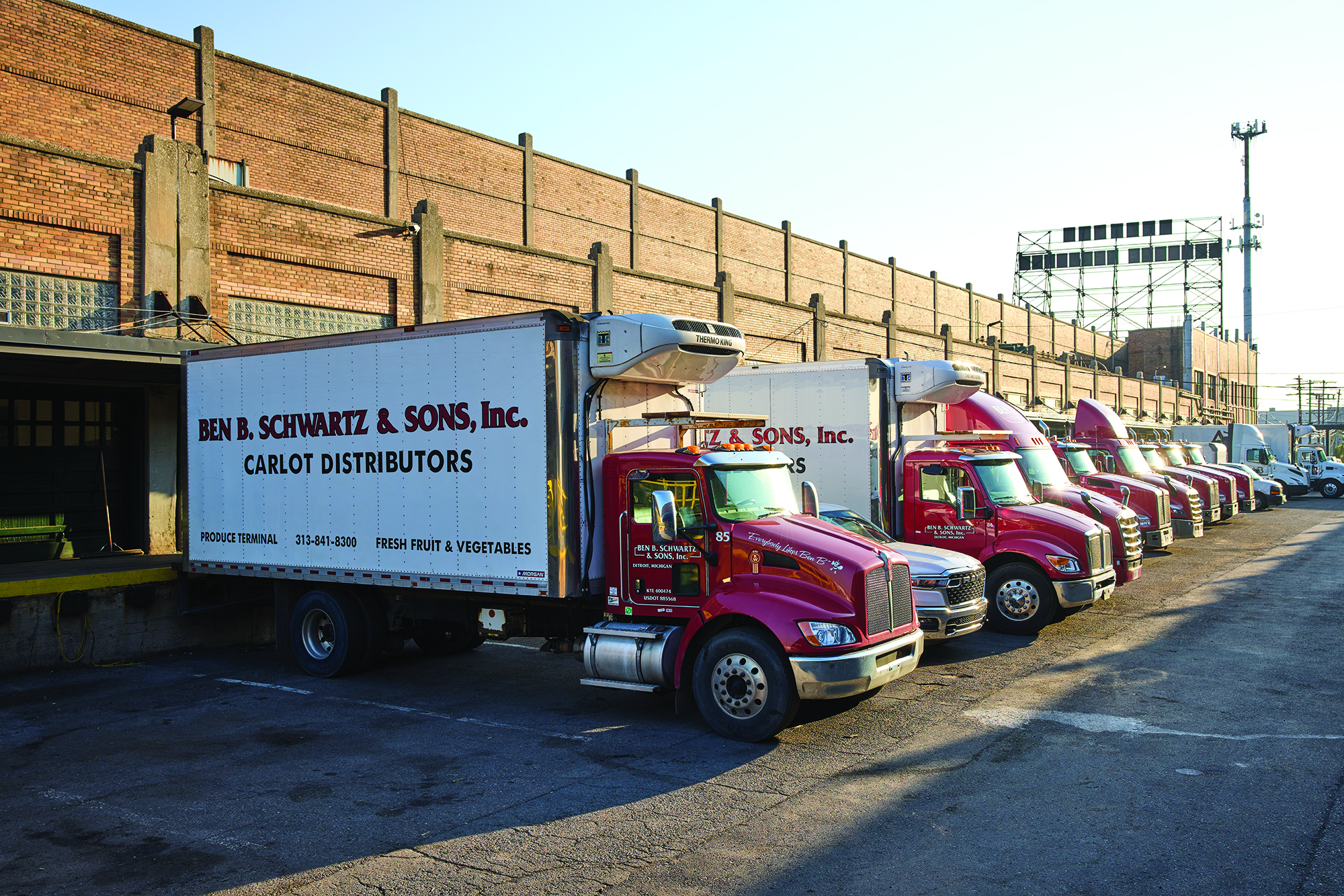
“We have our own trucks, so we are sourcing produce direct whenever we can,” Weaver said. Those trucks are a fleet of 18-wheelers. “We’re sourcing at least four tractor-trailer loads a week out of the Philadelphia Produce Market — and that is besides all of the other places where we are pulling product.”
Then there are the local Amish farmers who hand-deliver their harvests to the store. “That happens all summer long,” Weaver said, adding that with the advent of greenhouses the local season is constantly being extended.
“Right now I have local tomatoes,” Weaver said in late May. “They were started in a greenhouse, so we have fresh Pennsylvania-grown tomatoes now, when normally they would not be ready until July 4.”
Despite the fact that the majority of Shady Maple’s produce is local, it does source from around the globe.
“We also have a lot of ethnic shoppers, so we like to cater to both ends of the spectrum,” Weaver said. “We carry all of the mainstream items, but we have the unique items too, like yucca root, plantains, jicama. We carry all the different varieties because people know if they want it, it is probably here.”
However, long-distance shipping does have its share of perils, Weaver cautioned.
“We try to get the best looking produce that we can. That’s not always easy — especially when things are being imported,” Weaver said. “It will come into the store and look beautiful, and a day later we’ll be like what happened? That’s because produce is very, very perishable, especially if it is imported.”
Weighing in
Offering shoppers such a vast selection of pick-your-own raises another problem — scanning everything accurately scan at checkout.
Remember the “olden days” when each supermarket had a manned scale station where shoppers would line up and have their selections weighed and priced? Well, those days are alive and kicking at Shady Maple. In fact, Shady Maple has five such counters.
“I think we’re the last one left that still does that,” Weaver said. “Because we sell at least double the non-packaged items of any other produce department out there, and a lot of our customers like hand-picking their items and putting it in the bag, it is easier to come to our weigh station and get it weighed and priced. If we were to require all of those purchases to be weighed at checkout, it would just slow us down too much. Our checkout couldn’t handle it,” he said.
“The neat thing about our weigh stations is that our staff is very knowledgeable about produce, so they are constantly answering questions and communicating to the public. I feel that is just one more way to provide great customer service,” Weaver said.
That is not to say that Shady Maple eschews all packaged product. It does sell tubs of mushrooms, bags of carrots and has a rack of branded bagged salads.
“We need to carry a bagged salad program because some people want that, but our best-seller is still the tossed salad that we make in-house,” Weaver said. “We’re hand-cutting the vegetables and lettuces ourselves. I was just talking with one customer and he said he drives here all the way from New Jersey just for our salad because it is so much better than the typical bagged salad one buys.”
Shady Maple is also witnessing the same shift to organic as its conventional competitors.
“Every year it grows and every year there are more people that demand it,” Weaver said. “They don’t just want it. They demand it. They say they won’t shop here if we don’t have it. So we keep expanding it. We keep getting more SKUs in and it is doing quite well.
“Organic used to look like poor quality. Now it looks as good as anything else. That has really helped,” Weaver added. “The organic programs have gotten way better. The problem is the prices are still outrageous. Once the prices come down, I think organic will overtake the conventional, but right now there is too much price disparity.”
Going greenhouse
As Shady Maple’s produce department continues to evolve, Weaver is looking to take local to the next level — growing hydroponic produce right on the selling floor. He is eyeing “greenhouse towers” silos that have plants growing in a circle.
“I’ve been exploring that quite heavily,” he said. “It is a great visual. It is definitely the way of the future. People want to see how their food is produced. Even a lot of the high-end restaurants have an herb garden right out back. People want to see that in the grocery store now. That vibe is moving through the industry at a rapid rate.”
Greenhouse towers may be a necessary move, as the competition in Lancaster County heats up. In May, Whole Foods opened its first Lancaster County location about 20 miles away and Wegmans is not far behind.
“We’re a little worried, but time will tell,” Weaver said. “We’re unique. We literally make 1,000 different recipes, in-house, from scratch, every single week — Wegmans is not doing that. A lot of their foods are now prepared and frozen. We already have customers that live in Downingtown and King of Prussia (PA) that shop us every week that are driving by a Wegmans to get here. And we have one weekly shopper that actually works for Wegmans. They like our store because we are different.”