Retail View: GMO produce touted that offers consumer advantages
Retail View: GMO produce touted that offers consumer advantages
For the most part, genetically modified agricultural products have been great for the grower, with not as easily identified and tangible benefits for the consumer, which may be why there is a public relations problem with the category.
However, two companies are currently quite far along on separate journeys in the developmental stage of an apple and a potato, which they claim have great consumer benefit — and acceptance in early market research. 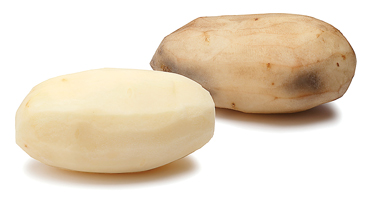 Simplot said consumers have reacted positively to its non-browning potato once they realize the genetic modification is simply turning off the browning gene.
GMOs, as they are referred to in many channels, are most closely identified with Monsanto and its Roundup herbicide. The more common GMO products are several agronomic crops that have been genetically modified to be Roundup-ready, meaning you can spray them with the herbicide to kill weeds without harming the plant.
There are several produce items that are genetically modified through biotechnology that are on the market without much fanfare. The most common is Hawaiian papaya.
Several years ago, disease threatened to wipe out the Hawaiian papaya industry. Disease resistance was bred into Hawaiian papaya varieties via biotechnology and the industry has survived and thrived. But papayas are still a specialty crop.
Apples and potatoes are staples in the produce department. Just how will a genetically modified variety of either of these crops do in the marketplace?
At the June Chicago convention of the United Fresh Produce Association, representatives of the Innate potato and the Arctic apple discussed their respective products and the market research they have independently done suggesting consumers will accept the product, especially when its value proposition becomes part of the conversation. Both items are similar in that the genetic modification that has been done is the turning off of the browning gene.
At the United Fresh convention and again in a separate interview with The Produce News, Doug Cole, director of marketing and communications for Simplot Plant Sciences, said the advantage of a non-browning potato is huge for the consumer and especially for the foodservice industry. Anyone who has cut a potato knows that after a relatively short time it starts to brown, which annoys consumers as well as foodservice operators.
Imagine the efficiency of being able to peel and cut a potato at source and deliver it in that fashion to a foodservice operation, which can use the product at their leisure.
The same benefit will be evident to consumers as they peel the potatoes and note less bruising, browning or black spots. Okanagan Specialty Foods’ Artic apple (right) is engineered to resist browning, making it an attractive option for sliced apple products. In addition to a better appearance, the apple also retains more vitamin C after it is cut.
Simplot received clearance from the Food & Drug Administration in March, which allows the company to use the Innate technology in various potato varieties.
In its press release announcing that step, the company wrote, “Simplot is working with growers and retailers to bring to the U.S. market several popular potato varieties with improved traits that benefit consumers, food producers, and growers. Innate potatoes have fewer black spots from bruising, stay whiter longer when cut or peeled, and have lower levels of naturally occurring asparagine, resulting in less acrylamide when cooked at high temperatures. Innate potatoes are also less prone to pressure bruising during storage, resulting in less potato waste and potentially millions of dollars in savings to growers every year.”
Cole said these are tangible benefits and market research has indicated that consumers react positively when told of these positive traits and informed that the genetic engineering involves turning off the browning gene.
He said Innate potatoes will be sold in limited test markets this summer and then reach a much broader market in spring of 2016. Because Simplot believes the value proposition is strong, it is urging growers and marketers to “accurately promote and market these exclusive features on relevant packaging.”
Cole said the company believes it is to their best interest to promote these advantages because they have created a better potato.
The same dynamic is fueling the development of the Arctic apple by Okanagan Specialty Foods. The Summerland, BC-based subsidiary of Intrexon sees a very similar value proposition for Arctic apples.
Jennifer Armen, director of business development for the firm, told the United Fresh audience and also this reporter in a recent interview that the firm used biotechnology “to silence the expression of the PPO enzyme, which causes browning in apples.” Besides presenting a better piece of fruit, she said the lack of browning, which changes the fruit nutritionally, results in the apple retaining more vitamin C after it is cut than a regular apple.
Initially the company has developed an Arctic Granny Smith and an Arctic Golden Delicious. These apples can be sliced and packaged without the use of preservatives. Armen said that research has shown that children will eat 70 percent more apples when they are presented in a sliced fashion.
“We see this as a way to invigorate these apples varieties,” she said. “The non-browning gives opportunities for many new uses.”
Okanagan’s Arctic apples have also been approved for growing and distribution by the FDA, but because it takes much longer to grow an apple than a potato, they will not be commercially available for a couple more years.
However the firm is also doing market research and Armen said consumers are reacting favorably when the value proposition is explained. She said in one research survey, 51 percent of consumers said they were somewhat or extremely likely to purchase genetically modified, non-browning apples.
“When we explain how they are modified, that figure jumped to 59 percent,” she said.
Armen concedes that not all consumers will purchase genetically modified apples, but not all consumers purchase any product. Okanagan clearly believes that a market does exist. In fact, two-thirds of consumers told researchers that if an apple was non-browning they would be more likely to purchase it.
The key will be whether retailers are willing to take a chance and sell and promote these items. These two companies are betting that consumer perception can be changed and success will follow.