Promotion and representation are primary goals of NOA
Promotion and representation are primary goals of NOA
The National Onion Association was launched over 100 years ago in 1913. Just as it was when it began, the primary purpose of the organization is to represent the industry, including growers, shippers and others along the supply chain.
Kim Reddin, who is director of public and industry relations for the Greeley, CO-based organization, said promoting onion consumption and representing the grower-shipper community in legislative and regulatory channels are the two main goals of the organization. While promotional efforts often are front and center, she noted in late February that the issue with the West Coast ports had occupied a good deal of Executive Vice President Wayne Mininger’s time in recent weeks.
“In fact, he is in Washington, D.C., right now and I know the port situation was one of the subjects on the agenda,” said Reddin.
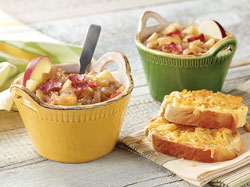 French onion soup continues to be a foodservice classic served by most fine dining establishments.The negotiations between the ports and the longshore workers union had ended though the contract had yet to be ratified as of this discussion. Reddin said the onion industry is hopeful that export shipments will resume at the normal level, but she noted that they had been curtailed in previous weeks. She said the shipment of storage onions during the winter months from the Northwest is prime export season for shippers, as those are the onions that last the longest and can withstand delivery by ocean liner to Asia and other destinations.
However, even storage onions have a finite shelf life and Reddin said there were reports of quality issues with some onions destined for export having shipments delayed because of the protracted contract talks and subsequent work slowdowns at the port.
On the promotional front, Reddin said NOA pushes its message through three primary channels: consumer publications, foodservice personnel and magazines, and health professionals.
On the consumer front, Reddin interacts with food editors touting recipes or usage ideas for onions. While onions have great presence in households and restaurants, she said there is always new ideas that can be shared with the consumer. For the size of its budget, she believes NOA does a credible job in gaining exposure. She noted several stories touting the onion that have appeared in various publications including O, The Oprah Magazine, Good Housekeeping, Bon Appetite and Cooks Illustrated.
“Our strategy is to influence the influencers,” Reddin said, which means convincing food editors, retail dietitians and others who have tried and true pipelines to consumers.
She said the NOA’s budget is too small to carry on consumer advertising such as Avocados From Mexico’s Super Bowel ad. “That’s a caviar dream on a beer budget,” she quipped.
The same approach of working with influencers is used in the foodservice arena, as NOA often works with culinary professionals before they reach the professional level. “We often work with secondary and post-secondary educators developing and producing material for their students.”
For example, Reddin said NOA has produced materials on knife skills involving onions and also on the correct method for caramelizing and breading onions. Foodservice establishments are big users of onions. In fact, a study not too long ago by NOA revealed that onions are mentioned on 94 percent of restaurant menus. While that’s great representation, only 40 percent of those mentions were for a side dish. Reddin said that means there are lots of opportunities to increase the onion’s presence on the typical menu. She revealed that adding caramelized onions to a side dish and making note of that on the menu description results in $1.75 higher price point.
Onions, she said, are still a very popular appetizer often sold as onion rings or in a “blossomed” recipe. French onion soup, she added, is a classic dish that remains as one of the most popular soup dishes for chefs.
With regard to the health play, the NOA executive said onions are high in vitamin C, help lower cholesterol and are known to have anti-inflammatory properties. Though the NOA has not commissioned any health studies, Reddin said there is plenty of research out there touting onions as a heart-healthy food among other good nutritional qualities. She was recently in New York City pushing this fact at a conference of health professionals, including registered dietitians and editors.
While red and white onions appear to be gaining in popularity, Reddin said the yellow onion still dominates.
“We don’t have exact figures but our estimate is that 85 percent of sales are yellow onions, 10 percent red onions and 5 percent white onions,” she said.