Philadelphia market site formally announced
Philadelphia market site formally announced
PHILADELPHIA -- "The produce building will begin about here."
It was an extraordinary bus tour. The "street beneath the wheels of the big bus was the now-unused runway of Philadelphia's abandoned navy yard. The brambles to the right will be converted into the world's most modern fresh produce market before 2008.
Sonny DiCrecchio, executive director of the Philadelphia Regional Produce Market, was the tour guide. Aboard the bus were Philadelphia's produce merchants.
The first tour stop early on the afternoon of Sept. 22 was a press conference, held in a more accessible and scenic part of the navy yard. Moderating the conference was state Sen. Vince Fumo (D-Philadelphia). The featured guests were Pennsylvania Gov. Ed Rendell and Philadelphia Mayor John Street.
While acknowledging the efforts of many individuals, including Mr. DiCrecchio and the board members of the Philadelphia Fresh Food Terminal Corp., the politicians formally announced the building of a new market, to be built by the produce industry, with major public funds contributed by Pennsylvania and the city of Philadelphia.
Sen. Fumo noted that when Philadelphia opened its Food Distribution Center in 1959, people from around the world visited the city to see how the leading food center had been designed. "They will do that again now when they come to see the new produce market, he said.
After the political formalities, which included a half-dozen city television stations, the produce leaders reboarded the bus for the commentary by Mr. DiCrecchio. He pointed to the location of a new sister fish market, and showed how a $10 million access road will need to be built over railroad tracks to reach the fish and produce markets. Mr. DiCrecchio indicated that the navy yard earth a couple of centuries ago was once part of the Delaware River. The first step in construction will be tests to see how deep pilings must go to support the new markets over soft ground. That will be key to determining the final, real cost of the fish and produce markets.
Mr. DiCrecchio said that the construction will begin in March 2006 and will be completed by the end of 2007. Among those attending the press conference were three executives of the Philadelphia Regional Port Authority. These men, Chairman Brian Preski, Executive Director Jamie McDermott and Deputy Executive Director Bob Blackburn, will be involved in the market because the PRPA will administrate the new navy yard property and warehousing. Development of the port of Philadelphia, also administered by the PRPA, will follow the market construction.
As would be expected of a navy yard, the property is immediately adjacent to the Delaware River. Mr. DiCrecchio said that the waterfront would not be directly tied to the market, though there was a motion from the back of the bus that Jimmy Storey, president of the Philadelphia Fresh Food Terminal Corp., could entertain aboard his yacht, Final Storey, from that location. The motion was seconded.
The navy yard includes an old, arched, concrete airplane hanger. While the food industry would like to use the space, it is regarded as a historical building by people of influence, so it will most likely remain a landmark amid Philadelphia's fresh food industry. Sen. Fumo said that the produce market "was a dream five years ago that was made possible by a strong private-public relationship. As he called on Mr. DiCrecchio to explain the warehousing numbers, the senator noted that the storage capacity of the produce market will be three times the volume of the current market.
City and state officials are relieved to keep the market after New Jersey made a strong push to move the produce facility to Camden. Mr. Fumo noted that 1,600 people currently employed by the markets will stay in Philadelphia, while an additional 300-400 jobs will be created.
Mr. Fumo noted that Philadelphia currently has the second-largest market in the United States (New York's Hunts Point Terminal market is the largest). "This will make Philadelphia number one.
Gov. Rendell said that bioterrorism became an important issue after the 9-11 attacks. Such an attack is considered "imminently possible by Homeland Security, he said, and the new market will take all precautions to guard against such an attack, while also making food safety a priority, the governor noted.
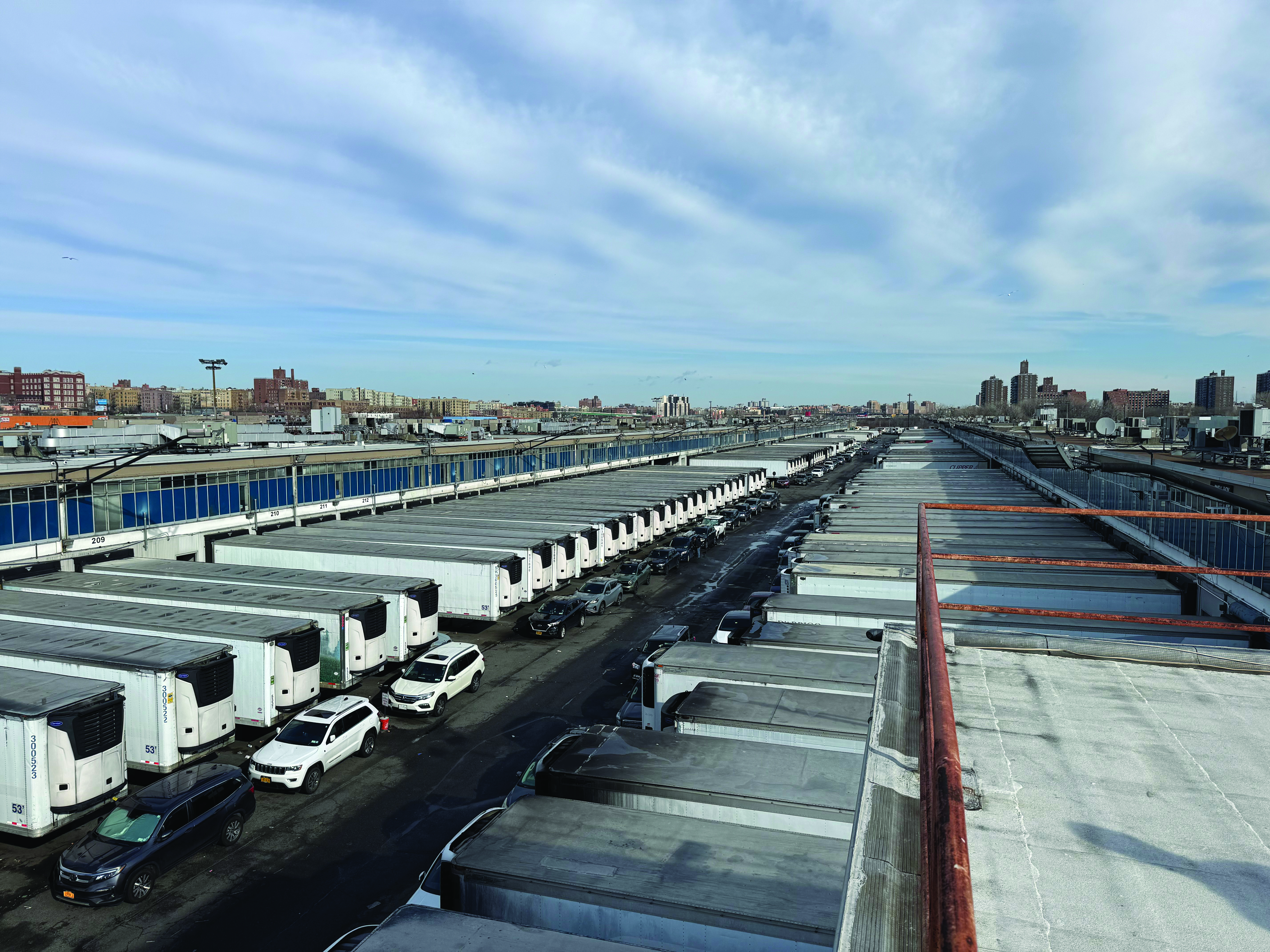
The new market site is located only about one mile from the existing location, which lies between downtown Philadelphia and Philadelphia International Airport. Mr. DiCrecchio is heading construction of both the produce and seafood markets. The fish market has been adjacent to Philadelphia's produce market since the two were finished in 1959.
It was an extraordinary bus tour. The "street beneath the wheels of the big bus was the now-unused runway of Philadelphia's abandoned navy yard. The brambles to the right will be converted into the world's most modern fresh produce market before 2008.
Sonny DiCrecchio, executive director of the Philadelphia Regional Produce Market, was the tour guide. Aboard the bus were Philadelphia's produce merchants.
The first tour stop early on the afternoon of Sept. 22 was a press conference, held in a more accessible and scenic part of the navy yard. Moderating the conference was state Sen. Vince Fumo (D-Philadelphia). The featured guests were Pennsylvania Gov. Ed Rendell and Philadelphia Mayor John Street.
While acknowledging the efforts of many individuals, including Mr. DiCrecchio and the board members of the Philadelphia Fresh Food Terminal Corp., the politicians formally announced the building of a new market, to be built by the produce industry, with major public funds contributed by Pennsylvania and the city of Philadelphia.
Sen. Fumo noted that when Philadelphia opened its Food Distribution Center in 1959, people from around the world visited the city to see how the leading food center had been designed. "They will do that again now when they come to see the new produce market, he said.
After the political formalities, which included a half-dozen city television stations, the produce leaders reboarded the bus for the commentary by Mr. DiCrecchio. He pointed to the location of a new sister fish market, and showed how a $10 million access road will need to be built over railroad tracks to reach the fish and produce markets. Mr. DiCrecchio indicated that the navy yard earth a couple of centuries ago was once part of the Delaware River. The first step in construction will be tests to see how deep pilings must go to support the new markets over soft ground. That will be key to determining the final, real cost of the fish and produce markets.
Mr. DiCrecchio said that the construction will begin in March 2006 and will be completed by the end of 2007. Among those attending the press conference were three executives of the Philadelphia Regional Port Authority. These men, Chairman Brian Preski, Executive Director Jamie McDermott and Deputy Executive Director Bob Blackburn, will be involved in the market because the PRPA will administrate the new navy yard property and warehousing. Development of the port of Philadelphia, also administered by the PRPA, will follow the market construction.
As would be expected of a navy yard, the property is immediately adjacent to the Delaware River. Mr. DiCrecchio said that the waterfront would not be directly tied to the market, though there was a motion from the back of the bus that Jimmy Storey, president of the Philadelphia Fresh Food Terminal Corp., could entertain aboard his yacht, Final Storey, from that location. The motion was seconded.
The navy yard includes an old, arched, concrete airplane hanger. While the food industry would like to use the space, it is regarded as a historical building by people of influence, so it will most likely remain a landmark amid Philadelphia's fresh food industry. Sen. Fumo said that the produce market "was a dream five years ago that was made possible by a strong private-public relationship. As he called on Mr. DiCrecchio to explain the warehousing numbers, the senator noted that the storage capacity of the produce market will be three times the volume of the current market.
City and state officials are relieved to keep the market after New Jersey made a strong push to move the produce facility to Camden. Mr. Fumo noted that 1,600 people currently employed by the markets will stay in Philadelphia, while an additional 300-400 jobs will be created.
Mr. Fumo noted that Philadelphia currently has the second-largest market in the United States (New York's Hunts Point Terminal market is the largest). "This will make Philadelphia number one.
Gov. Rendell said that bioterrorism became an important issue after the 9-11 attacks. Such an attack is considered "imminently possible by Homeland Security, he said, and the new market will take all precautions to guard against such an attack, while also making food safety a priority, the governor noted.
The new market site is located only about one mile from the existing location, which lies between downtown Philadelphia and Philadelphia International Airport. Mr. DiCrecchio is heading construction of both the produce and seafood markets. The fish market has been adjacent to Philadelphia's produce market since the two were finished in 1959.