Pharr Bridge moving forward on expansion projects
Pharr Bridge moving forward on expansion projects
During the first week of November, Pharr, TX, city officials were meeting with representatives of the federal government to continue to advance a private-public partnership that will eventually expand operations of the Pharr Bridge in south Texas.
While construction on the four approved projects has not begun yet and completion of even the top priority item is at least a year away, Luis Bazan, bridge director for the city, said it is important to keep the ball rolling. “We are visiting with CBP (U.S. Customs & Border Protection), GSA (General Services Administration) and the government’s Donor Acceptance Program (DAP). We have a meeting with the DAP Team on Thursday (Nov. 5).”
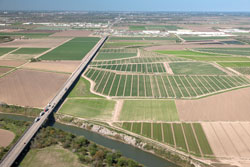 With an ever-growing number of trucks — especially those carrying produce — coming across the Pharr Bridge, expansion projects will help move traffic through the port of entry in a more efficient and quicker fashion.Bazan explained that the four projects on the drawing board in their prioritized order are: 1) the building of two additional lanes and booths on the northbound side of the bridge coming from Mexico into the United States; 2) the building of a truck staging area for northbound traffic; 3) two additional exit lanes for northbound traffic after it moves past the entry booths; and 4) the building of a new facility that will house USDA inspectors and serve as a training facility for that agency.
Pharr Bridge officials have been contemplating these efforts for several years. Bazan said the city will actually fund the improvements through the government program known as DAP or the Donation Assistance Program. That program basically allows for private entities (non federal government sources) — in this case the City of Pharr — to pay for upgrades or improvement of a government program. While Pharr operates the bridge itself, it is a U.S. port of entry staffed by federal employees and the improvements have to be approved by GSA. Earlier Pharr submitted its proposal for the four projects and they were approved.
Bazan said the need is obvious. Mexico’s Super Highway — connecting the west and east coasts of that country — has led to a significant increase of truck traffic through Pharr’s port of entry, especially in the fresh produce industry. “In the first 10 months of this year, our traffic is up 38 percent. Laredo (Texas) is up about 23 percent while Nogales is up 14 percent. We are number one in avocados and number two in tomatoes. Right now there is about $25 billion in trade that moves through our port.”
When stretches of the highway began to be completed several years ago, Bazan said, experts predicted that “we would see a tsunami of increased traffic. That didn’t happen, but we have seen steady growth.”
He actively markets the Pharr port of entry to Mexican shippers as being far more efficient than other ports, including Nogales. “The biggest (U.S.) markets are in the northeastern part of the United States. If you go through Pharr you can get there a lot quicker,” Bazan said. “You can save 700 miles (off the trip).”
He expects traffic to continue to build and grow at a rapid rate in the coming years. Three of the four projects are designed specifically to move traffic through the port in a more efficient and quicker fashion. The extra lanes entering and exiting will obviously allow more trucks to be processed in any given hour. The staging area will give trucks a place to park as their loads are being processed. For many different reasons, a tractor-trailer will be delayed at the border as the proper paperwork is being checked. Currently, the trucks have no place to go and park wherever they can find space, often creating traffic issues.
The expansion of the USDA facility, including the inclusion of a training center, Bazan said, should lead to faster processing of certificates for the fresh produce sector. Currently only one USDA entomologist is on duty during the open hours. Bazan would like to see this increased as well as testing capabilities. Currently, some pest tests must be sent to the Brownsville port for processing. “The idea for this new facility is allow this port to detect certain pests and allow for certification and release without having to send the test elsewhere,” he said.