Experience, customer diversity help Auerbach thrive
Experience, customer diversity help Auerbach thrive
With more than 80 years of experience under its belt, a strong connection with its suppliers, and a diverse list of customers, Maurice A. Auerbach, a wholesaler/importer in Secaucus, NJ, has the ability to withstand the mounting challenges of the produce industry. The U.S. tariffs on many perishable imports is just the latest hurdle that is being jumped.
“Weather, transportation, margin shrink and now the tariffs all add a lot of uncertainty to our business,” said Paul Auerbach, president of the company. “But that’s what makes our company valuable to our suppliers and our customers.”
He said the Auerbach company prides itself on the excellent communication channels that it keeps open with its trading partners. And its years of experience in the industry means it has faced the same challenges time and time again. The tariffs are a good example. Auerbach noted that they have been importing produce for many years, so they have had experience with tariffs, though he did admit they have never been as impactful as they are currently. This year, the tariffs arrived very quickly and at levels not seen before in many cases. Still the company has traversed the issue with the help of its customs broker partners.
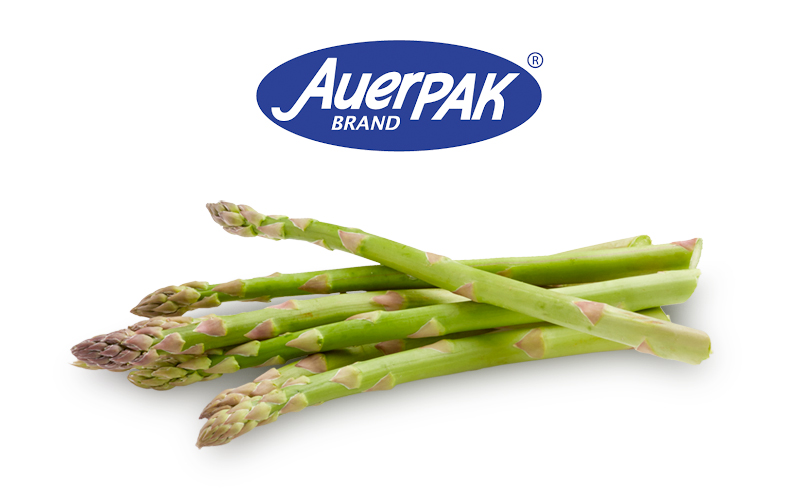
Turning his attention to asparagus, Auerbach said it has been a good season for the entire category regardless of point of origin. The company sources from Peru and Mexico throughout the year, and seasonally from both Michigan and Canada as well as other U.S. locations. “We get asparagus every day of the year,” he said. “Up to 10 to 12 arrivals per week.”
Though garlic is Maurice A. Auerbach’s number one commodity, asparagus is a very important item. “Through the summer, supply has been very good,” Auerbach said. “And so has the demand.”
In fact, he remarked in late August that the FOB price was very strong and unprecedented on the jumbo and larger sizes. “We have been pleasantly surprised,” he noted.
Auerbach reported that the company often sources from both Peru and Mexico at the same time as there is no longer a clear delineation of their respective seasons because of the many different production regions in both countries. For an importer, he said that ability to source from several locations at the same time is advantageous.
Another advantage for Auerbach is its mix of customers. The longtime leader of the company said it sells to a good mix of foodservice operators, wholesalers and retailers, with that customer diversity evolving over many decades. “That is a longtime pattern for our company,” he said. “We feel we have a very good, diversified customer base.”
He said that mix comes in quite handy when unforeseen circumstances upset the proverbial apple cart. “It helped us immensely during COVID when the foodservice business stopped overnight,” Auerbach recalled.
With regard to the next several months, he expects Peruvian asparagus supplies to pick up in September allowing for good holiday promotions in November and December.
Pressed on the difficulties presented by the tariffs, including the 10 percent tariff on Peruvian asparagus, Auerbach said it is a challenge passing that cost on. “The problem is no one wants to absorb the tariff,” he said. “We get push back from both ends. The customer base (in the United States) doesn’t want to absorb it and neither does the shipper base. The result is the importer sees margin shrink.”
Auerbach said that situation is not universal nor is it unique to asparagus. The company does work with both buyers and suppliers of many different imports who are willing to share the added cost, but some are not.