PAMP says state growers are surprised with this season’s crop outcome
PAMP says state growers are surprised with this season’s crop outcome
“Apple harvest in Pennsylvania was completed in late November, with Pink Lady being the last variety to be harvested,” said Julie Bancroft, executive director of the Pennsylvania Apple Marketing Program headquartered in Harrisburg, PA. “This crop surprised many growers in the state. Early season crop assessments had some growers anticipating 80-85 percent of a normal crop, but once we got further into the season the outlooks begin to improve significantly.”
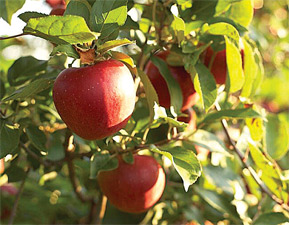 The Pennsylvania Apple Marketing Program works hard to promote and market the state’s beautiful apple crop. (Photo courtesy of PAMP)Bancroft added that she fully expects that this year’s crop will exceed initial in-state, early season projections.
“When all is said and done, it’s likely that the crop will actually end up surpassing our official U.S. Apple estimate of 10.5 million bushels, which will also mean we’ve exceeded our 2012 volume,” she said. “We expect to pack select varieties all the way through to the new harvest season in August 2014.”
Commonly referred to as PAMP, the organization is a commodity marketing program established by the Commodity Marketing Act of 1968. It is funded by apple growers and governed by a board of directors. The board is comprised of growers from various regions of the state and a representative from the Pennsylvania Department of Agriculture.
The program’s goal is to promote the sale and consumption of the state’s fresh apples and processed apple products. PAMP works with retailers in Pennsylvania, direct marketers, apple processors and apple shippers to provide point-of-sale materials, promotions and marketing support across various distribution channels. A portion of PAMP’s annual budget is also dedicated to horticultural and marketing research.
PAMP is an active member in both the U.S. Apple Association and the U.S. Apple Export Council. Membership in these organizations allows apple growers, shippers and processors in Pennsylvania the opportunity to work directly on issues and policies affecting the apple industry, both domestically and internationally.
Bancroft noted that this year’s bountiful crop also yielded fantastic fruit in Pennsylvania.
“The color and quality of this crop is second to none,” she said. “Because the fruit quality is so desirable, we’ve seen sustained steady demand. We are beginning to see consumer demand for newer varieties like Honeycrisp very slowly starting to challenge traditional consumer favorites like Red Delicious.”
She also said that although the number of growers is down very slightly — less than three percent — new plantings are increasing in the state.