Outlook 2015: Behavior change, risk mitigation, innovation crucial
Outlook 2015: Behavior change, risk mitigation, innovation crucial
January is the time of year when most trade publications, e-newsletters and blogs spend considerable time dissecting the prior year’s results. Though I may touch on a few major happenings or trends from 2014, I’m not going to make this the focus of this article.
After all, you lived and experienced what happened last year and the national trends I track may not have any bearing on what happened in your particular business in your individual market.
Besides, though we often hear and abide by the old adage that “we study history (i.e. last year’s results) so we don’t repeat the same mistakes,” many of the externalities — things outside of our direct control that drove our 2014 results may be different in 2015. Rather than look at things through the rear view mirror, take this as an opportunity to look forward and plan on the realities or potentialities that will exist in 2015.
Let’s take a look at some of the key factors we all — grower, importer, wholesaler, supermarket or retail florist and logistic/transportation companies alike — should be looking at that will affect your business in 2015:
The consumer:
We read that the economy is improving, but this strength is not trickling down to the average consumer, and discretionary spending dollars will be shrinking. Wage growth is not keeping pace with the cost increases of life’s necessities, such as insurance, utility bills, food, etc. Though the official unemployment rate is down to 5.8 percent, the real unemployment rate, including those who have stopped looking for work or are part time and want full time jobs, is almost 13 percent. And a large percentage of the jobs added to the economy are lower wage positions. Recent polls show that consumers are still uncertain about where the economy is headed and their personal financial futures.
What this means to you: Unless we can convince the consumer of the real value flowers and plants add to their lives and lifestyles, be it well being, or emotional and psychological benefits, they will focus their buying decisions on price value and view our products as luxuries and deferrable purchases. As an industry, we’re reinforcing the price value proposition because low prices are the key message we communicate to the consumer. Until we change our own behavior, it will be very difficult to change the consumers’ behavior.
Consolidation:
This is happening at all levels in all channels. Wholesalers are buying competitors, broadening their geographic reach to maintain volume in the face of the declining retail florist population. In the supermarket channel, the big get bigger as the national chains purchase regional players, and regional chains band together to better compete. Growers, especially offshore, are buying their more financially challenged competitors.
What this means to you: Retailers will have fewer supplier options, and suppliers will have fewer retailers to sell to. Retailers need to strike a balance between fostering and nurturing strong relationships with their key suppliers, while still maintaining a stable of alternative suppliers; mitigating risk will become an integral part of future buying decisions.
There’s still a need and opportunities for the small and mid-size grower for a number of reasons: to support the locally grown initiatives; to provide the new and unique products, especially those that don’t travel well over long distances and through distribution; and to leverage their flexibility and rapid response to benefit retailers.
Distribution and logistics:
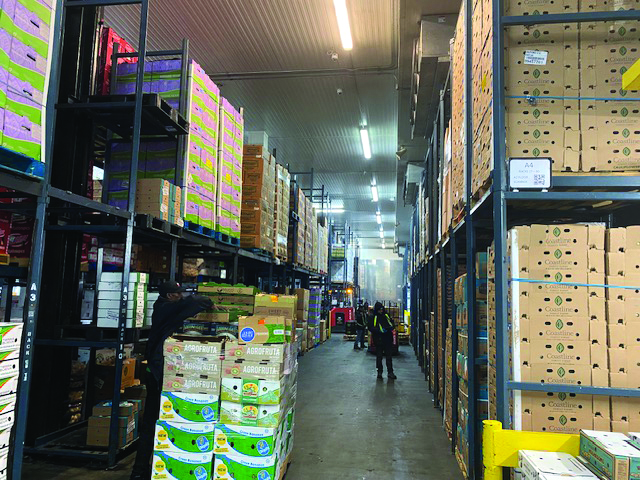
As an industry, we’ve squeezed just about as much as we can out of the cost of our products without sacrificing quality; the next horizon will be gaining efficiencies and savings in the movement of our products, from producer to consumer. Disintermediation of the supply chain will accelerate and new models will result. New modes of transportation will be investigated and piloted in 2015.
What this means to you: Buyers will need to become as expert in distribution and logistics as they are now in the sourcing of product; likewise, suppliers will need to be open to trying new and innovative models, as well as looking at different packing and packaging to capture product handling and movement efficiencies
You’ve had to deal with change in the past, especially during the recent economic downturn. But the rapidity of change in the next 12 months will be even more challenging. Past performance is important to identify opportunities, but a solid plan addressing the externalities and opportunities of the immediate future will dictate your success in the coming year.
Stan Pohmer is chief executive officer and founder of Pohmer Consulting Group in Minnetonka, MN. He can be contacted at [email protected] or 612/605-8799.