Northwest cherries up to two weeks early
Northwest cherries up to two weeks early
For the most part, Mother Nature has cherry picked just the kind of conditions that growers in the Pacific Northwest need to produce the quality cherry crop the region is known for. In 2015, these conditions will translate to good volume, impressive size and high quality.
Some shift in the marketing window for Rainier cherries, whose popularity continues to surge among consumers, is expected.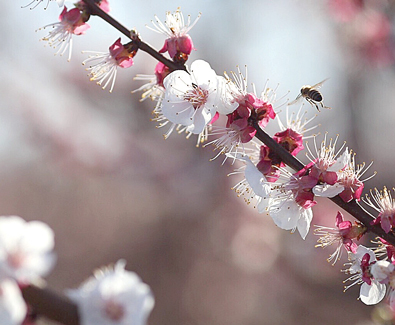 Conditions during spring cherry pollination were favorable in 2015. (Photo courtesy of Northwest Cherry Growers)
James Michael, vice president of marketing-North America for the Washington State Fruit Commission/Northwest Cherry Growers, put it this way: “Blue skies and sunshine for the most part. We kept waiting for Mother Nature's other boot to drop, but the fair weather during bloom has continued ever since. We've had a bit of cool weather here and there, but for the most part that's only served to slow down the region. At one point after bloom, some districts were reporting being up to three weeks early. Now, for the most part, we're a week to 10 days ahead of schedule.”
Cherry producers in Oregon were affected by weather this season, however. “Oregon had some severe cold damage last winter and is expected to be down anywhere from 30 to 50 percent in production,” Michael continued. “Growers at this point are holding out to see if the trees themselves have survived.”
Michael said total acreage in cherry production in the Pacific Northwest has not increased significantly, though overall volume continues to push the production envelope. “But modern orchards aren't a set-and-forget enterprise,” he explained. “There are constant changes and improvements in orchard architecture and practices, along with new varieties and root stocks.”
Producers are anticipating moving approximately 20 million boxes of cherries this season, and Michael said more than half this volume will ship during the month of June. “The crop is earlier than any in the past decade, and with that, our entire production will likely slide up one to two weeks,” he stated.
Shipment is expected to start around May 23, with volume running through the middle of July. “Some late-season growers will have availability into August,” he added.
“We're also expecting a strong Rainier crop, including the early-ripening sub-variety Early Robin,” Michael continued. “They're running ahead of schedule, just like the dark sweet crop. So plan for a strong Rainier push in June. We'll have some into July, but by National Rainier Cherry Day on July 11, most of the crop will be just a happy memory for consumers.”
Large, lush cherries are a hallmark and accepted benchmark of annual Northwest production. “Granted, some years we all notice they taste a little better than others. But for the most part, about three out of every four cherries shipped from the Northwest is 10.5-row and larger, with dark red, sweet fruit being standard. And with our industry's investment into handling and sorting technology, one could argue that each season is a little better than the last,” he observed.
Michael said savvy shoppers continue purchase cherries as a means to achieve healthy lifestyles. “Cherries are a natural anti-inflammatory, and people are learning that,” he said. “Aside from the health benefits of an anti-inflammatory, they're also a low glycemic fruit that packs melatonin. Shoppers are increasingly looking for easy, convenient meal choices to go, and impulse spurred by the seasonality of cherries helps boost sales.”