Continuity keys Henry’s direction in new era
Continuity keys Henry’s direction in new era
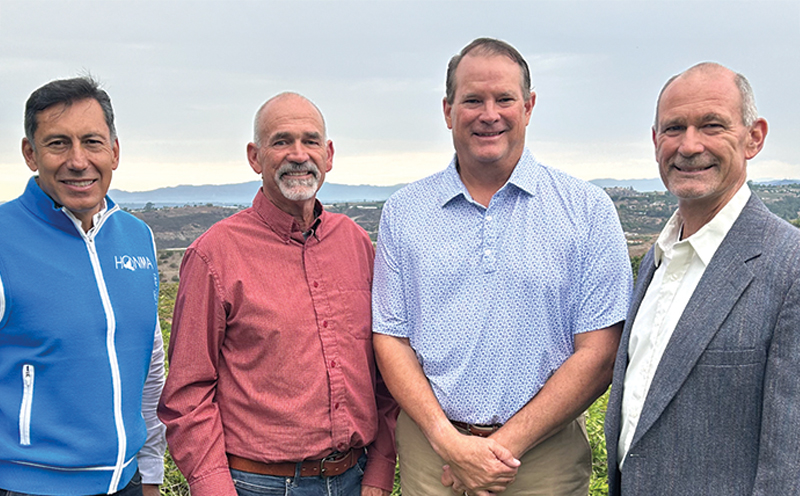
In a year marked by celebration and sadness, Henry Avocado moved into a new era in the summer of 2025.
Founded by Charles and Florence Henry in 1925, the company’s centennial celebration was well under way this year when its president, Phil Henry, passed away in June. Vic Varvel succeeded Henry as president at Henry Avocado. Chris Varvel and Jon Ullrich now serve as co-CEOs to continue Henry’s legacy. “Fortunately, Phil had established the direction for current and future operations well in advance, which greatly helped the new management team,” Chris Varvel said.
Stability is also based on the continuity of service at every level of leadership in the company, including Chris Varvel who has spent 35 years in various capacities at the Escondido, CA-based fresh avocado shipper.
Varvel expects the second hundred years to largely mirror the first. The company’s focus on quality, with an eye toward customer satisfaction, has dominated every major operational and marketing move since the fledgling farm was at its original 80 acres.
In the mid-1950s Henry converted its orchards to the Hass variety after promoting its benefits and marketability within the California producer community.
When Henry became a year-round distributor in 1990 by importing avocados from reliable sources in the Americas it was in response to its customer demand for an ongoing supply of the popular fruit.
The second reason can be attributed to Gil Henry, son of the founders and Phil’s cousin. His vision and energy brought custom–ripening to the industry in the 1980s that enabled the delivery of avocados at the precise degree of ripeness customers required.
The capability greatly enhanced avocado demand as shippers could provide a ready-to-eat product to the retail level, and foodservice customers could confidently broaden their menu of avocado-accented dishes.
To literally deliver on its promise of Always Fresh, Always Just Ripe and Always on Time, Henry established the first of seven distribution centers in Phoenix in 1994, which stretch from Escondido, CA, to Charlotte, NC. All are strategically located to minimize the time from harvest to customer warehouse.
The centers have a combined 120 forced-air ripening rooms. The first distribution center dedicated to handling the fruit from Mexico opened in San Antonio in 2008. It has 19 forced-air ripening rooms and can process more than 40,000 cartons each week.
Houston opened seven years later to service additional foodservice and retail customers for Henry’s Bravocado and Green Goddess brands in Texas. It features 27 ripening rooms that can accommodate 334 pallets during peak season. A sixth generation Texan, Ullich has managed sales for both centers since 1997.
A sanitation program benefiting employees and customers was put in place prior to Covid. Since 2019, after hours work crews employ state-of-the-art cleaning equipment from the packingline to the floor operation. Foamers, floor scrubbers and a dry vapor steam machine are used in combination to eliminate contaminants from every source imaginable.
Capping the safety accent is a product flow sequence that limits the possibility of cross contamination by isolating all product handling equipment to designated zones. For example, any bins used in overnight storage are cleaned and sanitized with a bin-washer before being returned to the field for reuse.
As part of the facility wide sanitation upgrade, Henry also used the products and services of Oxyion, whose process features a scientifically-validated antiviral and antimicrobial technology that eliminates up to 99.9 percent of viruses and bacteria such as Listeria, Salmonella and E.coli from the premises.
Chris Varvel summarized the company’s operational and marketing accomplishments as a joint effort.
“Our customers are an important source of motivation for Henry to provide consistent quality, along with our employees. That is to say, Henry’s century of success has been achieved because our loyalty flows both ways creating a unity of purpose.”