Mexico avocados poised for volume growth this fiscal year
Mexico avocados poised for volume growth this fiscal year
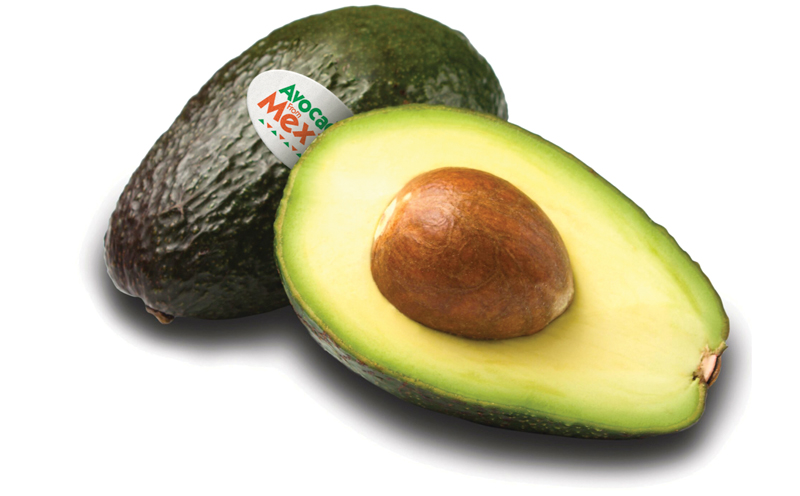
After a couple of years in which the size curve skewed smaller inhibiting total growth by pounds, avocado producers in Mexico are expecting to increase their volume to the U.S. market during the 2025-26 crop year.
Alvaro Luque, president and CEO of the U.S.-based promotion organization, Avocados From Mexico, told The Produce News on July 25 that the size curve for the current July 2025 - June 2026 crop year appears as if is returning to a more normal size distribution, which should feature a greater number of 48s and larger fruit. For the past two years, a prolonged drought and other weather issues resulted in a size curve featuring a greater percentage of fruit in the 60s and smaller column. As a result, the number of avocados shipped to the United States continued to increase but not the poundage. He also reported that demand continued to grow during that time period, which resulted in a very strong FOB price for much of the time. “It was a challenging situation,” he said. “We were moving more units but not more pounds.”
Nonetheless, AFM saw continued volume growth during its core marketing periods, which has informed its promotional strategy for the upcoming year. Luque said record sales of avocados occurred during the 2024 college football season (September through December), the Super Bowl marketing period and the sales effort surrounding the always-popular Cinco de Mayo holiday.
Though the retail scan data measuring those outcomes does not distinguish point of origin of the avocados being sold, Mexico’s fruit has at least a 90 percent market share during the football season and about 65 percent in early May.
Luque said the effort to increase promotional activity during the fall to coincide with the college football season rather than just focus on the Super Bowl was an important shift that has paid dividends. He reasoned that there are 1,600 college football games during the four-month football season, with each televised game being an opportunity for a party and a guacamole eating event.
AFM also added regionally-focused promotions during the previous marketing year and will continue to follow that strategy with a look toward expanding into another region or two in coming years. Last season and again this year, AFM is focusing extra promotion effort on the South Atlantic region. Not only is that an area considered to be the hot bed for college football, it is also both the fastest growing avocado region in terms of sales growth and in terms of actual consumption.
Last year, and again this year, AFM is continuing its partnership with the Southeast Conference and the University of Georgia in what is nationally recognized as college football’s top conference. Luque said that region is the fastest growing region in the United States in terms of population and is seeing a tremendous growth in migration of Hispanics with Mexican roots. The Southeast has always had a significant Hispanic population but it was dominated with Cubans and Hispanics from other Caribbean countries.
AFM has put together several promotional programs with Southeast retailers to augment this regional marketing focus.
Luque noted that the promotional organization continues to have a robust merchandising plan in conjunction with the Susan G. Koman for the Cure program, which is focused on finding a cure for breast cancer. That dovetails nicely with AFM’s increasing interest in building promotions that emphasize the health benefits of avocados. Last season, it partnered with the American Heart Association on a campaign the featured several national retail chains. Those efforts will be expanded this year.
As AFM continues to expand its promotional reach on behalf of avocados, Luque said the award season for the entertainment industry, which runs from January through March, offers some additional, crowd-gathering events to turn into guacamole fests.
The 2026 World Cup, which is being jointly hosted by the United States, Canada and Mexico beginning next June, is another natural tie-in for avocados that AFM expects to exploit.
Besides discussing AFM’s specific promotional plans, Luque also weighed in on some other issues involving the global supply and demand situation for avocados. He said the industry appears to be in good shape with continued growth on both sides of that equation. He could not predict when additional states in Mexico will be allowed to ship into the United States, but those efforts are ongoing.
Luque also reminded that Mexico only exports about half of its production to the U.S. market. Mexico does have a very strong domestic market, but its sheer avocado volume indicates that it will continue to be able to meet U.S. demand as it grows.
Luque added that growth has always been the goal of AFM. Though on an annual basis, Mexico avocados represent about 85 percent of U.S. consumption, he said “we’ve always been about expansion (of the market) not domination.”
He believes there is room for many niche players in the market place, but he does call out what he believes is one of the top attributes for Avocados From Mexico — for the top retailers in the country, Mexico is the only supplier that can offer a consistent year-round supply.