The effects of organic produce branding on sales
The effects of organic produce branding on sales
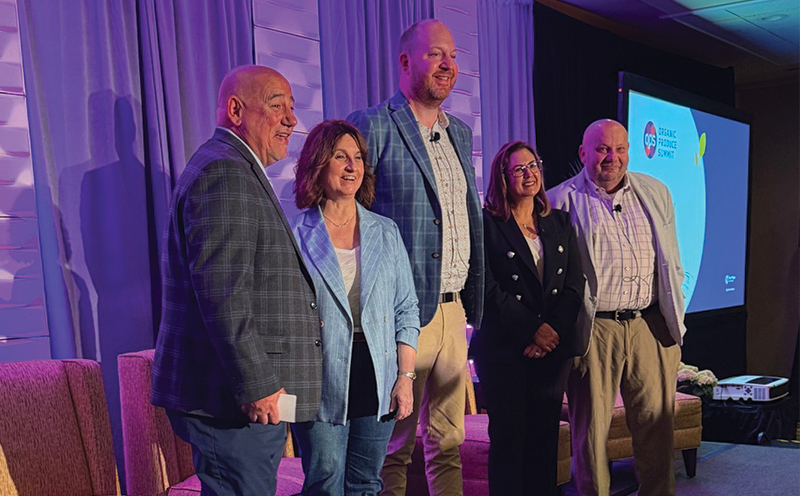
An impressive panel of retailers and suppliers explored the value of branding organic produce, with a private or company label, at the recently concluded Organic Produce Summit in Monterey, CA, July 9-11.
There was no consensus about the best path to travel, but a lot of good ideas surfaced concerning strategies to increase the sales of the organic produce category. Titled “The Pros & Cons of Private Label & Branded Organic Produce,” the session featured Driscoll's Chief Communications Officer Frances Dillard; Heather Fuller, vice president of sales at Braga Fresh Family Farms; Dennis Payne, director of produce and floral merchandising at The Fresh Market; and SpartanNash Senior Director of Produce & Floral Merchandising Andy Smith. Longtime produce retailer Victor Savanello, who worked with both Payne and Smith at their respective chains during his career, moderated the session, keeping the discussion lively and on target. Savanello is now vice president of merchandizing and business development at Katzman Distribution, headquartered in Burlington, NJ.
Driscoll’s may well have the most recognized consumer brand in the fresh produce industry and Dillard said it has translated to the organic berry sector. She noted that about 20 percent of Driscoll’s berry production is organic, which represents more than 50 percent of all the organic berries in the marketplace. She also noted that berries are the number one organic produce seller at retail in the United States.
On the overarching concept of brands in the marketplace, Dillard said it is consumers that determine if you have a brand rather than just a label. She said consumers do recognize the Driscoll’s brand and they do that by paying a premium for Driscoll’s berries and repeatedly coming back for more.
Because Driscoll’s has been marketing its well-known brand on its proprietary fruit for well over a century, it was a relatively straight-forward decision to transfer that brand loyalty to its organic options. In fact, the same label is used touting the brand name as the main feature of the label, just as it is with conventional berries. The fact that the clamshell holds organic berries is a descriptor on the label, not a main focus of the label.
Dillard reported that Driscoll’s marketing philosophy revolves around the idea of getting the consumer to trade up to the Driscoll’s brand and what it markets as premium berries. Its organic option gives the consumer another opportunity to trade up.
Braga Fresh began its branding journey with its Josie’s Organics label. Consequently, Fuller noted that when the company added a brand for its conventional output, it went with Braga Farms. She said the “organics” descriptor is part of the original brand and they did not want to impact the value of that messaging.
Fuller revealed that organics are the cornerstone of Braga Fresh Farms, representing about 80 percent of what they grow. “Organics is a priority for us,” she said, opining that they see a bright future for the category and continued growth, especially in the organic salad kit sector.
Braga Fresh packs its organic produce in its own label and it also packs in private labels for its retail customers. Fuller said each retailer has a different strategy and Braga works with those retailers to grow the category, regardless of what brand is featured
Organic salad kits are one of the top organic produce items as both retailers on the panel also commented on the growth in that category.
Speaking in general about the organic produce sector, Smith of SpartanNash said it is a very important part of the retailer’s marketing strategy. He noted that the chain’s marketing slogan is “We deliver the ingredients for a better life,” adding that there is no better product than organic produce to fit that descriptor.
SpartanNash has experimented with its own brand over the years but is currently not focusing on that for its organic produce. He did, however, note that branded organic produce is an important driver for the company’s continued growth.
Payne reported that The Fresh Market is very involved in promoting organic produce and said it represents about 30 percent of produce sales. “Organics means the world for us,” he said.
He noted in their stores they feature organics with their lead produce displays. Payne said 90 percent of produce sales are impulse buys so leading with an organic display is an important strategy in growing sales of the category. In fact, he said The Fresh Market is on the verge of rolling out a big organic push chain-wide.
The retailer does have its own brand and is utilizing it in organics but somewhat sparingly. Payne said they do use it on their organic dips and dressings. He said putting your name on an own company brand comes with responsibilities, including how it eats, looks and is priced.
Photo: Vic Savanello, Frances Dillard, Andy Smith, Heather Fuller and Dennis Payne.