New products, good service fuel sales for Church Bros.
New products, good service fuel sales for Church Bros.
Creating customized blends that focus on flavor is fueling unprecedented sales growth for Salinas, CA-based Church Bros. LLC.
“We just looked at our weekly numbers and we are breaking records in every category,” said Ernst Van Eeghen, vice president of marketing and product development for the long time Salinas Valley grower-shipper.
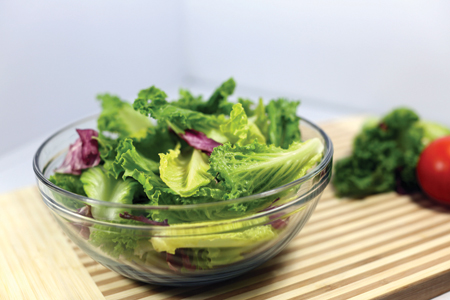 Church Bros. has made a concerted effort to customize its salad blends for its customers while focusing on improving the flavor profile of each blend.Church Bros. specializes in foodservice business and Van Eeghen told The Produce News that the sales increase can be partially attributed to an improvement in the economy which has been reflected in improved business at the restaurant level. “But our growth is much larger than the industry indexes so there is obviously something else going on. We believe it is a reward from our customers for exceeding their expectations.”
He said about 75 percent of Church Bros.’ business is in the foodservice sector. “We have added new customers,” accounting for some of the growth, “but about 70 percent of our growth has come from existing customers. That is organic growth and we are very proud of it.”
Van Eeghen said for the past several years Church Bros. has made a concerted effort to customize its salad blends for its customers while focusing on improving the flavor profile of each blend. He said there is a trend away from what he calls “the cookie-cutter salads” as restaurateurs in every category look to add unique offerings to their menus. From fast-food operators to white-tablecloth establishments, practitioners want something new and different or they want to spice up an old standard.
He said almost every restaurant serves a caesar salad along with a cobb, garden variety and spring mix, but Church is trying to offer them something a bit different. He said the company’s experts work with foodservice operators to discuss their demographics and what they are trying to accomplish. Then the company creates a customized blend with a high flavor profile to appeal to those customers. Because restaurant chains don’t like to give away their trade secrets, Van Eeghen said he was not at liberty to give specific examples. But he said some foodservice operators are looking for different colors in their blends or different types of cuts. “For example, chopped romaine is typically chopped both horizontally and vertically but one fast-food chain wanted it to be cut only horizontally so that every bite had a rib to it. That increased the forkability of the salad,” he said.
The Church Bros. veteran said the firm has also developed a coleslaw with more flavorful ingredients that let restaurants reduce the amount of dressing they use. “It has more flavor and less dressing so it has resulted in a cost savings,” he said.
Besides customized blends, Church Bros. has introduced three new value-added blends that have a greater flavor profile and are finding favor among foodservice operators. Church Bros.’ new Power Mix is a nourishing blend of baby kales, chards, spinach and lolla rosa. Rich in vitamins A and C, this mix is a leading source of iron too.
The firm’s Cascade Mix is a blend of green leaf and romaine heart leaves with a touch of radicchio. The radicchio delivers a mild bitterness to compliment the sweet and crunchy heart leaves. This tender blend is triple-washed and minimally processed, resulting in a delightfully rustic, homegrown appearance while providing the delicious combination of crunchy and juicy leaves. Van Eeghen said operators like the rustic look as it does visually trade on the locally grown movement.
Church Bros.’ new Treviso Blend marries the sweetness of romaine with the smooth pungent taste of Treviso. Treviso is in the Radicchio family and is a cross between romaine lettuce and Belgian endive. Van Eeghen said this blend allows a foodservice operator to offer a little different take on its caesar salad.
While the company, which sells nationwide, can’t be “local” in every market, Van Eeghen said it has launched a marketing campaign called Know Your Food, Know Your Farmer. He believes that the local movement is centered on customers trusting where their food comes from and creating a connection with the grower. This program, he said, is designed to let consumers meet “the boots on the ground” that are producing their food.
He said national foodservice chains have a difficult time participating in the locally grown movement because of their need to offer a consistent product across their many outlets. It is hard to source locally when you need the outlet in Pittsburgh, PA, to serve the same dish as the location in Pittsburg, CA. The Church Bros. marketing campaign allows for the building of that connection, even if the grower is across the country.