Millennials: the veggie generation
Millennials: the veggie generation
Despite an increased consumer interest in health and nutrition, Americans are still ignoring one of the easiest ways to live a healthier lifestyle: eating their vegetables. However, a recent survey showed hope, finding that millennials (age 18-34) consume more vegetables than any other generation.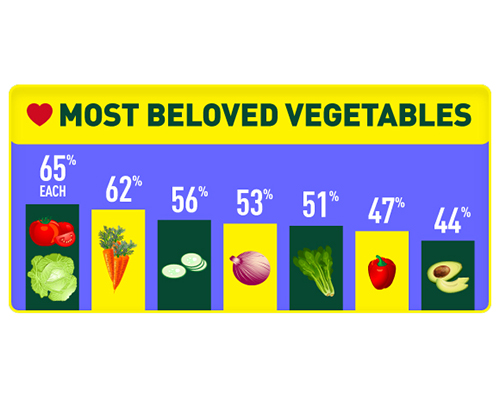
While the average U.S. consumer only eats 2.3 servings of vegetables per day, millennials average almost a half serving more per day (2.7 servings). Further, the number of millennials who meet the minimum recommendation of four servings per day is the highest of any age group (22 percent).
The survey, commissioned by Subway Restaurants, found that the majority of Americans (84 percent) aren’t meeting the USDA recommended minimum number of daily vegetable servings.
“We commend Subway Restaurants’ efforts to encourage consumers to eat more vegetables and promote healthier eating,” Kristen Stevens, chief operating officer of Produce for Better Health Foundation, said in a press release. “The findings of the National Eat Your Vegetable’s Day survey further draws attention to the need for Americans to incorporate vegetables into their diet as disclosed in our annual 'State of the Plate' report. The first step in changing behaviors is creating awareness and driving discussion to help educate consumers on the various health benefits of eating more vegetables and how to eat more of them.”
According to the company, 47 percent of participants claimed that nothing prevents them from eating more vegetables, despite revealing that overall health benefits are their top motivation for vegetable consumption (70 percent), among those who ever eat vegetables.
So why are millennials eating more vegetables? Survey results reveal personal appearance being a key motivator of vegetable consumption. Of millennial adults who ever eat vegetables, 45 percent who ever eat vegetables are more likely to eat vegetables so they can “look better” as compared to those over 35 (26 percent). Millennials are also more likely to eat vegetables to lose weight (56 percent) than those over 35 (39 percent).
"The American diet has traditionally lagged in prioritizing vegetables as a staple of their diet; however, it is encouraging that the youngest generation is slowly bucking the trend,” Lanette Kovachi, MS, RD, Global Dietitian, SUBWAY, said in a press release. “The millennial generation is more self-aware than previous generations due to their social, photo-driven culture, so looking better is a natural motivator. But the truth is nutrient-rich vegetable consumption truly does have positive physiological effects, including a healthier-looking complexion, assisting in weight control, enhancing the immune system and prevention of chronic disease.”
Although nothing prevents nearly half of Americans from eating more vegetables (47 percent), the survey also revealed other excuses for not eating more vegetables, highlighted by being too expensive (14 percent); a dislike of the flavor (11 percent); and preparation time (10 percent).
Men (12 percent) are more likely than women (7 percent) to cite preparation time as a reason that they don’t eat more vegetables. Further inhibiting their consumption, men who ever eat vegetables (39 percent) are more likely than women (28 percent) to prefer their vegetables cooked.
While consumers in the study said their preferred vegetables are lettuce and tomatoes (both 65 percent), the survey revealed that millennials were less married to these vegetable staples than other generations. Further, women demonstrated a greater affinity for variety, highly ranking cucumbers (60 percent), spinach (58 percent) and avocados (49 percent) amongst their vegetable favorites as compared to their male counterparts (cucumbers: 50 percent, spinach 44 percent, avocados 38 percent).
The survey examined the current state of vegetable consumption by U.S. consumers, including number of servings eaten daily, favorite vegetables, excuses, motivations and consumption meal time. The national survey was conducted online by Harris Poll on behalf of Subway Restaurants June 4-8 among 2,019 U.S. adults ages 18 and older.