Melissa’s continues goal of providing year-round supplies of organic produce
Melissa’s continues goal of providing year-round supplies of organic produce
Melissa’s World Variety Produce in Los Angeles is consistent in its mission of providing organic product year-round.
Melissa’s, a major distributor of specialty produce items, entered the organic category about 15 years ago.
Robert Schueller, director of public relations, said that today the company’s organic lineup includes just over 550 fresh and dried produce items, some of which are seasonal.
“Organic citrus, primarily out of California, is at its strongest from December through March,” said Schueller. “Varieties are more readily available at this time of the year. Organic blood oranges, kumquats, variety tangerines and mandarins, Navel oranges and more are all at their peak.”
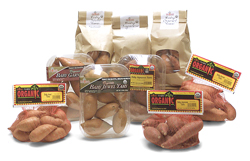 Melissa’s offers a selection of organic baby yams.The majority of Melissa’s organic produce is grown in the United States and in Mexico. Schueller noted that the U.S. produces more in spring and summer months, while Mexico is heavily depended upon during the winter for organic produce.
Melissa’s products, including its organic line, are shipped across the U.S., mostly to large chain supermarkets.
“We continue to increase and add more organic items to our line,” said Schueller. “The Organic Trade Association, since it was initially formed, has helped to promote organics, secure legislative support and helped to increase safety standards, all of which have aided the category in its evolvement and growth.”
Melissa’s stays on top of its organic food-safety initiatives. The company maintains ongoing compliance for organic certification through California Certified Organic Farmers, also known as CCOF, with which it has a perfect record.
Schueller noted that Melissa’s continues its goal of offering organic varieties year-round.
“Kale, along with sweet potatoes, has been among the biggest trends in the organic vegetable category,” said Schueller.
“This also coincides with what consumers perceive in relation to the locally grown trend,” he continued. “Local supplies of organics are highly seasonal, and mainly in the summer months. From late October to May, more than half of the U.S. is under a freeze, so growing local produce is impossible in these areas.”
He feels that the only hope of year-round organic supplies lies in hothouse technology. “But this technology is much more expensive, and not as efficient in many ways,” he said.