Industry Viewpoint: Nourishing communities through strategic donation opportunities
Industry Viewpoint: Nourishing communities through strategic donation opportunities
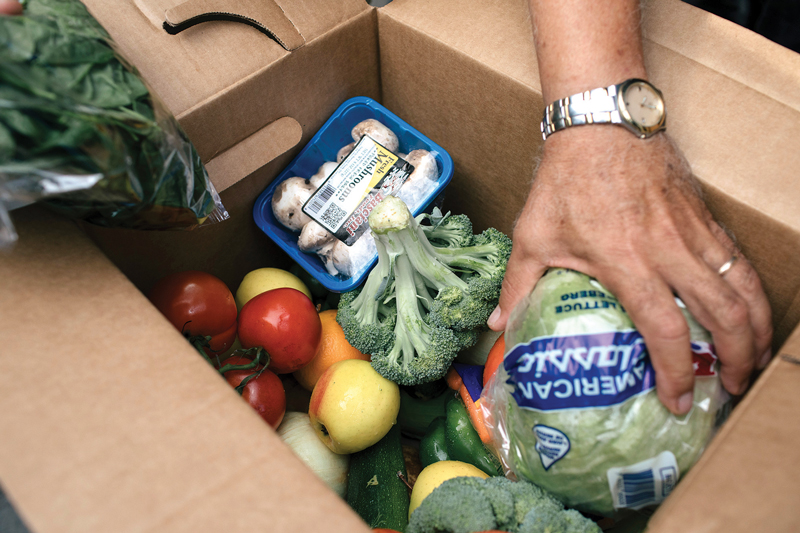
For tens of millions of people facing hunger across the country, fresh fruits and vegetables are among the most sought after foods, and sometimes among the most difficult to access consistently. When produce companies and growers choose to donate surplus, that choice has a direct and meaningful impact on families in need of fresh, nutritious food that supports their health and well-being. The question is not whether that surplus can do good, it is how to make sure it gets there.
In today’s produce industry, surplus is inevitable. Markets move, weather shifts, labor availability changes and demand signals fluctuate, often simultaneously. The difference lies in whether excess volume becomes a liability or a strategic opportunity.
When structured intentionally, produce donations allow growers and produce companies to reduce shrink, unlock tax advantages and recover operating costs tied to harvest and packing. They protect brand and market positioning while reinforcing their role as responsible community stewards.
At Feeding America, the network of over 250 food banks and 60,000 agency partners aligns donor intent with operational realities and network capacity. Surplus produce moves safely, efficiently, predictably and with financial integrity. As a result, fresh produce donation serves as a deliberate solution within the modern supply chain instead of becoming a last minute decision.
Fresh produce donation leaves slim margins for delay. Tight quality windows, costly storage and missed market opportunities can all add up quickly. Any solution for excess product must operate with the same urgency, precision and reliability as commercial distribution.
Across the country, Feeding America mobilizes millions of square feet of cold storage, thousands of trucks and regional operations teams connected by shared technology to move large volumes of fresh food quickly, safely and reliably. In fiscal year 2025 alone, the network rescued more than 4.3 billion pounds of food, including 971 million pounds of produce from growers that would otherwise have gone unused.
This work depends on growers and produce companies recognizing food rescue as more than goodwill. When donation is structured to respect business strategy, recover allowable costs and move in real time, surplus shifts from a drag on operations to a controllable, value-preserving supply chain extension.
Why stewardship matters
Feeding America’s national produce strategy is grounded in a practical reality: effective food rescue relationships begin locally. For donors operating across multiple states or regions, that local success can lead to surplus solutions that scale beyond a single market while preserving donor expectations and operational control.
Feeding America’s national donor network does not replace local partnerships. Instead, it connects them, helping proven local models evolve into coordinated regional and multistate opportunities aligned with modern produce operations. Our easy-to-use online sharing platform, MealConnect Marketplace, prioritizes local produce and grocery distribution while expanding visibility to support regional and national sharing as appropriate. It enables donors and food banks to manage and schedule donations, coordinate pickups and deliveries efficiently, and capture data that improves service and sourcing decisions. In 2025, more than 1.2 billion pounds of excess fresh food was actively sourced through MealConnect Marketplace, supporting large scale produce rescue while maintaining dignity and ease for the communities served.
Feeding America’s produce industry stewardship focuses on:
- Supporting local donation efforts while creating pathways to regional and national scale;
- Aligning network partners to ensure consistency, clarity and repeatability across markets;
- Providing transportation and logistical support that enables multistate movement of product;
- Seeking and securing funding to offset freight, Pick and Pack Out and Value-added Processing costs for larger volume opportunities;
- Offering data, research and capacity building support that allows donation programs to grow alongside a donor’s business.
Donation as a financial strategy
When donation is integrated into surplus planning, financial considerations become an opportunity. Beyond supporting communities, produce donated to Feeding America may also qualify for federal enhanced tax deductions.
For many growers and produce companies, this creates a meaningful financial offset, particularly when donation is treated as part of a broader excess volume strategy. Feeding America provides documentation to support donation records, and donors are encouraged to consult with their tax advisors to fully leverage applicable incentives.
Donation does not mean absorbing all the costs
A common misconception is that produce donations must always be fully zero-cost for the donor, with no charges for product, handling or packaging. While zero-cost donation is often the fastest and most efficient pathway, it is not the only way produce companies can responsibly move surplus through the Feeding America network. Two cost-recovery models allow donors to align food rescue with operational realities while maintaining full charitable donation status:
- Pick and Pack Out Costs: Allow donors to recover harvest, packing and handling costs associated with preparing surplus donated produce. PPO supports donation at scale by covering the real costs of labor and packaging needed to meet food bank distribution requirements (for example, repacking bulk produce into household ready sizes that maximize reach).
- Value-Added Processing Costs: Enable donors to recover expenses associated with processing or enhancing donated produce, making it easier to distribute or use while improving usability and extending the product’s impact for neighbors. VAP can transform excess volume into more accessible, longer life food without compromising donation integrity.
PPO and VAP costs do not change the donation status of the produce. Rather, they are payments for direct costs that enable donation to occur systematically, allowing growers to move larger volumes of surplus without undermining operational integrity.
A call to put abundance to work
By working together, produce industry partners and Feeding America network members can ensure that more of the nation’s abundance of perfectly good produce reaches tables instead of being left in the field or going uneaten. Feeding America is committed to stewarding produce donations responsibly, transparently and at scale, so that fresh fruits and vegetables remain accessible to communities across the country, and donation remains a viable option for the people who grow them.
If you’re ready to join us, sign up for MealConnect Marketplace, or email our team at [email protected] for more information.