Henry Avocado grows as import numbers rise
Henry Avocado grows as import numbers rise
The steady rise in offshore avocado production has allowed Henry Avocado to enjoy a similar climb in numbers with its customer base. From the 2007 levels of 970 million to the present, Phil Henry, president of Henry Avocado, calculates the combined imports from Mexico, Chile and Peru have increased at the rate of 10 percent per year.
Total domestic and imported sales volume is around 1.7 billion pounds now, led by avocados from Mexico, which will weigh in at over 1 billion pounds in 2013-14. As a year-round distributor of its CustomRipe program, Henry has parlayed this robust supply to expand his customer base by providing it with a consistent supply of superior quality, fresh avocados.
Headquartered in the growing region of Escondido, CA, where it farms as well as processes its own harvest and that of its growing partners, Henry has seen its distribution center in San Antonio, TX, thrive from its proximity to the sources in Mexico.
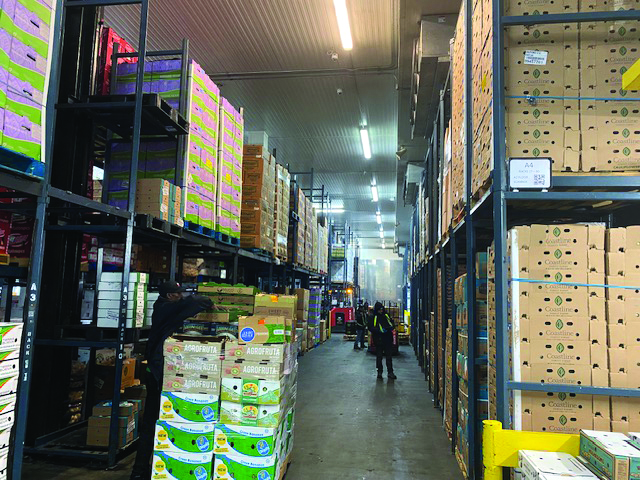
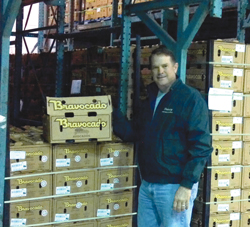 Henry’s Jon Ullrich inspects avocados from one of the 12 ripening rooms at Henry’s distribution center in San Antonio, TX. While also using the imports to fill orders in California and Southwestern states, Henry has used the bounty from Mexico to add retail and foodservice customers throughout Texas, and enlarge its presence in the Midwest states.
The largesse from Mexico couldn’t have been better-timed, as Chile — also a Henry source after the California crop ended its season in October — has had drought problems the past two years.
With the lack of rain, Chile is expected to ship 50 million pounds this fall and winter, which is slightly more than last year but well below normal. Considering its acreage and new plantings, however, Chile has the potential to export more than 100 million pounds to the U.S. in 2014-15.
The most striking increase comes from Peru, which should double its U.S. imports to 90 million pounds this season. Henry adds that Peru’s groves are very young so production is increasing rapidly from year to year.
In just its second year of exporting to the U.S. in 2013, its growers shipped from late spring throughout the summer, but its crops went mostly to Northeastern states and fed the growing markets in Europe, Asia and Canada.
The California crop, at around 500 million pounds, was also about 10 percent more than last year, which gave importers like Henry an added benefit. “Our high domestic volume allows us to delay orders to our certified growers in Mexico until their crop is more mature,” he said of the cycle of product quality and consistent pricing the industry is enjoying.
Growers from Mexico are playing a key role in the demand side as well as supply. Jon Ullrich, who manages the Henry CustomRipening and distribution center in Texas, said Mexico has dramatically increased its marketing budget for the U.S., noting it will spend $35 million on promotions from July 1, 2013 through June 30, 2014.
Consumers are doing their part in the equation by responding to the high-quality product with increased individual consumption. Some of the market growth, in no small part, comes from restaurant chains that give their avocado dishes prominent menu placement and advertising exposure.
Great media coverage of the nutritional benefits of avocados has expanded the positive exposure and balanced the advertising statements. It is widely and correctly reported that avocados have the vitamins and minerals of green vegetables, the protein of meat and provide essential body oils.
To facilitate its growing customer base, Henry has 12 ripening rooms at the Texas distribution center and 42 more at its four other centers in California and Arizona.