Supply chain critical to Sprouts success
Supply chain critical to Sprouts success
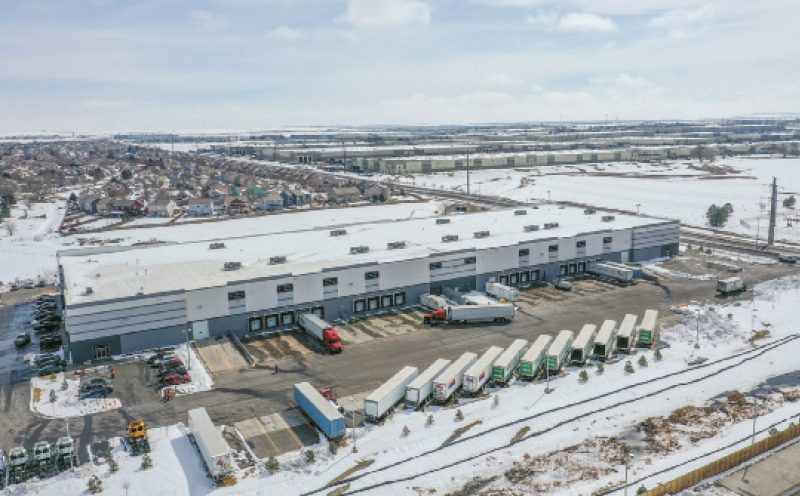
To Sprouts Farmers Market Chief Supply Officer Joe Hurley the tremendous growth plans of the chain are what makes his job exciting.
“That’s the fun part of store growth,” he said, likening it to a puzzle.
The supply chain department has a goal of having each store within 250 miles of a distribution center. Sprouts currently has six DCs and is exploring opening additional DCs in the Northeast and Midwest in the coming years. With an expected increase of at least a couple hundred stores by then, Hurley needs to make sure those DCs and stores are aligned and that the logistics are as efficient as possible to deliver the freshest product to each retail location.
With those three extra facilities, and others not quite yet on the drawing board, Hurley said Sprouts will be able to fulfill “Jack’s (CEO Jack Sinclair) vision to have locations ‘from sea to shining sea’.”
He is prideful that since joining the team, Sprouts has opened two new distribution centers and has upgraded all the existing facilities. “In 2021, we opened up two DCs 70 days apart,” he said, noting how difficult that effort was.
He said it takes about 18 months to develop a facility with constant oversight needed. To open two simultaneously was a herculean task, “and we did in the middle of COVID,” he said.
A new Northern California distribution center broke ground in September of 2025 in Tracy, CA. Once built, it will replace the facility in Union City, CA. The California facility is one of the few that must service stores beyond the 250-mile target radius. Hurley noted that Sprouts has three stores in the Pacific Northwest, which is obviously not enough to support its own DC.
Hurley is also proud of developing Sprouts banana and avocado ripening room program. “When I came aboard, we did not have a ripening room in any of our DCs, now we have avocado and banana ripening capabilities in each facility.”
He said that is very important to accomplish the goal of giving customers the freshest product possible. The supply chain expert said efficiency and speed of distribution from DC to store are his top concerns. Sprouts uses third-party logistics partners to accomplish the task, so the DC concentrates its efforts on getting the product in and out of the facility as quickly as possible.
Hurley revealed that when a new DC is being developed and sized, the company tries to project growth for the next 12-15 years, which he said is a good life span for such a facility. Sprouts business model calls for leasing these facilities to allow for flexibility as the years go by. Speaking specifically of the overall produce supply chain, Hurley said it does have challenges that are a bit different than consumer packaged goods. “The volatility is the big thing,” he said. “Recently we have had lots of rain that have played a role in the supply availability this past year.”
On the plus side, Hurley stated that the outdoor nature of produce production helped produce suppliers traverse the COVID pandemic better than CPG operators. “For the most part, produce suppliers did not have to shut down facilities,” he said.
“We are all about forming partnerships with our suppliers,” Hurley said. “Of course, we need on-time and full deliveries, but when there is a friction point on the logistics end, we try to work it out. We are all aware that once you pick produce, it starts to die.”
To help smooth out those produce friction points, Hurley has taken greater control of the logistics since joining Sprouts. “When I started, we did zero FOB buying. Now we are at 60 percent.”
Of course, an FOB buy puts the chain store in charge of the transportation, where Sprouts can utilize its own buying clout with the third-party logistics companies that it contracts and help assure faster deliveries.
Going forward, Hurley is excited about the role AI can play with regard to forecasting store sales and replenishing the DCs. “Since I have been here, we have done a lot of work on forecasting and replenishing but we are still trying to figure it out. AI is going to help tremendously.”
Sprouts has become an employer of choice in recent years because of the way it treats its team members and, according to Hurley. He noted that during COVID, Sprouts, like the industry at large, had challenges keeping employees at the warehouse level. “The industry had 110 percent turnover, which means for every 10 new hires, there were 11 people leaving,” he said.
He said Sprouts did better than that and today turnover is not an issue at all. “It goes back to the culture piece,” Hurley said. “Our team members love working here.”