Florida tomato industry upbeat
Florida tomato industry upbeat
NAPLES, FL - One might think that Reggie Brown would be upset about the Florida tomato industry these days, but in fact, he is actually quite upbeat about it.
Mr. Brown, manager of the Florida Tomato Committee, told The Produce News before the 2008 Florida Tomato Institute, held here Sept. 3 at the Ritz- Carlton Naples as part of the 33rd Joint Tomato Conference, that in spite of the Salmonella scare that decimated tomato sales, "I think the industry is relatively stable. Except for the last 90 days, we had a pretty good year."
He said that the industry packed 45 million boxes and received an average price of $13.71 this past season, compared to 52 million boxes at an average price of $7.69 during the 2006-07 season. Total sales were some $616 million in 2007-08, compared to $403 million in 2006-07.
"There is a message in that, and even though we didn't make our budget, our objective is to make money for the industry," he said. "We have to think positively, we can't have a pall over the industry, and you can almost feel it here. Psychologically, we have to move away from it and pick ourselves up by the bootstraps."
He said that the committee will work with the U.S. Food & Drug Administration and U.S. Centers for Disease Control & Prevention on doing a better job should there be another crisis.
"You don't get these licks without trying to make progress," he said. "We hope they are more conscienscious about their epidemiology going forward." Mr. Brown continued, "We are ready to see the industry regulated -- we've been calling for it for years. Even the specter of a crisis punishes everyone in the business."
He expected the losses from the Salmonella crisis to the Florida industry to amount to about $140 million at the farm and packinghouse levels, and the committee was "working diligently" to be compensated by the federal government for being "inadvertently indicted by bad epidemiology."
He expected that a federal food-safety regulation that will mandate food safety for tomatoes nationally will soon be passed by Congress.
The committee has "been out in front of food safety for several years," and Mr. Brown said that he was glad to see food-safety legislation for growers and packers of tomatoes in Florida go into effect on July 1. The law -- one of the earlier of its type in the United States for produce -- is designed to limit contamination and focuses on three areas: water quality, limiting animal access to fields and good worker hygiene.
Hurricane Fay helped deliver much needed rain to the drought-stricken state last month, but in the process, it caused some damage to its three main tomato-growing areas, he said.
There was some wind and rain damage in the Palmetto-Ruskin growing area and some plastic damage in Immokalee. Although Quincy received 10-20 inches of rain, the plants were not at maturity and were expected to recover, he said.
Mr. Brown noted that there were three tropical systems in the Atlantic Ocean in early September, and one, Tropical Storm Hanna, was expected to be close to Florida as this article went to press.
Mr. Brown said that he was "more concerned" that this coming season "is a typical year and an excess year. The combination of the end of the last season and costs increasing by 20 to 25 percent an acre will give people pause to expand their acreage."
During his state-of-the-industry speech at the institute, Mr. Brown said that the industry had a "very productive year," including working with the U.S. Commerce Department to renew the suspension agreement with the Mexican tomato industry for another five years that prevents dumping by the Mexican industry in the United States.
He noted that the committee received a $200,000 block grant from the newly passed federal farm bill that will be used for its promotion and education program in the upcoming season.
"We can continue to have this pall and cloud over us and over this meeting this week, and we need to focus on the future and the positive," he said. "We're going to be working to restore that public confidence behind us. The reality is that as an industry, we did the right thing. There are a lot of things happening in this business and we need to think positive to move forward."
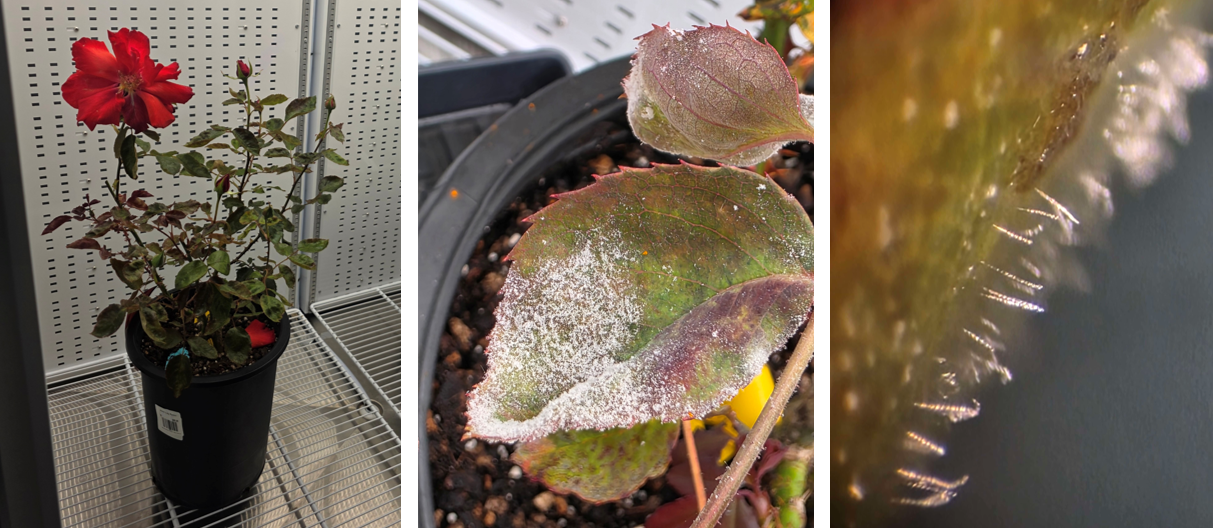
Daniel Cantiliffe, distinguished professor and chairman of the University of Florida's Institute of Food & Agricultural Sciences' horticultural sciences department, welcomed attendees to the institute and said that challenges facing the Florida tomato industry include labor, food safety, dump tank sanitation, water and cull discharge, competition from Canada, Mexico and greenhouse growers, transportation, best management practices, water and irrigation and viruses and other disorders, including a newly discovered disease, purple leaf disorder, which is becoming more prevalent.
While yields have increased and production has stayed pretty much even since the 2002-03 season, "the thing we have no control over is the thing that is killing our tomato industry today: the price dipping below the average of what it costs to produce a box of tomatoes in Florida. This has a tremendous overall impact on the total value of the industry, but it has greater impact on what growers can sustain now and into the future."
Mike Aerts of the Florida Fruit & Vegetable Association talked about there being cause to celebrate because methyl bromide was still available to growers, even though existing stocks continue to be depleted and prices continue to increase because of its increasing scarcity.
Martha Roberts of IFAS gave attendees a timely update on tomato food safety, noting that because so many Salmonella outbreaks have been associated with fresh tomatoes -- six between 1998 and 2007 -- that the U.S. Centers for Disease Control & Prevention will consider tomatoes a source for any future outbreaks.
"We have to overcome this mindset," she said. "The [public's] confidence in the tomato as a safe part of the food supply was damaged. It is critical that we review the facts in the latest outbreak and improve procedures for the future."
She also noted that because there is no mechanism to absolve or exonerate a product once it is associated with an outbreak, "early detection is the key to reducing economic impact."
Samantha Winters, director of education and promotion for the Florida Tomato Committee, told The Produce News that the organization has increased its marketing budget for the coming season to win back and reassure consumers about Florida tomatoes. Instead of national promotions, efforts will be "focused on markets that are typically supportive of Florida tomatoes."
She said the promotion will concentrate on 15 markets in the eastern United States using print, radio and "guerrilla advertising." It will have two advertisements in those markets in Parade, a magazine supplement found in Sunday newspapers.
"We wanted to have a dialogue with consumers and get in front of them," she said.
Mr. Brown, manager of the Florida Tomato Committee, told The Produce News before the 2008 Florida Tomato Institute, held here Sept. 3 at the Ritz- Carlton Naples as part of the 33rd Joint Tomato Conference, that in spite of the Salmonella scare that decimated tomato sales, "I think the industry is relatively stable. Except for the last 90 days, we had a pretty good year."
He said that the industry packed 45 million boxes and received an average price of $13.71 this past season, compared to 52 million boxes at an average price of $7.69 during the 2006-07 season. Total sales were some $616 million in 2007-08, compared to $403 million in 2006-07.
"There is a message in that, and even though we didn't make our budget, our objective is to make money for the industry," he said. "We have to think positively, we can't have a pall over the industry, and you can almost feel it here. Psychologically, we have to move away from it and pick ourselves up by the bootstraps."
He said that the committee will work with the U.S. Food & Drug Administration and U.S. Centers for Disease Control & Prevention on doing a better job should there be another crisis.
"You don't get these licks without trying to make progress," he said. "We hope they are more conscienscious about their epidemiology going forward." Mr. Brown continued, "We are ready to see the industry regulated -- we've been calling for it for years. Even the specter of a crisis punishes everyone in the business."
He expected the losses from the Salmonella crisis to the Florida industry to amount to about $140 million at the farm and packinghouse levels, and the committee was "working diligently" to be compensated by the federal government for being "inadvertently indicted by bad epidemiology."
He expected that a federal food-safety regulation that will mandate food safety for tomatoes nationally will soon be passed by Congress.
The committee has "been out in front of food safety for several years," and Mr. Brown said that he was glad to see food-safety legislation for growers and packers of tomatoes in Florida go into effect on July 1. The law -- one of the earlier of its type in the United States for produce -- is designed to limit contamination and focuses on three areas: water quality, limiting animal access to fields and good worker hygiene.
Hurricane Fay helped deliver much needed rain to the drought-stricken state last month, but in the process, it caused some damage to its three main tomato-growing areas, he said.
There was some wind and rain damage in the Palmetto-Ruskin growing area and some plastic damage in Immokalee. Although Quincy received 10-20 inches of rain, the plants were not at maturity and were expected to recover, he said.
Mr. Brown noted that there were three tropical systems in the Atlantic Ocean in early September, and one, Tropical Storm Hanna, was expected to be close to Florida as this article went to press.
Mr. Brown said that he was "more concerned" that this coming season "is a typical year and an excess year. The combination of the end of the last season and costs increasing by 20 to 25 percent an acre will give people pause to expand their acreage."
During his state-of-the-industry speech at the institute, Mr. Brown said that the industry had a "very productive year," including working with the U.S. Commerce Department to renew the suspension agreement with the Mexican tomato industry for another five years that prevents dumping by the Mexican industry in the United States.
He noted that the committee received a $200,000 block grant from the newly passed federal farm bill that will be used for its promotion and education program in the upcoming season.
"We can continue to have this pall and cloud over us and over this meeting this week, and we need to focus on the future and the positive," he said. "We're going to be working to restore that public confidence behind us. The reality is that as an industry, we did the right thing. There are a lot of things happening in this business and we need to think positive to move forward."
Daniel Cantiliffe, distinguished professor and chairman of the University of Florida's Institute of Food & Agricultural Sciences' horticultural sciences department, welcomed attendees to the institute and said that challenges facing the Florida tomato industry include labor, food safety, dump tank sanitation, water and cull discharge, competition from Canada, Mexico and greenhouse growers, transportation, best management practices, water and irrigation and viruses and other disorders, including a newly discovered disease, purple leaf disorder, which is becoming more prevalent.
While yields have increased and production has stayed pretty much even since the 2002-03 season, "the thing we have no control over is the thing that is killing our tomato industry today: the price dipping below the average of what it costs to produce a box of tomatoes in Florida. This has a tremendous overall impact on the total value of the industry, but it has greater impact on what growers can sustain now and into the future."
Mike Aerts of the Florida Fruit & Vegetable Association talked about there being cause to celebrate because methyl bromide was still available to growers, even though existing stocks continue to be depleted and prices continue to increase because of its increasing scarcity.
Martha Roberts of IFAS gave attendees a timely update on tomato food safety, noting that because so many Salmonella outbreaks have been associated with fresh tomatoes -- six between 1998 and 2007 -- that the U.S. Centers for Disease Control & Prevention will consider tomatoes a source for any future outbreaks.
"We have to overcome this mindset," she said. "The [public's] confidence in the tomato as a safe part of the food supply was damaged. It is critical that we review the facts in the latest outbreak and improve procedures for the future."
She also noted that because there is no mechanism to absolve or exonerate a product once it is associated with an outbreak, "early detection is the key to reducing economic impact."
Samantha Winters, director of education and promotion for the Florida Tomato Committee, told The Produce News that the organization has increased its marketing budget for the coming season to win back and reassure consumers about Florida tomatoes. Instead of national promotions, efforts will be "focused on markets that are typically supportive of Florida tomatoes."
She said the promotion will concentrate on 15 markets in the eastern United States using print, radio and "guerrilla advertising." It will have two advertisements in those markets in Parade, a magazine supplement found in Sunday newspapers.
"We wanted to have a dialogue with consumers and get in front of them," she said.