Suntory Group develops Teamoss as an alternative to peat moss
Suntory Group develops Teamoss as an alternative to peat moss
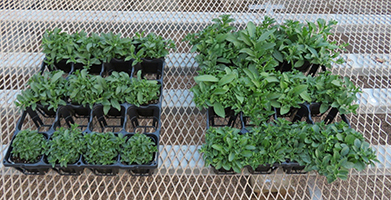 Suntory Holdings and Suntory Flowers announced the development of Teamoss, a horticultural soil material designed as an alternative to peat moss, made from manufacturing residues generated at Suntory Beverage and Food plants. Teamoss is an upcycling horticultural material that achieves both reduced environmental impact and resource circulation, for which the company has applied for a patent.
“Through the creation of new technologies, we will continue to take on the challenge of addressing environmental issues and promote initiatives that contribute to sustainability,” said Daigo Suginobu, president of Suntory Flowers.
1. Challenges and opportunities
The need for sustainable alternatives to peat moss
Peat moss is produced from partially decomposed mosses and other plant matter that has accumulated over many years. It is widely used in horticulture as a soil conditioner and growing medium due to its high water-retention and nutrient-holding properties. However, peat moss extraction is associated with the release of carbon dioxide stored in soils, as well as the degradation of wetland ecosystems, raising concerns from an environmental impact perspective. As regulations on peat moss extraction and sales advance, particularly in Europe, there has been a growing need to develop alternatives to peat moss.
Promoting the upcycling of manufacturing byproducts
According to estimates, waste generated by food loss and agriculture accounts for about one-fifth of Japan’s total industrial waste each year, based on the Environment Ministry’s fiscal 2018 industrial waste status report. Much of this waste is incinerated or landfilled, causing concerns due to its increasing environmental impact and the wasting of valuable resources.
Suntory has been recycling 100 percent of its manufacturing residues as animal feed and fertilizers and continues to position the further effective use of these residues as a key priority, promoting initiatives to realize a circular economy through upcycling.
2. Our initiative
The new horticultural soil material is produced using manufacturing residues generated at Suntory Beverage and Food plants, with used green tea leaves as the primary raw material, combined with supplementary materials such as wood chips. Developed through a proprietary patented process, the new horticultural soil material successfully delivered functionality comparable to peat moss. This material was developed by Suntory Flowers in line with the group’s commitment to sustainable agriculture and restoration of soil biodiversity.
Suntory Flowers conducted a pilot test using flower and vegetable seedlings under identical conditions. Seedlings grown with Teamoss showed growth comparable to, or in some cases exceeding, those grown using conventional peat moss. These results indicate that Teamoss is a viable alternative to peat moss, which can contribute to reducing environmental impact while offering practicality and productivity for horticultural applications. In addition, by using manufacturing residues and enabling domestic ingredient sourcing, Teamoss is expected to be cost-effective and has sufficient market potential.
3. Future outlook
Suntory Flowers plans to begin production and sales on a commercial basis in Japan in 2027. To achieve this, the company will promote initiatives such as establishing a mass production structure and conducting cultivation trials across a wider range of flower and vegetable seedlings. Furthermore, the group will consider the use of other manufacturing residues generated across its supply chain, beyond used green tea leaves.
As environmental regulations continue to strengthen and the global transition toward decarbonization accelerates, Suntory expects demand for sustainable horticultural materials as alternatives to peat moss to grow. At this stage, commercial production and sales are planned to start in Japan, while potential expansion into overseas markets, including Europe, will be considered in the future.
The Suntory Group has long supported regenerative agriculture as one way to reduce greenhouse gas emissions in the agricultural sector. The group collaborates with suppliers and contract farmers to transition to sustainable farming practices, such as cover cropping, organic fertilization and no-till farming. Notable projects include barley cultivation in the United Kingdom (2022), sugarcane cultivation in Thailand (2024), as well as a pilot program to verify the effects of high-performance biochar (2025).