Drought may curtail fall Huron lettuce deal
Drought may curtail fall Huron lettuce deal
Some growers may cut back -- or pass up -- lettuce plantings for a fall harvest in Huron, CA, as a result of tight water supplies.
The fall Iceberg lettuce harvest in Huron typically runs for as long as five weeks and serves to fill a gap between the end of quality product from the California and Arizona desert areas and the start of the Iceberg lettuce harvest in the Salinas Valley.
Crops that require less irrigation and tillage than Iceberg lettuce could look attractive during times of tight water allocations.
Westlands Water District, which covers much of the west side of the Central Valley in Fresno and Kings counties, has been given permission to pump a small amount of ground water into irrigation canals, but that isn't expected to have much of an effect on crop production.
Max Yeater, chief operating officer of Monterey, CA-based Pro*Act, said that Huron is "always a logistical nightmare."
While curtailing Iceberg lettuce programs in Huron may mean that growers will try to start earlier in the Salinas Valley, they might have more luck "stretching Yuma," Mr. Yeater said.
It would be good news logistically "not having to run trucks over the hill," Mr. Yeater said. But if not growing in Huron means plants have to hold on longer in the desert, that may not be good either.
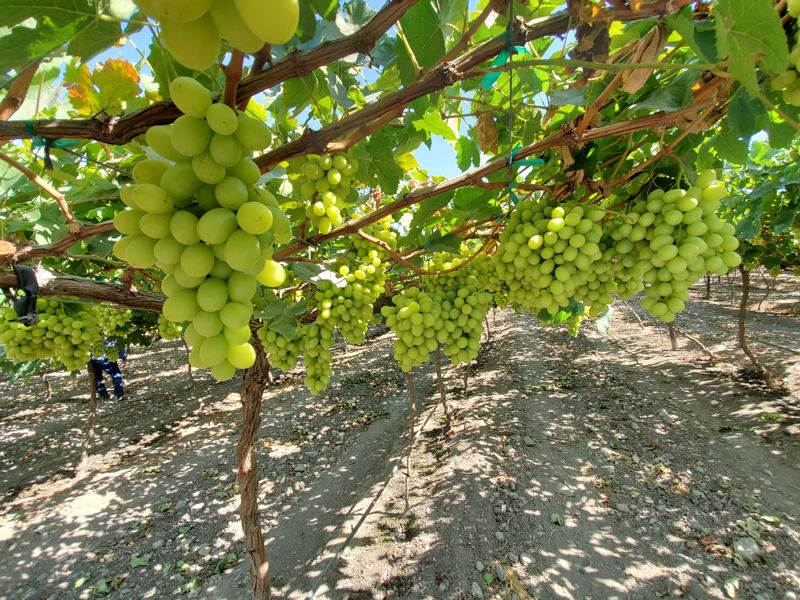
"We are going to make whatever works, work," Mr. Yeater said. Tim York, president of Salinas, CA-based Markon Cooperative Inc., said that there is no doubt the industry has water issues, adding that in the Huron area, tree fruit and grapes would get first priority.
But the industry still is in "overproduction mode" with Iceberg lettuce, and farmers "may get healthy" with higher prices on lower volume out of Huron, Mr. York said. The answer may be to push Yuma forward and make Salinas later, he said.
Mr. York noted that rather than bypass Huron entirely, it's possible companies will choose to shorten their harvest to "three-and-a-half or four weeks."
Jim Bogart, president of Salinas, CA-based Grower-Shipper Association of Central California, said that he has heard the Huron deal may be cut back this year but that he has hasn't heard any groundswell of concern over that scenario.
The fall Iceberg lettuce harvest in Huron typically runs for as long as five weeks and serves to fill a gap between the end of quality product from the California and Arizona desert areas and the start of the Iceberg lettuce harvest in the Salinas Valley.
Crops that require less irrigation and tillage than Iceberg lettuce could look attractive during times of tight water allocations.
Westlands Water District, which covers much of the west side of the Central Valley in Fresno and Kings counties, has been given permission to pump a small amount of ground water into irrigation canals, but that isn't expected to have much of an effect on crop production.
Max Yeater, chief operating officer of Monterey, CA-based Pro*Act, said that Huron is "always a logistical nightmare."
While curtailing Iceberg lettuce programs in Huron may mean that growers will try to start earlier in the Salinas Valley, they might have more luck "stretching Yuma," Mr. Yeater said.
It would be good news logistically "not having to run trucks over the hill," Mr. Yeater said. But if not growing in Huron means plants have to hold on longer in the desert, that may not be good either.
"We are going to make whatever works, work," Mr. Yeater said. Tim York, president of Salinas, CA-based Markon Cooperative Inc., said that there is no doubt the industry has water issues, adding that in the Huron area, tree fruit and grapes would get first priority.
But the industry still is in "overproduction mode" with Iceberg lettuce, and farmers "may get healthy" with higher prices on lower volume out of Huron, Mr. York said. The answer may be to push Yuma forward and make Salinas later, he said.
Mr. York noted that rather than bypass Huron entirely, it's possible companies will choose to shorten their harvest to "three-and-a-half or four weeks."
Jim Bogart, president of Salinas, CA-based Grower-Shipper Association of Central California, said that he has heard the Huron deal may be cut back this year but that he has hasn't heard any groundswell of concern over that scenario.