Del Rey Avocado remodels Fallbrook packinghouse
Del Rey Avocado remodels Fallbrook packinghouse
Del Rey Avocado Co. Inc. has recently completed “a major remodel” of its packinghouse in California, according to Robert (Bob) Lucy, president of the company.
Del Rey has been operating out of the same facility for many years, and had outgrown the existing space, but was unable to enlarge the facility’s footprint due to space restraints on the site. However, “we were able to go up quite a bit, and we basically doubled our storage, which is just wonderful,” he said.
The remodeled facility now has five new state-of-the-art ripening rooms that are “just beautiful,” significantly enhancing the company’s ripening capabilities, Lucy said. “They hold 14 pallets per room, which is really a nice deal for us.”
From a purely aesthetic perspective, “the place looks so much better,” Lucy said. Some “nice landscaping” has been added as well. The facility is located in downtown Fallbrook, and locals are appreciative of the improvements. “People say the building looks so nice,” he said.
The renovation project was nearing completion in February when Lucy told The Produce News that the loading dock area, which was previously partially open, would now be fully enclosed and climate controlled, with the temperature maintained at probably 50-55 degrees. The dock “had worked out for us for 27 years,” he said. “But now we want to take use of that area so we can have fruit stored there for a while” and not have it sitting in 85 or 90 degree summer heat “before we put it away.”
As of mid-July, with the California season at peak production, the Peruvian import season at peak production, the Mexican season in transition from old crop to new crop, and weekly volume at an all-time high, the renovated facility was being well used.
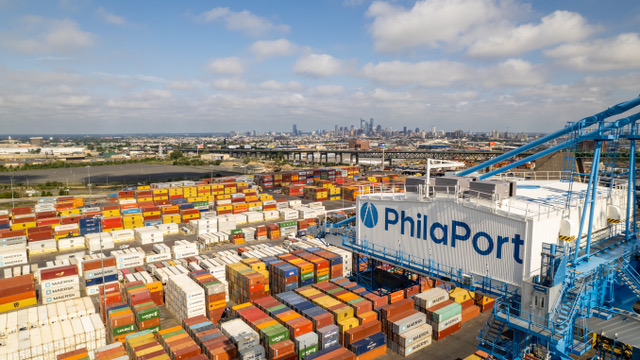
Del Rey also has distribution warehouses in various parts of the country. “We have a warehouse in Florida. We have a warehouse in Vineland, NJ,” in the Philadelphia area. “We have a warehouse at the [Texas-Mexico] border in McAllen,” in addition to the Fallbrook facility, Lucy said. “So we have four inventories that we are working, with trucks going all over the place.”
The business is “much more complicated than it was 10 years ago,” he said.
The current California avocado crop, estimated at 500 million pounds, could come in just a little lighter than that because of smaller-than-normal fruit sizes in the early crop, Lucy said. But “there will still be plenty of California fruit in the market in August and September and all the way into October.” Furthermore, “we are seeing a little bit more big fruit.”
In April and May, “we were just burred with small fruit. We are now starting to see that shifting around a little bit. We are getting more size in the pack — more 40s and 48s being packed today than there were a month ago.” Along with that, prices are stronger on the small fruit than they were earlier, he said.
Peruvian avocados have been in the U.S. market for three or four weeks, Lucy said. “Quality has been good. A lot of fruit has come in and been on programs with different retailers, so much of it has been pre-purchased and not on open market.” That was the choice of Peruvian growers, “and we are involved with that,” he said. “We are growers down in Peru and have a nice farm there. We are bringing most of that fruit into the East Coast so it doesn’t conflict with our West Coast growers.”
In California, Del Rey has its own avocado ranches and also works with outside growers.
The large sizes of the Peruvian avocados coming into the United States have helped “fill the gap” for those sizes in the marketplace, Lucy said. “We are getting a lot of 32s, 36s and 40s into the system, and that has worked out really well.”
In the company’s Mexican avocado program, the Flora Loca crop, a light-volume early bloom preceding the main new crop, was just getting started as of mid-July. Mexican growers “did a very disciplined job of waiting until they got dry weight numbers that they are really satisfied with,” Lucy said. “I have heard good reports on the Flora Loca.” He expected that to go well into August, followed by Aventajada bloom and then the main new crop, which is expected to have a good volume again this year.
As the California and Peruvian seasons wind down, Chilean imports will ramp up. “We expect to see some Chilean fruit in September,” Lucy said. “I am hoping that none of it comes in August. I hope that the higher prices that are happening right now don’t lure Chilean fruit in. I think it would be probably not good at this time. I think they would be better off waiting until September or October, when they get a little bit more maturity in the fruit so that they don’t run into quality issues.”
Whatever the Chilean exporters may say about the fruit, “the fruit will tell the story,” Lucy said. “If it is good, it will find a market. If it is not, it will end up being discounted because there is going to be very good California” fruit in the market as well as the Mexican Flora Loca and possibly still some Peruvian fruit into September.
Chile also has the option of sending fruit to Europe, he said. Exporters “are trying to see what the market is going to be in Europe” and “what programs they can set up in the next month” with U.S. retailers. They will take a look at what Europe is offering them and what the U.S. is offering, and they will make a decision.”
Last year, Europe offered better prices, so Chile “redirected a lot of fruit to Europe,” he said. “I think they will have that luxury again this year.”
They will send fruit to the U.S. market if they are satisfied with price commitments they can get from U.S. retailers. That said, “I think they are going to send more fruit to the United States this year than last year,” he added.
At Del Rey, which has avocado growers in various growing districts in California from San Diego County north to San Luis Obispo County, “we do a very late season program” out of the Morro Bay area with the Shandleys, Lucy said. Morro Bay is one of the most northerly of the California avocado growing areas in the state, and the fruit harvests in September and October and into November.
“It is a great program, and it is very high quality.” That fruit is packed in a special “Morro Bay” box.
On the sales side, “we have a new salesman here” at Del Rey, Lucy said. Josh Underseth, who is new to the produce industry and who “works very well” with Patrick Lucy and Donny Lucy on the sales team, “has come in and is taking a lot of the sales that Joe [Reavis] used to do.” Reavis “did a fine job selling,” but logistics and operations are “Joe’s specialty” and “we really needed him doing [such things as] the boats at the harbor, the bagging operations, the preconditioning.”