Commodity-specific food-safety guidelines advocated at United workshop
Commodity-specific food-safety guidelines advocated at United workshop
LAS VEGAS, NV -- Representatives of tomatoes, leafy greens and tree fruit crops advocated commodity-specific food safety guidelines at a United Fresh Produce Association seminar during the organization's annual convention, here, May 4-7.
A trio of speakers representing dozens of crops agreed on the message that one standard does not fit all, so commodity-specific guidelines are necessary.
Scott Horsfall, chief executive officer of the California Leafy Greens Marketing Agreement, updated the crowd on the significant progress that industry made to adopt verifiable standards within six months of the leafy greens food-safety crisis in mid-2006.
Mr. Horsfall said that the group recently passed its one-year anniversary and its first-year report revealed an industry that has already greatly reduced the risk of food-safety contamination. But he was quick to point out that it is only a start and that the industry and its guidelines will continue to get better as time goes on.
Other commody groups have followed the lead of California leafy greens producers and launched their own initiatives. Reggie Brown, executive vice president of the Florida Tomato Exchange, and Bob Elliott, director of food safety for Sunkist Growers Inc., spoke about progress their respective industries have made as they move toward the ultimate goal of estblishing their own food-safety standards. Tomatoes are getting close to that end goal, while the tree fruit industry is still in a fact-finding mode.
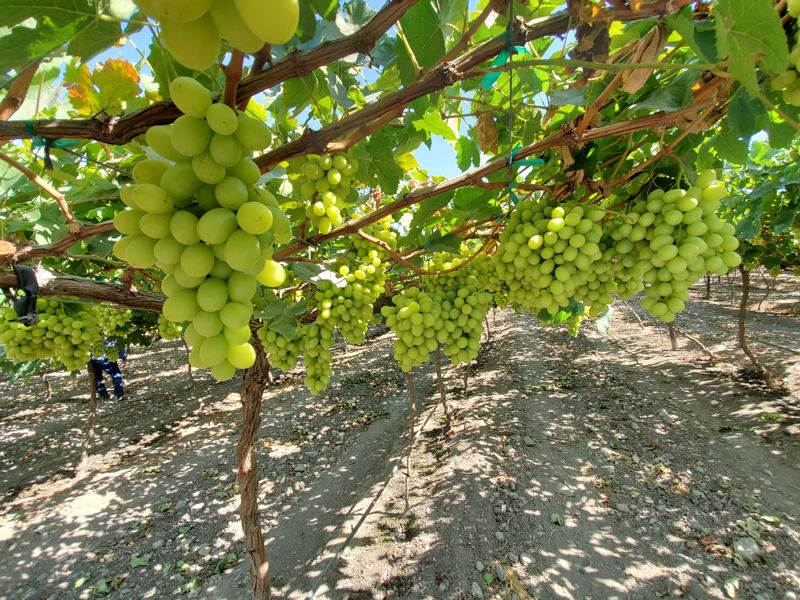
Mr. Elliott's presentation revealed the difficulty of establishing food-safety standards. He said that the tree fruit and nut industries, which include citrus, apples, stone fruit, grapes and many different nuts, are working together to create commodity-specific guidelines. Those crops share some traits that allow for common guidelines, such as the fact that the commodity is off the ground and it does not come in contact with soil or surface irrigation as it is growing and maturing.
On the other hand, there are major differences like harvesting techniques and edible or inedible skin or husks. Some guidelines could be the same for all products grown on tress, but others clearly have to be different.
The contentious nature of this issue was obvious during the question-and- answer period. One audience participant defended his company's food-safety requirements, claiming that there is research showing that E. coli can be transmitted through the air in a lab. He said that frogs and other amphibians also have shown the ability to be carriers in lab situations. His comment elicited reactions from the audience, and had the panel questioning the wisdom of spending resources chasing risks that are minuscule at best.
Mr. Brown said that everyone in the produce industry wants to reduce the risk of contamination, but "we have to understand that there is some amount of risk inherent in produce production, and we can't eliminate everything."
Panel moderator David Gombas, senior vice president of food safety and technology for United, said that the first step in risk analysis is to analyze the "real risk" associated with the particular issue. He said that the industry cannot afford to be "chasing after phantom risks."
Another topic explored by the panelists and the audience was the lack of uniformity and reciprocity with industry food-safety audits.
Mr. Brown said that it is "ridiculous" that any shipper should have to have "15 different audits from 15 different companies" to satisfy the needs of its customers. He advocated a standardized auditing process so an audit of an operation would be accepted by all of a shipper's customers.
There seemed to be agreement on this point, although no one was able to relate any progress toward that end.
A trio of speakers representing dozens of crops agreed on the message that one standard does not fit all, so commodity-specific guidelines are necessary.
Scott Horsfall, chief executive officer of the California Leafy Greens Marketing Agreement, updated the crowd on the significant progress that industry made to adopt verifiable standards within six months of the leafy greens food-safety crisis in mid-2006.
Mr. Horsfall said that the group recently passed its one-year anniversary and its first-year report revealed an industry that has already greatly reduced the risk of food-safety contamination. But he was quick to point out that it is only a start and that the industry and its guidelines will continue to get better as time goes on.
Other commody groups have followed the lead of California leafy greens producers and launched their own initiatives. Reggie Brown, executive vice president of the Florida Tomato Exchange, and Bob Elliott, director of food safety for Sunkist Growers Inc., spoke about progress their respective industries have made as they move toward the ultimate goal of estblishing their own food-safety standards. Tomatoes are getting close to that end goal, while the tree fruit industry is still in a fact-finding mode.
Mr. Elliott's presentation revealed the difficulty of establishing food-safety standards. He said that the tree fruit and nut industries, which include citrus, apples, stone fruit, grapes and many different nuts, are working together to create commodity-specific guidelines. Those crops share some traits that allow for common guidelines, such as the fact that the commodity is off the ground and it does not come in contact with soil or surface irrigation as it is growing and maturing.
On the other hand, there are major differences like harvesting techniques and edible or inedible skin or husks. Some guidelines could be the same for all products grown on tress, but others clearly have to be different.
The contentious nature of this issue was obvious during the question-and- answer period. One audience participant defended his company's food-safety requirements, claiming that there is research showing that E. coli can be transmitted through the air in a lab. He said that frogs and other amphibians also have shown the ability to be carriers in lab situations. His comment elicited reactions from the audience, and had the panel questioning the wisdom of spending resources chasing risks that are minuscule at best.
Mr. Brown said that everyone in the produce industry wants to reduce the risk of contamination, but "we have to understand that there is some amount of risk inherent in produce production, and we can't eliminate everything."
Panel moderator David Gombas, senior vice president of food safety and technology for United, said that the first step in risk analysis is to analyze the "real risk" associated with the particular issue. He said that the industry cannot afford to be "chasing after phantom risks."
Another topic explored by the panelists and the audience was the lack of uniformity and reciprocity with industry food-safety audits.
Mr. Brown said that it is "ridiculous" that any shipper should have to have "15 different audits from 15 different companies" to satisfy the needs of its customers. He advocated a standardized auditing process so an audit of an operation would be accepted by all of a shipper's customers.
There seemed to be agreement on this point, although no one was able to relate any progress toward that end.