Citrus industry at crossroads dealing with greening issues
Citrus industry at crossroads dealing with greening issues
Citrus greening disease has left Florida with its smallest crop of oranges in more than 50 years and is now threatening both Texas and California, as well as other parts of the world.
Joel Nelsen, president of California Citrus Mutual in Exeter, said the entire U.S. citrus industry is at a crossroads with the future of the industry on the line. Already there is serious doubt whether Florida will bounce back, and there is a robust debate regarding the best practices for dealing with this disease as it rears its ugly head in citrus groves and backyard trees around the world.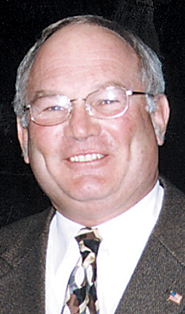 Joel Nelsen
Both Texas and California citrus leaders believe they have gotten in front of this disease, but the leader of Florida’s effort is not so sure all the lessons have been learned.
Florida’s tragic situation
Harold Browning, chief operations officer of the Florida-based Citrus Research & Development Foundation, is considered the quarterback of the Florida citrus greening problem. In the Sunshine State long noted for its orange juice, it is not possible to overstate the problem.
Ten years into the first detection of citrus greening, Browning said the disease has infected 100 percent of the state’s commercial groves. Most growers are trying to cope with the diseased trees, which has led to a dramatic decline in yield. For this season, the crop has been estimated at about 80 million cartons — a more than 10 percent decrease from last year’s crop, which was the smallest in 40 years. This year’s expected production has been called the smallest in more than 50 years.
Browning does not know if the bottom has been reached yet; he fears it has not.
“There are new plantings coming into production,” he told The Produce News in mid-October, “but I am afraid we are still losing more acreage than we are gaining at this point.”
Browning acknowledges that Florida’s disastrous situation is the result of not understanding the role the Asian Citrus Psyllid had in spreading Huanglongbing initially. “We thought we had it under control,” he said. “We lost the battle from 2006 to 2009 when the psyllid population grew tremendously.”
ACP is the vector that spreads the disease from tree to tree and no one realized that at the time. By the time it was understood, the ACP population was out of control and the number of infected trees was growing exponentially. The next issue has undoubtedly been the reluctance of growers to totally remove trees that are infected.
Juice oranges are not a huge cash crop so the revenues per acre do not typically justify an aggressive approach of eliminating diseased trees. Many growers tried to manage the disease and determined that they could live with the decreasing yields. Unfortunately, yields have fallen faster than expected and the disease spread faster than expected.
Browning said the experience in Brazil appears to prove that removing infected trees is the best way to deal with the issue. Brazil, which is the world’s largest grower of juice oranges, has removed 34 million trees, and currently it is estimated that HLB has affected about 18 percent of its groves. That is a much better outcome than what Florida has experienced.
The Florida researcher is not sure that lesson has been learned. He said citrus producers talk about managing the disease, which means coaxing production out of a diseased tree. He understands the economics of doing that but knows that practice was largely responsible for spreading the disease in Florida. He stops just short of advocating the removal of all diseased trees but clearly believes that is the best path.
Browning is optimistic that the Florida citrus industry will come back. He said research is ongoing and “we are currently building a tool box” to deal with the issue.
Tolerant rootstock, more aggressive spraying programs, new plantings and even the potential for a genetically modified citrus trees with resistance to HLB are part of the potential solutions. But all these efforts take time and the million dollar question is what will the Florida citrus crop look like next year — or five years — down the road.
“We are all wondering what the bottom looks like,” Browning said.
Fresh-market citrus in California and Texas
While Florida’s citrus crop is an important part of the agricultural fabric of the United States, for the most part the citrus grown in Florida is for processing. Texas and California are the points of origin for most of the domestic fresh citrus grown and consumed in the United States.
Officials and citrus producers from both states say they have learned from the mistakes Florida has made and have aggressively fought both the disease and the vector in their respective states.
In Texas, HLB and the Asian Citrus Psyllid have been discovered in both commercial groves and residential trees. There have been dozens of finds, though the general belief is that the spread of HLB has been slower than anticipated. Each time a tree tests positive for citrus greening, an emergency quarantine has been put into effect by the Texas Department of Agriculture.
In noting the finds, the Texas Citrus Mutual website states, “Detecting additional greening was inevitable. Let’s hope we are finding the disease relatively early. Early detection and slowing the spread of the disease are our primary objectives.”
Still, just like in Florida, many growers are just not willing to completely eliminate diseased trees that are still productive.
Nelsen of CCM said California has definitely “had the benefit of learning from other people’s mistakes.” But he noted that Mexico’s citrus industry is “in a death spiral” because of the disease, and Florida may or may not recover. He said California cannot afford to go down a similar path.
“Eighty percent of the nation’s fresh citrus comes from California,” said Nelsen. “We have to succeed.”
The state of California and its citrus industry began an active interest in HLB almost a decade ago. Seven years ago, California was able to pass legislation to fund an HLB management program. That money has helped launch an education program to inform homeowners about the disease and how they can help prevent its spread.
Recently, HLB and the ACP have been found in the Los Angeles area but have not yet been discovered in the citrus-rich San Joaquin Valley.
Nelsen said that keeping it out of commercial groves with close proximity to the Los Angeles Basin — Riverside and Ventura counties — may be problematic. Eventually, if Florida’s history is an indication, the disease and psyllid will make that short jump.
On the other hand, Nelsen said an aggressive spraying program that usually is part of any fresh citrus operation has helped keep the psyllid population to a much more manageable level than Florida experienced. He noted that the marketing of fresh citrus requires greater attention to the cosmetic appearance and a more intensive spraying programs.
While Nelsen thinks “Florida has a rough road ahead” to keep its citrus industry viable, he believes California has gotten ahead of the problem and has a great chance of keeping HLB and the ACP in check. But he said it is going to take continued vigilance and quick action if and when the disease or the psyllid is discovered in commercial groves.
Nelsen is optimistic that California will be able to delay the spread of the problem until a cure, better rootstock or even a genetically modified citrus tree can be developed. He said the aggressive information campaign to Southern California homeowners has been instrumental in finding infected trees and beginning spray programs.
Steve Olson of Bayer CropScience said that company’s Citrus Matters program was an awareness campaign that the chemical giant conducted in the Los Angeles area, along with California Citrus Mutual, to inform homeowners about ACP and the need to treat or eliminate diseased trees.
For the most part, Olson said homeowners do not treat their trees, which enables diseases to go unchecked and spread. This is a huge problem in both California and Texas, as it is estimated that there are as many backyard citrus trees as there are commercial citrus trees in each state.
Olson said Bayer is also working on the problem from an eradication perspective and it does have several efficient products that can greatly reduce the ACP population. The firm is also working on biologicals that might be able to interfere with the spread of the disease itself.
Like others, Olson is optimistic that HLB can be managed with early detection and treatment of the psyllid being the current best practice.