Change may be coming for perishables entering south Florida ports
Change may be coming for perishables entering south Florida ports
Until recently, the majority of ocean-shipped fruits and vegetables imported from foreign countries have had to enter the United States through ports in the Northeast.
Decades ago when this ruling was made by the U.S. Department of Agriculture there was good reason. During the summer months especially, southern ports lacked cold storage abilities. Bringing fresh perishables into northern ports helped to ensure that they would not break down as fast or easily, and so product was imported there for cold treatment and clearance. Threats also involved the possible entry of fruit flies and other pests that could threaten local crops and vegetation, also due to the hot Southern weather.
Over time, as perishable imports increased tremendously, Northeastern ports became increasingly congested. This has resulted in delays and other issues — some that have affected product quality.
Another important fact to consider is that receivers in Southern states must then have the produce shipped back south for distribution. The result is increased transportation costs, fuel usage, higher consumer prices, and shorter shelf life on store shelves and in restaurant kitchens.
But times, technologies and import abilities have changed dramatically over the decades, and it was only a matter of time before people began to realize that product could be brought into Southern ports safely, and at a great cost savings to Southern receivers.
Last year, a new pilot program was spearheaded by the Florida Perishable Trades Coalition, a nonprofit association developed to increase trade in perishable products through Florida’s airports and seaports. Founding members include Crowley Maritime Corp., Customized Brokers, Seaboard Marine and Port Miami.
Nelly Yunta, vice president of sales, marketing and customer care, liner and logistics business groups for Crowley Maritime Corp. in Jacksonville, FL, and vice president of Customized Brokers, located in Miami, was a founding member of the Coalition and a strong advocate of the enormous difference bringing fresh produce into South Florida would mean to shippers, importers and receivers.
Yunta said that it took over two years to form the coalition, work with the U.S. agencies involved — primarily the USDA — and develop a pilot program in a long-term effort to open south Florida ports as entry points for products destined for the South.
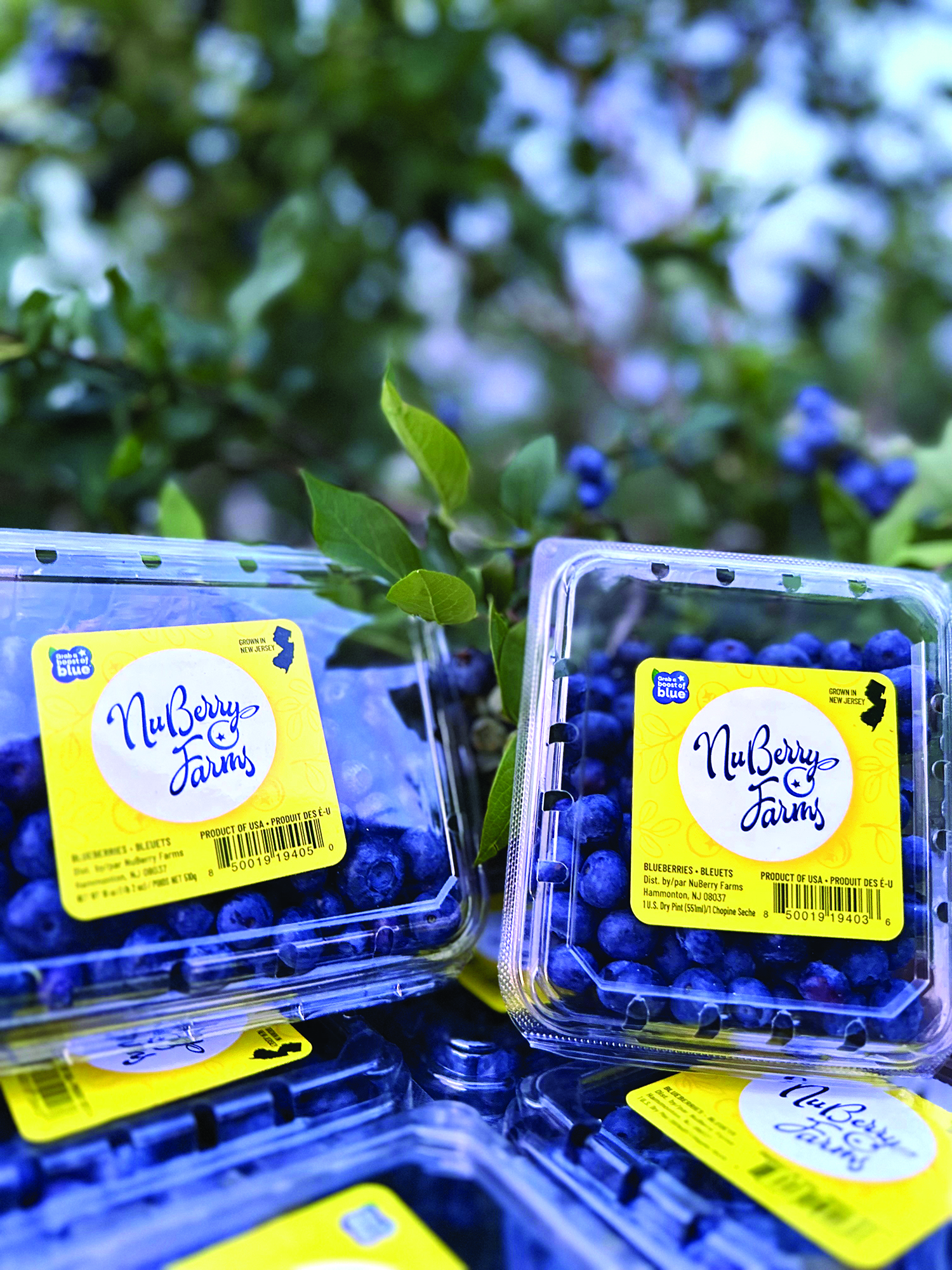
“Blueberries and grapes from Peru and Uruguay for the pilot program are good examples of products whose final receivers are in the South, but the products must enter the U.S. in northern ports, receive cold treatment and then be shipped back to customers in the south,” said Yunta. “These are well-defined import programs. If the test program goes well, we plan to expand it to other products and from additional countries.
“Port of Miami and Port Everglades are working on master plans for this project,” Yunta continued. “They want more business coming into Florida, and so they are doing whatever possible to make this project successful.”
A Broward County news release issued Dec. 2, 2013 was headlined, “Port Everglades Welcomes First Container of Imported South American Fruit Under New Pilot Program.” The first shipment of imported Peruvian grapes, under the test program, arrived at Port Everglades on global ocean carrier Hamburg Süd on Nov. 29.
“Hamburg Süd is proud to have been selected to carry the first refrigerated cargo load of fresh Peruvian grapes to Florida,” Juergen Pump, senior vice president of Hamburg Süd North America, stated in the release. “With our state-of-the-art refrigerated cargo containers and our fixed-day-of-the-week liner service between Peru and Port Everglades, we are uniquely positioned to cater to this exciting new business. Port Everglades is the first U.S. port of call for our South American West Coast/United States service and we are looking forward to serving the South Florida fresh produce import community.”
With the test program including only grapes and blueberries from Peru, it isn’t having a strong effect on Southern distributors such as those at the Pompano State Farmers Market yet, but companies there are keeping their ears and eyes open to what the future may bring.
“We doubt that we’ll be affected by the change because we fly our Chilean blueberries into Florida regardless of the time of year, and ocean freight shipments fall under different protocols,” said Charlie Eagle, vice president of business development for Southern Specialties, headquartered in Pompano Beach, FL. “But it is an issue that we’ll be watching in the future.”
Chip Jetter, president of Garden Fresh Distribution Service Inc. in Pompano Beach, FL, told The Produce News that at this point in time, he has similar feelings, noting that shippers in other countries may decide that they can get more money for their products by shipping into Florida once the product line expands to allow more products in.
“It has always been and will always be a supply-and-demand industry,” he said. “While I understand the theory, moving huge amounts of imports to a different port is like taking customers away from someone else. Those like us who are strong importers from Central America know that our growers aren’t growing for free. It takes time and a lot of money to put these projects together, and it’s going to take effort to make changes.”
Jimmy Myrick, vice president of Edward L. Myrick Produce in Pompano beach, said that for his company shipments into south Florida could have some positive benefits.
“If ultimately the majority of our imports now entering into Northeastern ports are permitted to come into Florida, it might provide us with an opportunity to expand our product line,” said Myrick. “And if such an import program is successful, it could save us a lot of money.”