Capespan working with growers to manage Chilean grape movement
Capespan working with growers to manage Chilean grape movement
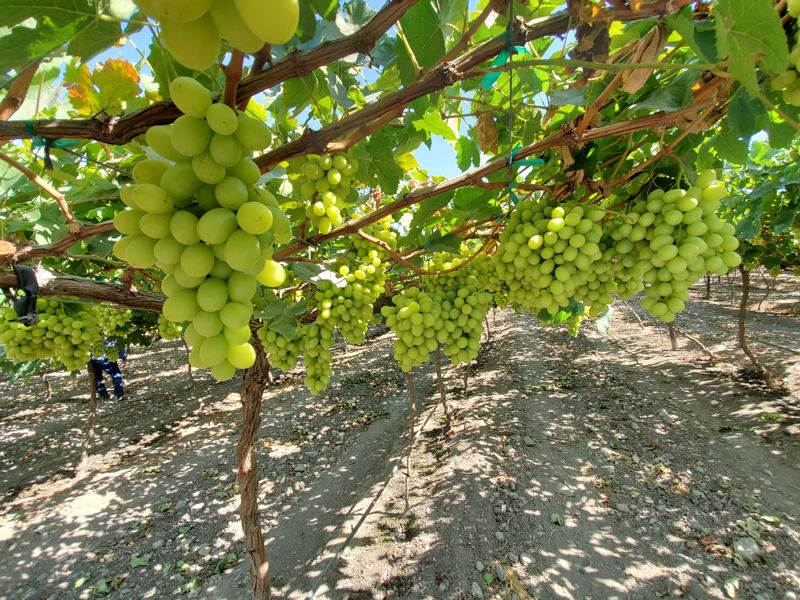
The Chilean table grape harvest covers a long north-to-south geography with a variety of elevations. It has more coastal influences in some areas and desert influences in others.
According to Mark Greenberg, president and chief executive officer of Capespan North America, a global supplier of fresh fruit, the Chilean grape harvest stretches from late November in the III Atacama Region to late April in the VI Rancagua Region.
“The availability in the North American market of the main grape varieties are traditionally the Flame seedless and Superior — also known as Sugarone — which are available in the market from mid-December through early March,” said Greenberg. “Thompson seedless are available from the last week of December through April. Black seedless, including Autumn Royal, run from mid-January through mid-April. Red Globe grapes are available from January through mid-May, and Crimson runs from the last week of February through mid-May.”
Greenberg noted that Chile has suffered from a long and protracted drought that has had a devastating impact on many fruit-producing regions, especially in the IV Coquimbo Region, but affecting other areas as well.
“Table grape and soft citrus production from Ovalle has suffered,” he said. “The drought has been relieved to some extent by this year’s late-winter and early-spring rain that helped to replenish some of the reservoirs, although by no means having fully restored them.”
The snow pack in the Andes Mountain Range, the greatest store of water, has also been augmented to some extent. But the rain that came was later than expected and therefore brought warmer temperatures.
“This meant that at elevations where one would have expected snow, the precipitation fell as rain, which created flooding in some metropolitan regions, he said. “In addition, in March Chile’s Atacama region — especially the area in the Copiapó Valley — faced a heavy protracted rain, which gave rise to flooding of almost biblical proportions.”
He added that the toll on the local population was devastating. The flooding also took out table grape acreage and deposited mud and silt on others — in some areas to a height of more than two meters. “It was an extraordinary event and will have a substantial impact on the volume of fruit that this region produces,” he said. “It is estimated that the region will produce up to 2 million fewer cases than it did last season.”
The winter is reported to have been warmer than normal, which Greenberg said translates to fewer chilling hours on the fruit.
“The spring, ironically, has been cooler,” he noted. “All of this has conspired to create a table grape crop that will be later in almost all regions and lighter in most.”
He also explained that Capespan will need to work with its producers to predict arrivals into North America, and also to predict spikes in the arrivals.
“This will allow us to work with our customers to plan promotional activity that will move the fruit in the heaviest arrival weeks,” he said. “The challenge will be to increase movement quickly when the short-supplied early market — and concomitant high prices — morphs into a well-supplied mid-season market.
“One cannot expect retailers to turn on a dime,” he said. “We need to give them ample notice so that promotions are well planned and have the desired result of moving increased volumes of fruit; not just the effect of lowering price.”
He also explained that it’s difficult to predict how the overall season will fare compared to average because movement will be on whatever Chile ships.
“I don’t expect to see great change from last season,” he said. “Certainly we will see lighter early volumes through January. But we also expect that heavy volumes that have in the past been shipped to more distant markets such as Asia may decline with fruit diverted to North America to take advantage of the shorter transit — or, more accurately — the less-risky transit. The very strong U.S. dollar will also help make it a preferred destination.”
Although the season had not yet started when Greenberg responded to The Produce News in early December, he said it would be foolish to think that there will not be some condition challenges this year, especially if there is frequent or inopportune summer rain.
“This is why growers will need to be flawless in their field management and vendors well-informed, agile and practical,” added Greenberg.