Stewardship and innovation define Stemilt Growers
Stewardship and innovation define Stemilt Growers

In the ever-evolving landscape of the apple industry, Stemilt Growers stands as a testament to adaptability, innovation and a commitment to sustainability. Brianna Shales, director of marketing for Stemilt, provided insight into the company’s journey, highlighting its milestones and focus on meeting consumer demands.
“Over the years, Stemilt has modernized its apple variety mix and strategically grown the volume of core apples like Honeycrisp and organics,” Shales said. The company’s expansion includes new orchard partnerships, extending its marketing footprint. In addition, Stemilt has invested in infrastructure, adding 10,000 square feet to its apple packing line with advanced sorting and bagging technology to enhance the quality of bagged apples.
 Celebrating its 60th anniversary, Stemilt takes pride in its origins. “In honor of the company’s legacy, we’re reflecting back on all the hard work that has been done by the hands of Stemilters,” said Shales. Stemilt, owned by the Mathison family, emphasizes the collaborative efforts of the Stemilt community, with a focus on celebrating the families within the organization.
The evolution of Stemilt’s operations includes the pivotal role of their distribution center, known as the Fresh Cube. Shales acknowledged its significance in ensuring a year-round supply of fresh apples. Looking ahead, Stemilt remains committed to delivering high-quality fruit that aligns with freshness and flavor standards, a win-win for both Stemilt and its retail partners.
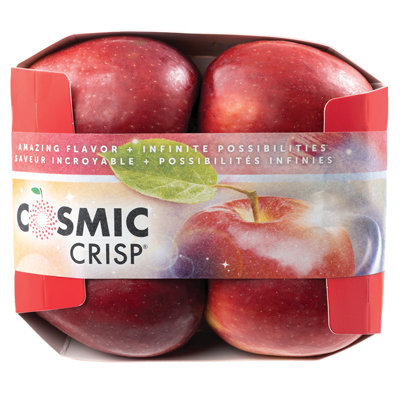
The diversity of apple varieties available today poses a challenge and opportunity. “Apple assortment is critical with how many apple varieties are out there today,” said Shales, “it’s something we’ve been seeing retailers focus in on.” Core varieties like Fuji, Gala, Pink Lady, Honeycrisp and Granny Smith remain crucial for steady growth. Shales also highlights opportunities in premium, club apples such as Cosmic Crisp, which has gained prominence, especially in the organic category.
“Sustainability has long been a must when growing organics,” explained Shales. Stemilt’s commitment to sustainability echoes its founder Tom Mathison who used to say, “we have to leave the land as good as we possibly can, or better, because we are just caretakers of it for a short time.” The Responsible Choice program, initiated in 1989, aligns Stemilt’s initiatives around core values, focusing on integrity, trust, innovation, humility and stewardship.
Shales outlined Stemilt’s sustainability commitments, including certifications in Bee Friendly Farming (BFF) and Equitable Food Initiative (EFI). BFF certification promotes pollinator health, while EFI certification addresses transparency in farm working conditions and food safety. “Over 100 Stemilt employees are trained on EFI standards, highlighting the company’s dedication to industry challenges,” she said, “including five who are equipped to teach others.”
Planning for the future is a meticulous process for Stemilt. “We’re very diligent in planning what we’re going to grow and base this on what consumers are demanding,” said Shales. In addition to revitalizing the apple mix with more Honeycrisp, Cosmic Crisp, and Granny Smith, Stemilt’s focus on variety development extends to Aura apples and new selections in the research and development process.
Challenges in predicting consumer preferences and future retail demands persist. Shales acknowledged the industry’s inherent complexity, where anticipating market trends require foresight and planning five years ahead. The company remains committed to maintaining a reliable and efficient supply chain through data collection, coordinated pack schedules and the Stemilt Fresh Cube distribution center.
Investment in Cosmic Crisp apples reflects Stemilt’s confidence in its potential impact on the apple category. Shales noted, “It’s a great apple for its ability to delight the consumer and it performs well at retail.” However, she acknowledged the crowded market and the need for caution in introducing new bi-colored apples.
The consumer shift toward packaged apples during the COVID-19 pandemic has influenced Stemilt’s strategy. Shales pointed out the rise in packaged apple volumes, which constitute 42 percent of total volumes. The company sees packaged apples as an opportunity to brand and tell stories to consumers.
The introduction of the sustainable 4-pack of organic apples, known as EZ Band, demonstrates Stemilt’s commitment to offering convenient and environmentally conscious options.
Looking to the future, Stemilt aims to create solutions for retailers that enhance the point-of-sale experience, selling more volume and providing the convenience consumers seek. “Our focus for the future will be to create solutions for retailers that help them win at the point of sale,” said Shales. Stemilt’s dedication to innovation and sustainability continue to position it as a key player in shaping the future of the apple industry.