Several pieces of pending legislation are of great concern to Grape & Tree Fruit League
Several pieces of pending legislation are of great concern to Grape & Tree Fruit League
FRESNO, CA — At both the state and federal level, there are issues and several pieces of legislation currently pending as of mid-July that are of great concern to the California Grape & Tree Fruit League, here.
At the state level, there are two bills currently moving through the legislature "that are of major concern to us," said Barry Bedwell, president of the league, July 13.
"The first is AB 2346," a bill that "would drastically change the regulations related to heat illness prevention. We think it is a tremendous overreach. It makes no sense, given the progress that has been made the last six years" with 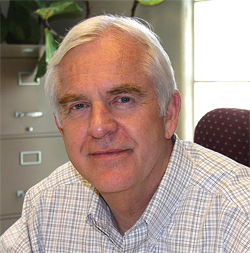 Barry Bedwellimplementation of existing heat illness regulations. The industry has worked "in conjunction with Cal OSHA" to put on seminars for tens of thousands of employees and employers, Mr. Bedwell said. "We have made great strides in the compliance percentages, and the whole culture and awareness of heat illness has changed over the last five to six years."
The league acknowledges that "any level of heat illness is preventable," he said, "and we are going to do our best to make sure that everyone is following the [existing] regulations" which he regards as entirely adequate to prevent heat illness.
The provisions of the currently pending bill are not "entirely unnecessary," he said.
Among other things, the bill requires that drinking water be within ten feet of farm workers at all times and that artificial shade be within 200 feet. "Natural shade would no longer qualify," he said.
Thus, if a grape picker is working under the canopy of an overhead grape trellis, as soon as he gets 200 feet into the row, it would be necessary under the proposed law for growers to put up an artificial canopy under the natural canopy of the vines.
It can actually be hotter under tarps at the end of the rows to provide artificial shade on a hot, sunny day than it is under the canopy of the grapevines, he said.
"Why in the world would agriculture in California be singled out for these kinds of silly regulations," Mr. Bedwell asked. "It makes no sense. This law doesn't apply to any other outdoor occupations other than agriculture, which again is silliness." There has been one heat-related death in agriculture in California in the last three years, and many more than that in other outdoor occupations and activities, about 400 in all each year in the United States.
The bill has passed out of the State Assembly and "is in the Senate," Mr. Bedwell said. "We are working hard to try to defeat the bill in the Senate," and if that is not successful, work with the governor "to try to address that very bad piece of legislation."
Another problematic piece of pending legislation is AB 1313 which would "take away the exemption for overtime on agriculture [currently] at 10 hours a day for field work and move it to eight hours," so that overtime would have to be paid to agricultural workers after eight hours each day. Weekly, the bill would move the overtime threshold to 40 hours from the current 60 hours.
"We have tried to point out that the only persons that are going to get hurt in this scenario is the workers themselves," Mr. Bedwell said. Unless there is an extreme shortage of labor, farmers will simply not schedule workers to work more than eight hours a day or 40 hours a week.
The problem is that with agricultural field work, weather often determines when field work can be done, so workers may lose hours or days of work, and therefore lose income, that will never be made up if they are only scheduled to work for eight hours a day on the days that follow.
A case in point occurred a few days before The Produce News talked to Mr. Bedwell. With the grape harvest underway and temperatures expected to climb as high as 108 degrees, at least one grower in the southern San Joaquin Valley had the pickers working a fairly long day the prior day so that the next day they could just work the coolest six hours of the morning and a void the extreme heat. That would not have been possible under the proposed legislation without additional cost to the growers who would simply have hired additional workers rather than pay the overtime.
"Agriculture is different" from other occupations, Mr. Bedwell said. "You can only work when Mother Nature allows it, and people can't schedule 52 weeks. So it is important that when they can work, they get in as many hours as possible." If the bill becomes law, "the individual worker is going to wind up getting less money overall."
Only three states out of 50 "address any kind of overtime for agriculture," Mr. Bedwell noted.
"These are two bills in particular that for table grape growers are a major, major concern," he said.