Del Rey has strong organic, conventional Mexico programs
Del Rey has strong organic, conventional Mexico programs
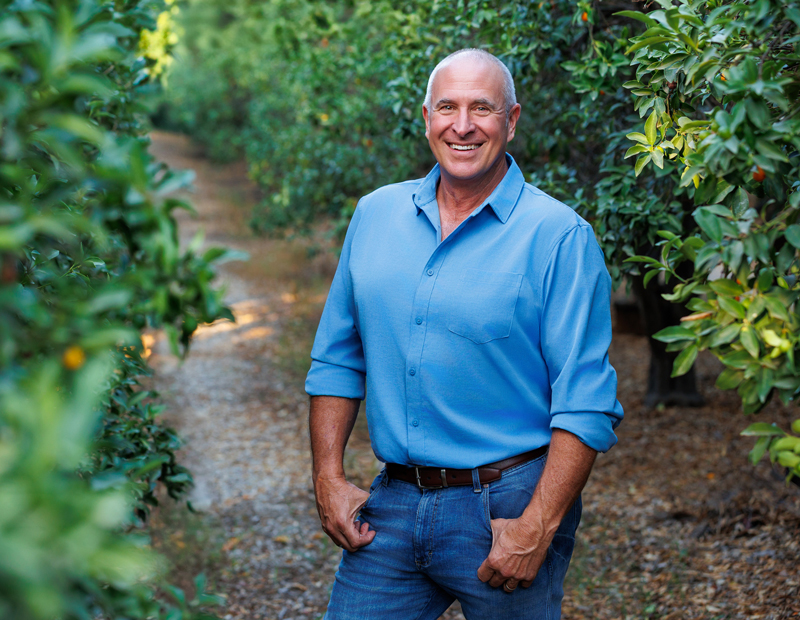
“Del Rey gets Mexican fruit from two major suppliers in Mexico, and we are very happy with the relationship,” said Bob Lucy, president of Del Rey Avocado Co. Inc. in Fallbrook, CA, in an interview with The Produce News. “They pack the ‘Del Rey’ box for us, so there is a continuity for our customers” who see the “Del Rey” label 52 weeks a year. “That is helpful in marketing.”
In addition to conventionally grown fruit, “we also have a very good program with organic avocados down in Mexico,” Mr. Lucy said. Del Rey also has a large  Bob Lucyorganic avocado program out of California, so the organic fruit out of Mexico provides continuity to that program. The organic avocados are packed in the “Del Rey Farms” label.
This fall and winter, “there will be very little Chilean organic available to anyone, so probably from mid-October or November 1st, all the organic will be coming from Mexico,” he said. “We have a good grower mix ready to go on that for Mexican avocados in our ‘Del Rey Farms’ label,” again providing continuity from the California organic program because it is the same label for both.
“We will really try to step up our organic out of Mexico,” Mr. Lucy said. “We had a very good year last year, but we are going to make sure that we get more Mexican organic coming up this year. We have some more customers for it.”
Organic avocado production appears to be increasing in Mexico, he said. “It seems like we are able to get another grower or two. I am not sure if we are cannibalizing that from somebody else, [but] I do think it is on the increase. I think [Mexican growers] realize that organic avocados are here to stay. The whole organic category is here to stay, so I think there are growers that are committed to that.”
Returns for organic fruit have been 10 percent to 20 percent more, on average, than for conventional fruit, but “there are those who feel you will end up getting 15 to 20 percent less volume, so organic growers need to make sure that the gross dollars they receive make sense” in the light of their higher production costs, he explained.
At Del Rey, “our growers have done very well,” Mr. Lucy said. “Our organic growers” in both California and Mexico “have had some very good years, in the last five years.”
Mr. Lucy said he is disappointed, however, that Chilean growers “didn’t stay in with more organic. I think it would have been a nice niche for them, but it hasn’t happened.”
On the whole, except for increased volume, Del Rey’s Mexican avocado program for the 2012-13 season is basically the same as in past years, Mr. Lucy said. “We have worked a number of years with these particular growers and packers, and the program will be very similar. We send fruit out of Michoacan [Mexico] to our facility at Millbridge Farms in Vineland, NJ, and we have a facility in Florida” at American Consolidation & Logistics in Opa Locka. In addition, “we store fruit at the Texas border, as many people do. And then, of course, we will bring loads here to California.”
As of the end of September, Del Rey expected to have “a couple more weeks of pretty good California volume to go, but we will start pulling our first Mexican fruit here probably by October 15,” he said.
The company had been shipping fruit from Mexico’s early-season Flora Loca crop to eastern destinations for several weeks, but hadn’t been bringing any of that fruit into California at all, Mr. Lucy said. So far, “we have plenty of fruit to handle the West Coast with California product. But because of the differences in transportation costs, we’ve been going into the Northeast and Florida with Mexican avocados. It just works better. We go from the Rockies east with Mexican fruit, and we stay from the Rockies west with California fruit, and it seems to have worked well for us. We are happy with that geographical breakdown.”
Del Rey expected to continue to have California fruit available for western markets through October before switching over completely to imported product, Mr. Lucy said.
Chilean fruit would soon be coming in, and “it will have its markets,” he said. “The Chilean fruit in the West and across the country will co-exist with the Mexican. There are some people who are very loyal to the Chilean program and there are other people who are very loyal to the Mexican product.”
In Mexico, Del Rey has a field person who “is helping us buy and select the fruit and make sure of quality control,” Mr. Lucy said. “We are very, very comfortable with the two packinghouses” that Del Rey is working with in Mexico “and with the growers … and we are very pleased with the quality that we get from our two packers. It has just been excellent. Last year, we brought in hundreds of thousands of boxes and had just a handful of quality issues. It was like nothing. We are very proud of that.”