Rahll’s locally grown focus a stronghold throughout the company’s history
Rahll’s locally grown focus a stronghold throughout the company’s history
Now in its third generation of management, Edward G. Rahll & Sons Inc., located on the Maryland Wholesale Produce Market in Jessup, MD, handles a full line of fresh produce, including a wide variety of herbs, ethnic, specialty and exotic items. It still maintains its traditional line of commodity produce, such as tomatoes, potatoes and onions, which it has handled for decades. Citrus from Florida and California, melons and stone fruits are also important items in the company’s line of fresh produce.
“We also specialize in watermelo Emmanuel Blanco handles the majority of Edward G. Rahll & Sons’ Hispanic customers, and is credited with increasing the company’s ethnic business.ns,” T.J. Rahll, the third-generation family member to operate the company told The Produce News. “But we really pride ourselves on our locally grown program. It is how we got our start, and it has remained an integral part of our operation to this day.”
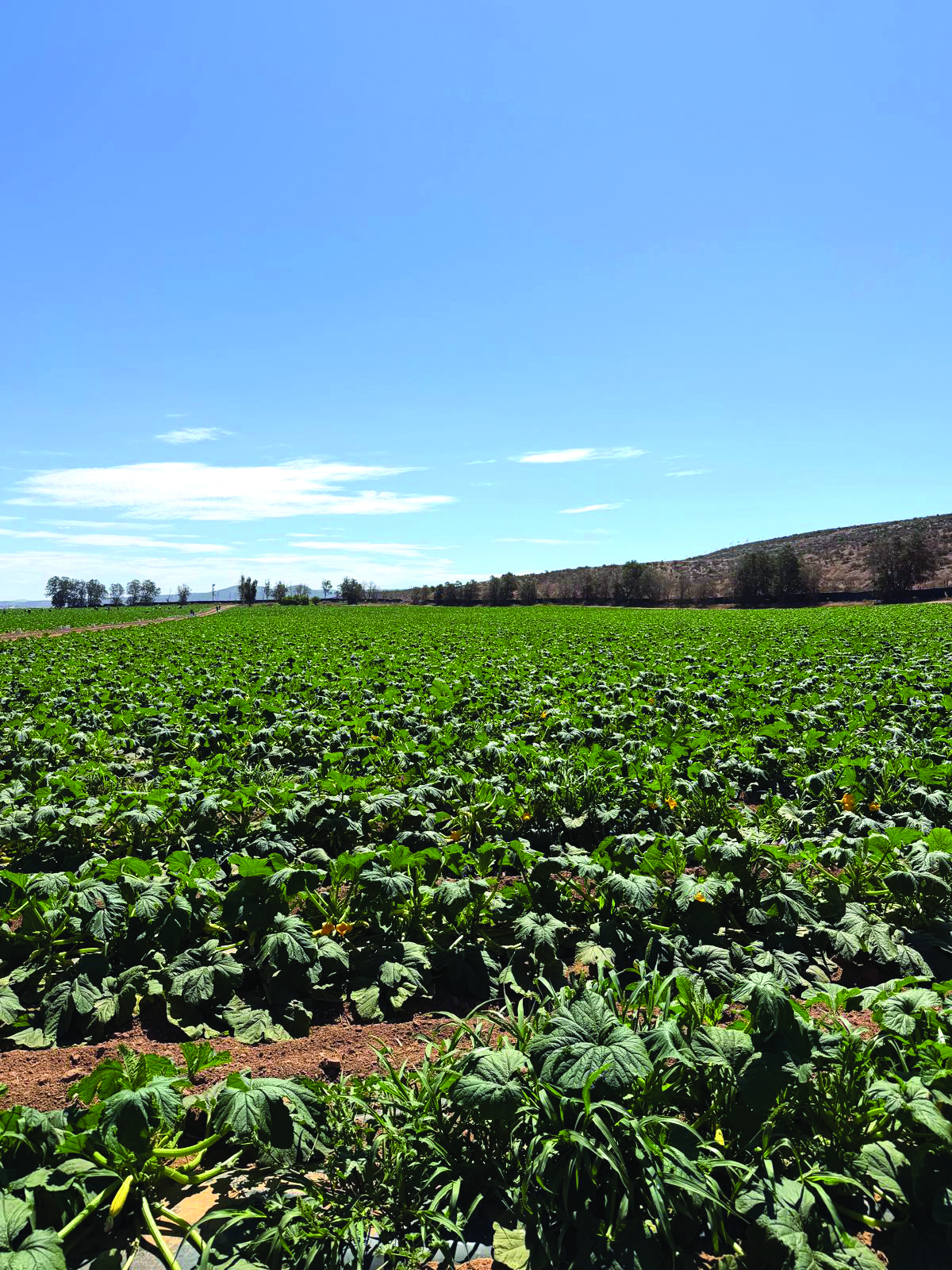
Edward G. Rahll works with between 50 and 60 local farmers each year for all of its seasonal supplies. As a generational family business, Mr. Rahll said that working with these growers has always been a major part of what the company represents.
“Our company has always, and always will, strive to be one of the biggest suppliers of local produce in our distribution area,” he added.
The top three locally grown items for the company are corn, watermelons and cantaloupe, followed by tomatoes, green peppers, cucumbers and other field crops.
From late fall to early spring, Edward G. Rahll sources from other growing regions in the country.
The company was founded at the Pulaski Highway produce market in 1951 by Edward G. Rahll, who was then selling out of back of truck. His son, T.J.’s father, Tom Rahll, was at the helm until a few years ago when he semi-retired. Tom Rahll passed away in February of this year.
Today, Edward G. Rahll occupies 11 units in building A on the MWPM.
Mr. Rahll said the company is continually working on its food-safety initiatives.
“We take food safety as a personal commitment,” he said. “We have a solid vision of what we want our facility to look like. Our own goals, combined with those of the market management, result in keeping the market in updated condition.”
Having opened in 1975, MWPM is nearing 30 years old, but tenants like Edward G. Rahll say the location is so good that to build a modern market elsewhere would be foolish.
“We’re in process of discussions with MWPM regarding future updates to the current facility that would increase our efficiencies in a sufficient way without having the burden of the great expense that it would cost us to rebuild,” he said.
“We believe that an updated facility is an attainable goal. For us, it’s more about making what we have work,” he continued. “Over time the tenants will work together to determine ways to continually update the existing facility. In the meantime, the market is constantly updated with new electricity, advanced security systems and other improvements.”
The Asian and Hispanic populations in the mid-Atlantic continue to grow and expand. Mr. Rahll said commodities are strongly influenced by these groups. He noted that MWPM is also seeing more ethnic tenants taking space on the market.
“Restaurants and stores continue to cater to this population,” he said. “And we are always expanding our line to provide them with the products they want. Many ethnic grocery stores, particularly those with a strong Asian culture, are opening in the area today. At certain times of the year we’ll bring items like boniato and malanga in from other growing regions. We also partner with others in the market to help fill our demand. And, local growers are now producing more of these ethnic items.”
Mr. Rahll pointed out an interesting fact that attests to the growing ethnic population in the Baltimore area. Consumers in the region have always eaten white corn, but ethnic groups tend to prefer yellow or bi-colored corn, which is sometimes referred to as “milk and honey” corn, so sales have gradually switched to accommodate the demand.
“It has been an OK year,” said Mr. Rahll. “Not amazing, but not terrible. We don’t complain when things are steady, but we never say ‘never.’ We’re in the middle of hurricane season, for example, and things can change overnight. We’ll take the smooth sailing as long as we can have it.”