Holt celebrates 100 years while investing in the future of perishables
Holt celebrates 100 years while investing in the future of perishables
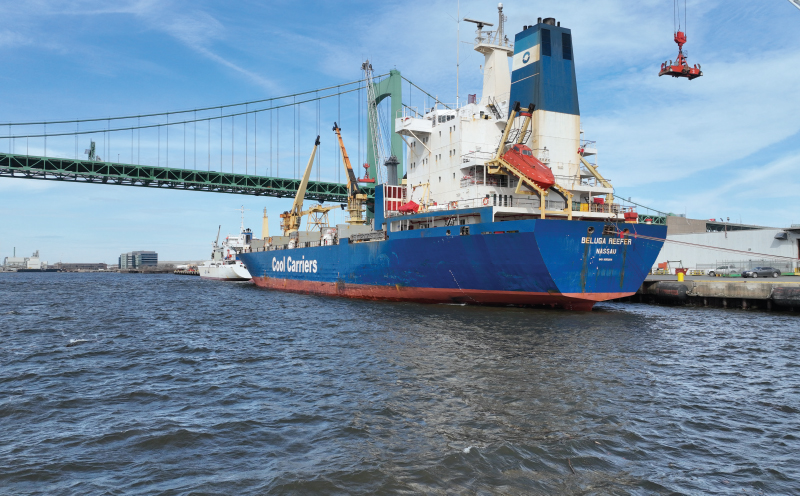
As Holt marks its 100th anniversary in 2026, the family-owned business is celebrating a century of growth while making some of the largest investments in its history to strengthen the Delaware River's position as North America's premier gateway for fresh produce and refrigerated cargo.
Since 1926, when Leo Holt Sr. purchased a single truck, the business has grown over four generations into one of the nation's leading transportation, marine terminal and logistics providers.
Today, members of the Holt family continue to guide the business, blending new technology and infrastructure investments with the values that have defined the company for a century.
“Reaching 100 years is a rare achievement,” said Christian Holt. “The Holt family is deeply proud of this legacy. With an eye toward the future, Holt remains committed to investing in infrastructure, technology and, most importantly, employees to ensure the strength and success of the next 100 years.”
That commitment is evident throughout the Delaware River port complex, where Holt continues to modernize both Gloucester Marine Terminal and Packer Avenue Marine Terminal while expanding the region's cold-chain capabilities.
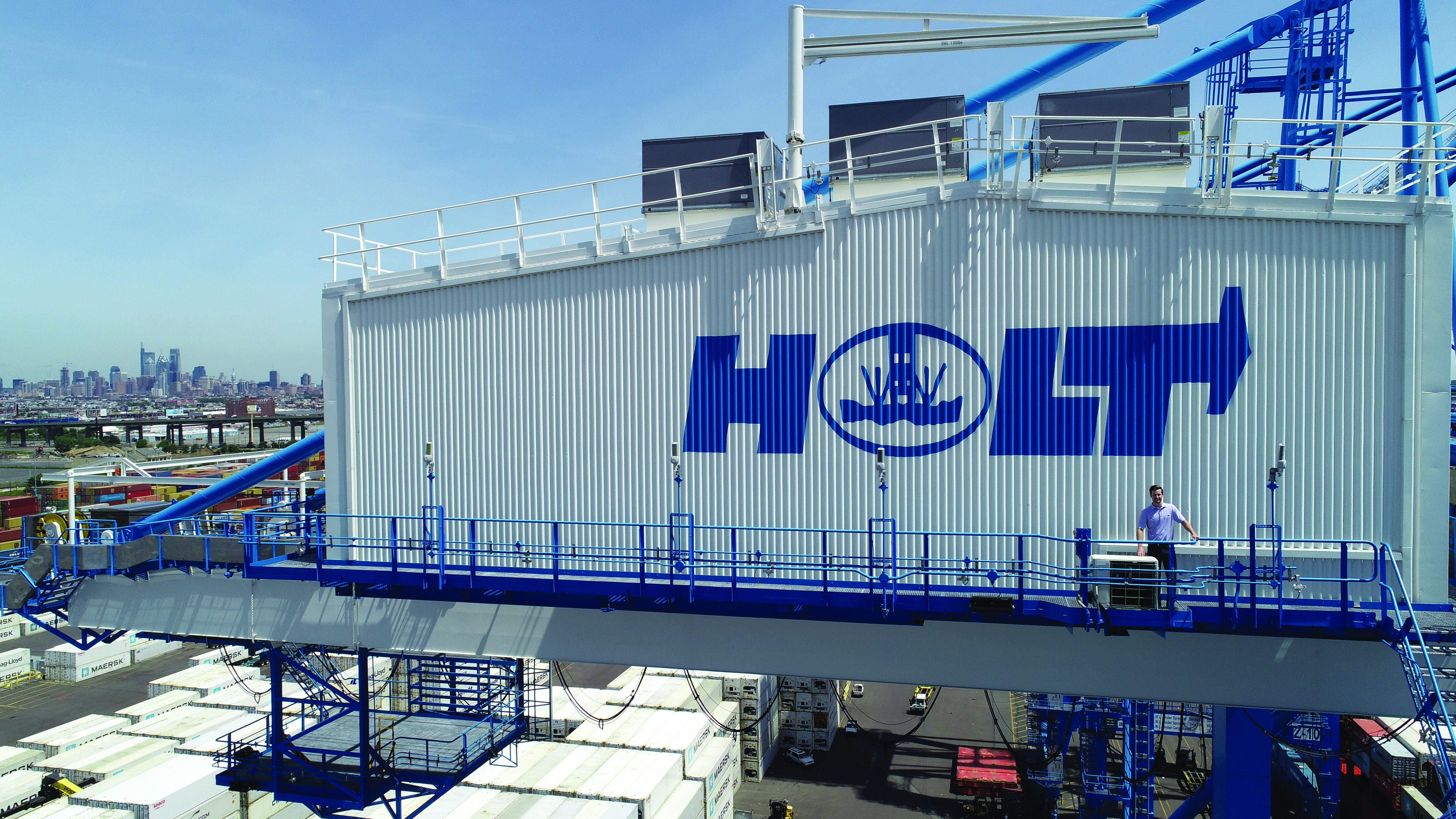
Perhaps the most visible symbol of that investment is the arrival of two new ship-to-shore cranes from Liebherr at Gloucester Marine Terminal. Towering above the Delaware River and visible from the Walt Whitman Bridge, the cranes represent a long-term commitment to expanding the terminal's role in containerized cargo.
“These cranes are much more than new equipment,” Holt said. “They are a 50-year asset that will help drive economic growth, expand job opportunities and position Gloucester Terminals for sustained success for decades to come.”
The crane project is part of a broader terminal transformation. Once recognized primarily as a breakbulk facility, Gloucester Marine Terminal has evolved into a hybrid operation capable of efficiently handling both breakbulk and containerized cargo.
“The only way to sustain growth, increase efficiency and deliver value to customers is to invest capital back into the business and its people,” said Holt.
Over the past several years, Holt has invested tens of millions of dollars in terminal infrastructure, including more than 1,000 additional on-dock refrigerated container plugs, demolition of more than 350,000 square feet of obsolete warehouse space, complete terminal paving, and new inbound and outbound gate systems that have increased capacity while improving the customer and trucker experience.
Among the most significant additions are new on-dock Insta Frío chambers, which extend the shelf life of delicate fruits and vegetables and provide produce importers with another value-added service at dockside.
Packer Avenue Marine Terminal has also continued expanding its refrigerated capabilities. Today, the terminal offers more than 4,200 on-dock reefer plugs — the largest concentration in the United States — allowing refrigerated containers to move quickly through the terminal while maintaining an unbroken cold chain.
Both terminals continue welcoming new business from existing and emerging trade lanes and have capacity to accommodate additional refrigerated cargo growth.
 Another major milestone is the completion of the PhilaPort Distribution Center-Cold, a state-of-the-art refrigerated and frozen warehouse located less than five minutes from Packer Avenue Marine Terminal.
The Class A facility is designed specifically for high-value perishables and is currently being outfitted with racking that will provide more than 26,000 temperature-controlled pallet positions.
“The building provides a perfect strategic location for fresh and frozen products that is close to the port and close to the population centers where those products are headed,” said Holt.
Its proximity to the marine terminal creates one of the fastest cold-chain logistics systems on the East Coast. Reefer containers can be discharged, inspected by U.S. Customs and Border Protection, cleared through the terminal and delivered to the warehouse in record time.
“There is now a home for additional growth, and new customers are walking through the building every week,” Holt commented.
Competitive advantage
Philadelphia's competitive advantage extends beyond physical infrastructure. Holt points to the Delaware River's unmatched perishables ecosystem, including access to more than 50 nearby refrigerated warehouses, the nation's largest concentration of USDA-certified import inspection houses, and a modern on-dock Customs inspection facility that significantly accelerates produce inspections.
Those assets have helped Philadelphia become the country's leading food port despite being smaller than many competing gateways.
“Philadelphia has become the No. 1 destination for food products, particularly perishables,” said Holt. “Importers need speed without compromising quality, and Packer Avenue Marine Terminal delivers that better than any port in the country.”
International recognition
That performance continues to earn international recognition. For the third consecutive year, the World Bank's Container Port Performance Index ranked Packer Avenue Marine Terminal as the most efficient container port in North America.
The region's strategic location further strengthens its value proposition. More than 56 million consumers from Maine through Washington, D.C., can be reached within 24 hours by truck or rail, while direct access to multiple Class I railroads provides room for continued cargo growth.
Produce imports remain one of the port's strongest growth sectors, with refrigerated container volumes increasing at double-digit rates year after year.
At the same time, Holt continues to pursue new international carrier relationships and additional trade lanes.
While a direct Asian container service has not yet been secured, company officials believe ongoing investments by Greenwich Terminals and the Commonwealth of Pennsylvania position Packer Avenue Marine Terminal to accommodate several thousand additional container lifts annually as new services develop.
Sustainability is another major component of Holt's long-term strategy, according to Holt.
At Gloucester Marine Terminal, more than 33,000 solar panels now generate renewable electricity for warehouse operations, while the company has transitioned much of its forklift fleet to electric power.
Additional investments include more than 3,000 linear feet of electrified berths, new electric cargo-handling equipment and the conversion of four Post-Panamax cranes from diesel to electric power.
Together, those projects are reducing emissions while supporting the growing cargo volumes moving through the Delaware River complex.
Continued expansion
Looking toward the end of the decade, Holt envisions continued expansion of refrigerated cargo volumes supported by larger vessels, expanded terminal capacity and one of the most comprehensive cold-chain logistics networks in North America.
With a century of experience behind it and major infrastructure investments continuing across its terminals, Holt believes it is well positioned to support the next generation of growth for produce importers, exporters and the fresh supply chain as it moves into its second century of operation.