Breeding the future of berries
Breeding the future of berries
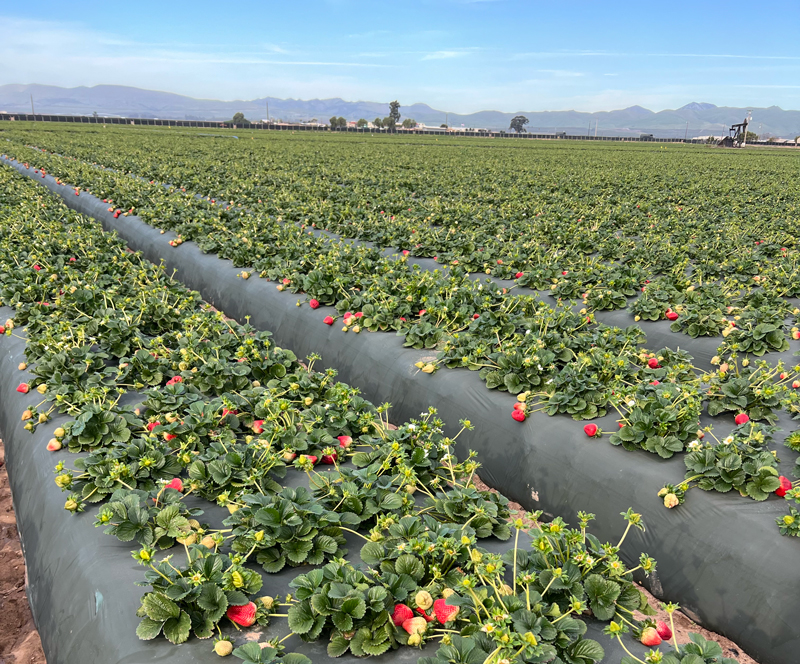
In berry fields around the world, rows of strawberries, raspberries and blackberries represent decades of careful breeding, research and innovation. Plant Sciences Genetics (PSG) is helping drive that progress—building on a family legacy that began with applied science and has evolved into an advanced berry genetics company serving growers and marketers across diverse production regions worldwide.
CEO Steve Nelson says the company’s story began in the 1960s, when his father and company founder, Richard Nelson, earned his master’s degree in apiculture at the University of California, Davis.
“He got the opportunity to intern at a lab and realized that if he truly wanted to be a contributor in the field, he needed more schooling.”
Richard returned to UC Davis for a doctorate in entomology, where he was profoundly influenced by his professor, Frank Strong, who deepened his passion for the field.
“My dad specialized in managing genetic resistance in twospotted spider mite populations to commonly used miticides. He later helped introduce the predatory mite Phytoseiulus persimilis to the strawberry industry, making it a cornerstone of integrated pest management for twospotted spider mite control,” Steve said.
 When Richard graduated in 1969, two paths diverged in front of him as he received job offers that would define the rest of his and his family’s life: one across the country as an entomology professor at Cornell University in New York, or a second, much closer to home in Watsonville, as an applied research entomologist with Driscoll’s.
“He felt very aligned with Driscoll’s vision and was attracted to the people and intrigued by their ambition,” Steve said.
Richard spent nearly 20 years with the company before resigning in March 1985 to start Plant Sciences, Inc. (PSI).
“At the time, my brother Mike and I were crop science majors, and our sister was a home economics major at California Polytechnic State University,” Steve recalled. “My dad called and said, ‘Well, yesterday I had a great job and three kids in college. Today, I just have three kids in college.’”
While Richard walked away from his role in search of new entrepreneurial pursuits, he took with him a network of relationships that would fuel the company’s first steps toward success.
“Our initial foundation was contract research. We conducted research on behalf of leading ag chemical companies, including efficacy trials, groundwater and environmental impact studies, worker safety studies and plant metabolism research,” Steve said.
After Steve graduated from Cal Poly with a degree in crop science, later going on to earn a master’s degree in plant biology, his dad invited him to come home and help out for the summer.
“He was wise in how he asked,” Steve said. “If he had asked me to come home and help him for the next 40 years, I probably would have run the other direction. But the summer seemed doable, so I accepted.”
Eventually, Mike graduated and came home “for the summer” as well, later going on to complete his doctorate in plant pathology at UC Davis.
Steve said these early years gave them invaluable experience learning how to conduct rigorous science. “With the expectations of not only the companies we were serving, but also federal agencies that audited our work, we learned early on how to set up trials and gather meaningful data—data that’s essential for making sound decisions in plant biology.”
During this time, Richard’s berry background at Driscoll’s came full circle when he was approached by WellPict Strawberries owner Tim Miyasaka, who would become PSI’s first customer and a major contributor to its early strawberry and raspberry breeding efforts.
Although Richard had worked at Driscoll’s, he did not have plant breeding experience. To address that, he arranged for Steve to meet with UC Davis Professor Royce Bringhurst, one of the most renowned plant geneticists and influential figures in strawberry breeding at the time.
“That sounded like a tall order—sending your 22 year-old son to meet who was considered ‘Mr. Strawberry,’” Steve laughed. “He took me into the lab and showed me how to make cross-pollinations. He explained the full process, from crossing and seed extraction to germination and selection. He basically gave me a four-hour crash course in plant breeding of strawberries.”
At one point during the tour, Bringhurst disappeared into the back of a dimly lit cooler in an old barn and emerged with a crate. Inside the crate were reference plant samples of publicly available varieties. Handing it to Steve, he said, “I hope your career is half as rewarding as mine has been,” and wished him the best of luck.
Not knowing exactly what to do next, Steve brought the samples home to Watsonville and established a small backyard greenhouse collection to observe how the plants performed.
As regulatory requirements surrounding contract research grew more complex, the family began reconsidering the direction of the business. They ultimately decided to refocus away from contract research, knowing the compliance mandates were not something they wanted to manage year after year. Instead, they chose to double down on plant breeding, propagation and grower support.
Over time, the company successfully built out breeding programs and nursery operations across strawberries, raspberries, blackberries, blueberries—and even artichokes through a partnership with Ocean Mist Farms.
In 2022, the company reached a pivotal turning point when Miyasaka, its original backing partner, decided to sell his business and step away from his involvement with PSI. This move required a complete restructuring of the company. After months of negotiations and planning, the operation emerged in April 2025 as Plant Sciences Genetics—a newly formed company designed to bring its genetics to a broader global market.
Under this new structure, PSG consolidated berry breeding populations and related intellectual property that had previously been managed across multiple entities. The company now leverages that portfolio through an open-market licensing model.
“We don’t sell plants,” Steve explained. “Our strategy is to retain ownership of our genetics and license varieties for authorized production. Growers produce fruit that is marketed through their chosen channels, and royalties are paid to PSG.”
Looking to the future, technology remains a key emphasis for the company. That includes incorporating gene-editing tools such as CRISPR, which can help breeders make precise, targeted changes within a species—complementing traditional breeding approaches.
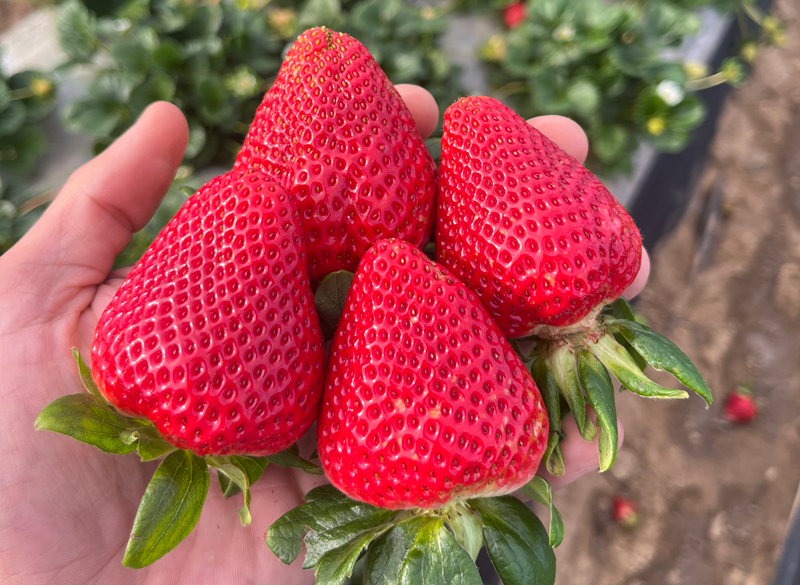
One strawberry already moving through to commercialization is an ever-bearing version of what was previously a short-day strawberry variety, Inspire. A variety well known in Europe for its exceptional flavor and strong post-harvest performance, Inspire reflects PSG’s focus on pairing consumer appeal with traits that help the supply chain—from growers to retailers—deliver a more consistent eating experience.
“When buying strawberries, it can sometimes be hit or miss,” Steve said. “Most consumers typically don’t know what variety they’re buying—maybe they know the shipper or where it was grown, but not much beyond that.”
“But when you buy apples, you can seek out the variety you prefer—Pink-Lady, Fuji, Cosmic Crisp, etcetera. That helps create a more consistent purchase and eating experience,” Steve said. “We want to bring that same reliability to berries by building recognizable, high-performing varieties with consistent quality, flavor and shelf life.”
As global demand for berries continues to grow, so does the importance of innovation in plant breeding. Through expanding breeding programs, global partnerships and continued investment in advanced technologies, Plant Sciences Genetics is helping growers meet the challenges of tomorrow’s agriculture.
What started as a leap of faith has grown into a company whose varieties are planted across a wide range of berry production systems. Looking ahead, Steve says the next chapter is already taking shape.
“We have a growing genetics portfolio across multiple berry categories, and new breeding technologies like CRISPR are expanding what’s possible,” Steve said. “That gives us the opportunity to deliver better-tasting berries and stronger performance throughout the supply chain. It’s an exciting time for us.”