Warm weather bumps up California fig harvest for Herman Produce Sales
Warm weather bumps up California fig harvest for Herman Produce Sales
Warmer March weather in California’s fig orchards has given way to more average temperatures in April, but it’s likely fig harvest will be a bit earlier than normal.
Erik Herman, who packs and sells California figs grown by his family’s farming operation, Specialty Crop Co., said it’s likely the first variety off the trees, Black Mission, will probably be harvesting in late May instead of early June. That crop, known as the breba crop, is fruit that set on last year’s growth wood.
The Specialty Crop Co. was started by Herman’s parents, Kevin and Diane Herman, in 1989. The packing and sales business, Herman Produce Sales, started in 2017. Although SpecCrop grows other fruit and nuts, Herman Produce Sales focuses on figs.
“I would say things are trending in a good direction,” Herman said about the upcoming crop.
As the season progresses from variety to variety, it’s likely that one-week jumpstart will bring each variety to market a week earlier. Typically, the early Black Mission crop harvests for about a month, followed by a gap of about two weeks, with Brown Turkey fig harvest starting around July 10-12. Brown Turkeys ship through November, and sometimes in December, Herman said, along with the main Black Mission crop.
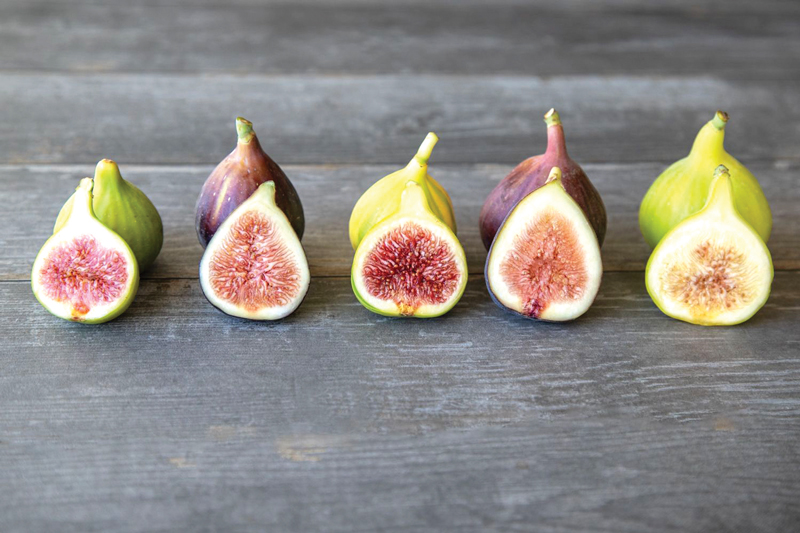
A new variety, Emerald, saw its first commercial season in 2025, Herman said. The variety is self-pollinating and is almost indistinguishable from Calimyrnas, a consumer favorite. Fresh production of Calimyrnas, however, was susceptible to pest damage and required pollination by wasps that sometimes ended up in packaging, and fresh production dropped off about 10 years ago, Herman said.
Availability of the Emerald variety is limited but will grow in subsequent years as the trees mature. The Emerald’s origin is from SpecCrop’s orchards, and the company propagated its own trees from cuttings.
“We’ve got some young orchards and finally I was able to get some fruit, and it was very, very well received,” he said. “It’s a really good eating piece of fruit and people enjoy it. It’s really reminiscent of Calimyrna.”
SpecCrop has planted about 100 acres of Emeralds that were planted several years ago, and the grower added another 75 acres this spring.
SpecCrop continues to plant other varieties, with Brown Turkeys, Sierras and other figs in the past two years, including some trees dedicated to dried fig production. Striped Tiger figs, which bear dark green and light green vertical stripes, are also sought after by some retailers, but production is limited.
“There it’s a demand and a use for Tiger figs, and it has its fan base,” Herman said, “whereas Black Missions and Brown Turkeys are the two big driving forces in fresh fig varieties.”
Herman Produce Sales’ figs are primarily grown in Madera County. The fruit is shipped throughout the U.S. and about a third goes to Canada.
They are available in a wide variety of pack options, including half-trays of 12-, 15- and 18-counts, full trays with 35-, 42- and 48-counts. Clamshells include eight-ounce, 12-ounce, one-pound, two-pound, and some customers request pint baskets (how strawberries used to be packed). There are also club-store packs available.
“You also have the foodservice and wholesalers that want the trays or baskets, and even some retailers want the baskets,” Herman said. “So, there’s quite the spectrum of different packs.”
Packing the delicate fruit is done by hand to avoid damaging the figs.
Foodservice is a big thing for figs as the fruit becomes more mainstream, with chefs offering figs on gourmet pizza, as an item on a charcuterie board and a growing number of innovative ways to incorporate figs into menus and in dishes.