In the Trenches: Labor, service conditions remain a challenge
In the Trenches: Labor, service conditions remain a challenge

Were you recently forced to wait in a long line at the supermarket checkout to pay for your items? How many cashiers were on duty at the time? Why is it that a store has eight to 10 checkouts and only one or two open for customers during busy hours?
Want to know what is happening these days when businesses operate this way? Consumers are starting to respond by quitting those companies and moving on to those that have better services and more available checkouts.
When visiting businesses, whether they are supermarkets, department stores, licensing bureaus, medical offices or service shops, it has become increasingly common to experience significant waiting periods before being able to pay for items or obtain services and leave in a reasonable amount of time. Consumers are frequently confronted with extended lines for services. This is often due to insufficient staffing levels.
For many customers, the greatest frustration lies in completing their purchases and exiting business locations efficiently when there appears to be too few workers assigned to numerous services or checkout counters.
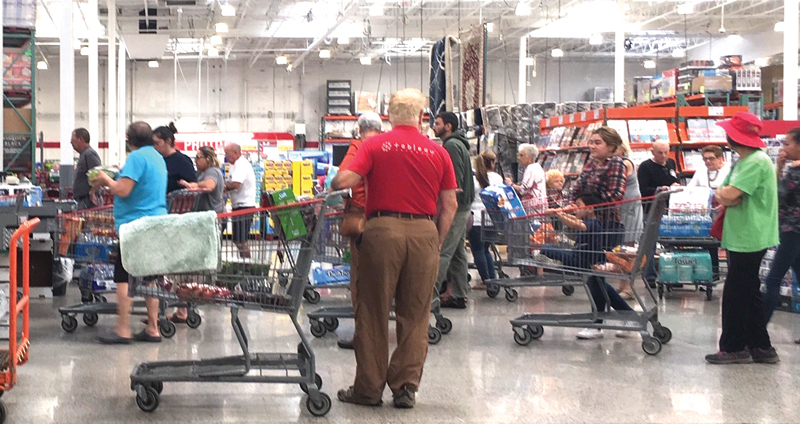
Long line wait times have become common during a period marked by business labor turnover conditions — especially in supermarkets. The pattern of constantly rushing while traveling to destinations only to endure lengthy waits has become widespread these days — and it’s only getting worse.
Whereas short lines at supermarkets were once typical, it is now common to find lines extending into store aisles, with just one checkout lane staffed despite the presence of multiple registers. This raises questions regarding the utilization of existing equipment within retail establishments. The inquisitive question is, why are there eight checkouts and only one occupied? It’s obvious why there are so many frustrated frowns on the people lined up at counters and checkout stands.
Recently, while shopping, I encountered a lengthy checkout line with only one register open. Although several self-scan stations were installed, they remained inoperative. Upon inquiry, customers were informed that these stations require experienced employees, but the supermarket was understaffed at that time due to labor shortages — better known as labor cuts by management.
This scenario highlights current resource allocation issues, as technologically advanced solutions are often underutilized due to those staffing shortages. Customers were obliged to wait regardless of available technology. Many were angrily losing their patience.
The acknowledgment of unstaffed service counters, inexperienced part-time employees, overextended staff and inconsistent management practices has become standard across many businesses.
Workforce reductions often correlate with diminished customer service quality. Industry discussions reveal instances where operational cutbacks directly impact service delivery and client retention. One example involved a produce buyer who, after repeated delays caused by reduced staffing, chose to end their business relationship, demonstrating how such measures can lead to customer attrition.
Frequent interruptions have become integrated into everyday interactions, calls placed on hold, service delays in retail settings and abrupt checkout closures all contribute to a less satisfactory consumer experience. Employees may also express challenges related to staffing shortages, anticipating slower service. This scene can even get worse when employees call in sick or part-time workers don’t show up.
These patterns stem largely from strategic decisions by upper management to reduce personnel numbers, which, in turn, places additional pressure on remaining staff and negatively affects both customer relationships and overall profitability. It physically wears down staff trying to cover more areas than can be handled.
In response, customers are increasingly demonstrating a preference for retailers offering more reliable service alternatives. As a result, companies face heightened expectations to improve operational efficiency and customer satisfaction.
The competitive landscape now encourages businesses to address service challenges proactively or risk losing customers to better-prepared competitors.
Ron Pelger is a former director of produce merchandising and procurement for a major supermarket retail chain. He is currently a free-lance writer for the produce industry supporting growers, shippers, and retailers. He can be contacted at 775-843-2394 or by e-mail at [email protected].