Southern Specialties eyes growth as it stays true to longtime core mission
Southern Specialties eyes growth as it stays true to longtime core mission
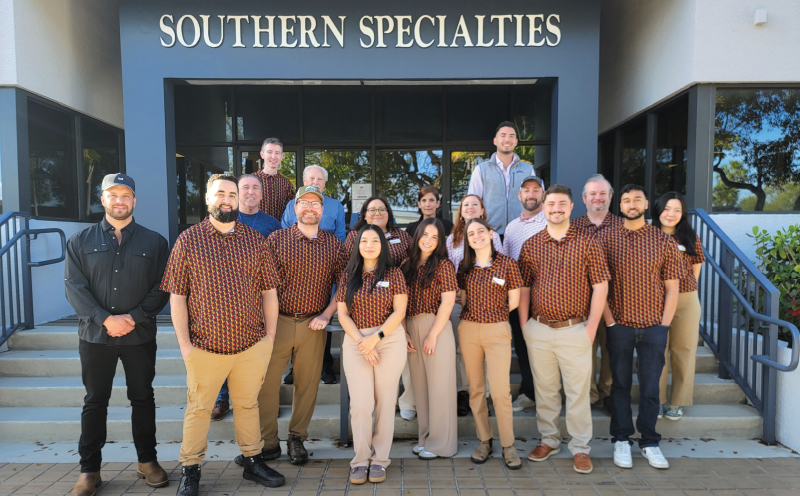
Southern Specialties started out in 1990 as a small operation but over the past 36 years, it has grown to become a major player in Florida’s fresh produce scene. And essential to that growth is its location in Pompano Beach and the important role the city plays in the produce industry.
“Pompano is historically known as a shipping point for fresh produce, fresh fruits and vegetables,” said Charlie Eagle, vice president of business development for Southern Specialties. “Originally, Pompano Beach’s focus was on those products that were grown in South Florida. Today, it’s a key distribution point where products that enter South Florida are grown in South America and Central America.”
The advantages that Pompano offers are excellent proximity to the triad of entry into South Florida—the Port of Miami, Miami International Airport and Port Everglades—which in total control the vast majority of fruits and vegetables entering South Florida for distribution throughout the East Coast and much of the country.
“Product that we distribute probably reaches 80 percent of the population,” Eagle said.
The company got off to a strong start in 2026, though cold weather in Florida affected its green bean program, which it has adjusted to by subsidizing with beans from other sources.
Other products, such as asparagus, are especially important for Southern Specialties.
Southern Specialties started out in 1990 as a small operation but over the past 36 years, it has grown to become a major player in Florida’s fresh produce scene. And essential to that growth is its location in Pompano Beach and the important role the city plays in the produce industry.
“Pompano is historically known as a shipping point for fresh produce, fresh fruits and vegetables,” said Charlie Eagle, vice president of business development for Southern Specialties. “Originally, Pompano Beach’s focus was on those products that were grown in South Florida. Today, it’s a key distribution point where products that enter South Florida are grown in South America and Central America.”
The advantages that Pompano offers are excellent proximity to the triad of entry into South Florida—the Port of Miami, Miami International Airport and Port Everglades—which in total control the vast majority of fruits and vegetables entering South Florida for distribution throughout the East Coast and much of the country.
“Product that we distribute probably reaches 80 percent of the population,” Eagle said.
The company got off to a strong start in 2026, though cold weather in Florida affected its green bean program, which it has adjusted to by subsidizing with beans from other sources.
Other products, such as asparagus, are especially important for Southern Specialties.
“We’re the largest grower and importer of fresh asparagus out of Peru,” Eagle said. “We also, year over year, continue to invest in asparagus fields in Mexico and our seasonal Michigan asparagus program continues to grow and gain traction.”
When the company began in 1990, its focus was growing and importing produce from Guatemala, including beans, baby squash, snow peas and sugar snaps. Today it offers even more products from Guatemala as it serves retail and club stores and food service.
“I think as an industry, we’re going more towards data-driven purchasing and a little less away from relationship-type purchasing,” Eagle said. “We’re also involved in fulfilling more contract-type business than ever before.”
Always seeking new ways to support retailers, Southern Specialties has rolled out a slight refresh of its Southern Select packages.
“We want to continue to offer an exciting landing spot for our Southern Select vegetable items to create the most excitement on the shelf and present the most compelling product for consumers,” Eagle said.
Facing new challenges every year has become the norm in the industry. And in 2026, things like labor, logistics and cost pressures are causing companies to make constant adjustments. The Southern Specialties team has been addressing those challenges through efficiency.
“That allows us to maintain the margins we need to successfully operate the business,” Eagle said. “It’s no secret that expenses continue to rise throughout all aspects of our business.”
At the same time, opportunities for growth are presenting themselves as consumers are looking to try new items.
“We continue, on a regular basis, to try to identify products that might resonate with our customers and consumers,” Eagle said. “We’re always reviewing seed selection, product categories and packaging. That provides an ongoing evolution for our business model.”
The ability to evolve has been essential to Southern Specialties as it has grown over the last few decades, but at the same time, the company has stayed true to its longtime mission to provide customers with the highest-quality specialty produce. Eagle credits that success to the company’s founder, Robert Colescott.
“We have a leader with great vision,” he said. “Robert drives the bus on many aspects of the business, and his vision continues to create a path for moving forward. We started out with a single office on the Pompano Farmers Market, and today we have about a 180,000 square-foot facility that offers ideal storage for those products that we bring to market, a packaging facility for our Southern Select line, computer-controlled ripening rooms and a company that offers third-party services to enhance the value that we bring to our customers.”