Morada Produce expects ‘really good’ California cherry season
Morada Produce expects ‘really good’ California cherry season
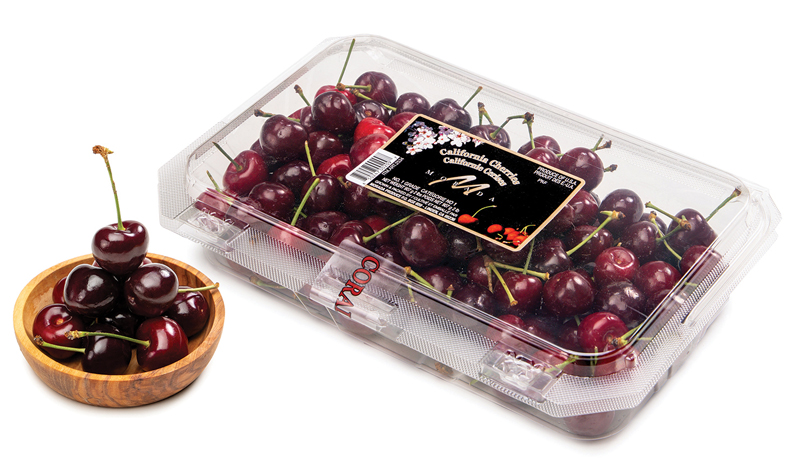
Situated in California’s fertile San Joaquin County, Morada Produce has built a strong reputation as a reliable packer and shipper of cherries.
“Cherries are a major part of our overall business,” said Mike Jameson, director of marketing, who has been involved in the cherry industry since the late 1980s. “In a good year, we’ll pack just over 2 million boxes, and that puts us right in the mix with the top handlers in California.”
That growth represents a significant evolution for Morada Produce, which entered the cherry category in 2003 with roughly 40,000 cartons. Over the past two decades, the company has steadily expanded its footprint and now supplies customers across the United States and around the world.
“Our customer base is heavily retail-driven, both domestically and internationally,” Jameson said. “We work with all the major chains in the U.S., a large percentage of regional retailers, as well as major customers in Canada and global markets.”
One of Morada’s key strengths is its ability to maintain a consistent supply throughout the California season. By sourcing fruit from multiple growing districts, including the southern, central, northern and coastal valleys, the company is able to offer customers a continuous flow of product from the earliest harvest through the final shipments.
“We have supplies in every major growing region,” Jameson said. “We’re one of the first to start harvesting, and we’re also one of the last to finish in the late districts like Hollister and Gilroy. That allows us to stay with our customers from day one of the season all the way through the end.”
Looking ahead to the 2026 season, Jameson expressed optimism about both crop size and quality.
“It looks like it’s going to be a good crop — not overly large and not small like last year,” he said. “We expect excellent fruit size, strong quality and very good flavor.”
Timing is also expected to play a major role this year, with harvest projected to begin earlier than in recent seasons.
“We’re anticipating starting around April 22 to 25, which is about a week ahead of normal,” Jameson said. “That earlier timing should give us a great opportunity to hit multiple retail promotions, including Mother’s Day and Memorial Day.”
Variety development continues to be a major focus for the company, as the California industry shifts toward newer, high-flavor offerings. While traditional varieties such as Bing and Coral Champagne remain important — with Coral Champagne accounting for a significant portion of the state’s production — Morada Produce is investing heavily in newer selections.
“We’re focused on varieties like Royal Hazel, Royal Lynn, Black Pearl and Rainier,” Jameson said. “These newer varieties offer excellent flavor, size and eating quality. That’s what consumers are looking for.”
He also noted that improvements in growing practices and packing technology have elevated the overall quality of California cherries in recent years.
“Growers are doing a better job producing larger fruit, and packers are using advanced optical sorting systems to ensure consistent quality,” Jameson said. “The end result is a better eating experience for the consumer.”
Despite those advancements, challenges remain, particularly when it comes to timing and competition from other regions. The transition from California to the Pacific Northwest can sometimes create market overlap, depending on the year.
“Some seasons we have a smooth transition, and other years there’s more overlap that can create pressure,” Jameson said. “But overall, California continues to deliver a premium product with very little competition early in the season.”