ESU Korea: Shine Muscat grapes a high-performance premium category
ESU Korea: Shine Muscat grapes a high-performance premium category

When ESU Korea, a South Korean Shine Muscat grower and shipper, evaluated exports to the U.S., the objective was not novelty — it was addressing a gap between a standout consumer eating experience and limited access in mainstream retail.
Historically, Shine Muscat grapes were positioned in the U.S. as a gift-grade specialty item with limited distribution and premium pricing. While the fruit carried strong brand recognition in Asia, availability stateside was largely confined to niche specialty channels.
“The fruit’s premium image commanded a premium price, but that meant that most consumers weren’t getting the opportunity to try it,” said Stella Seo, director of sales at ESU. “That limits how a category can grow.”
Seo said the Shine Muscat program was designed to reposition the variety as a mass-premium green grape alternative, offering superior eating quality while aligning with mainstream retail pricing strategies that support trial, repeat purchase and category velocity.
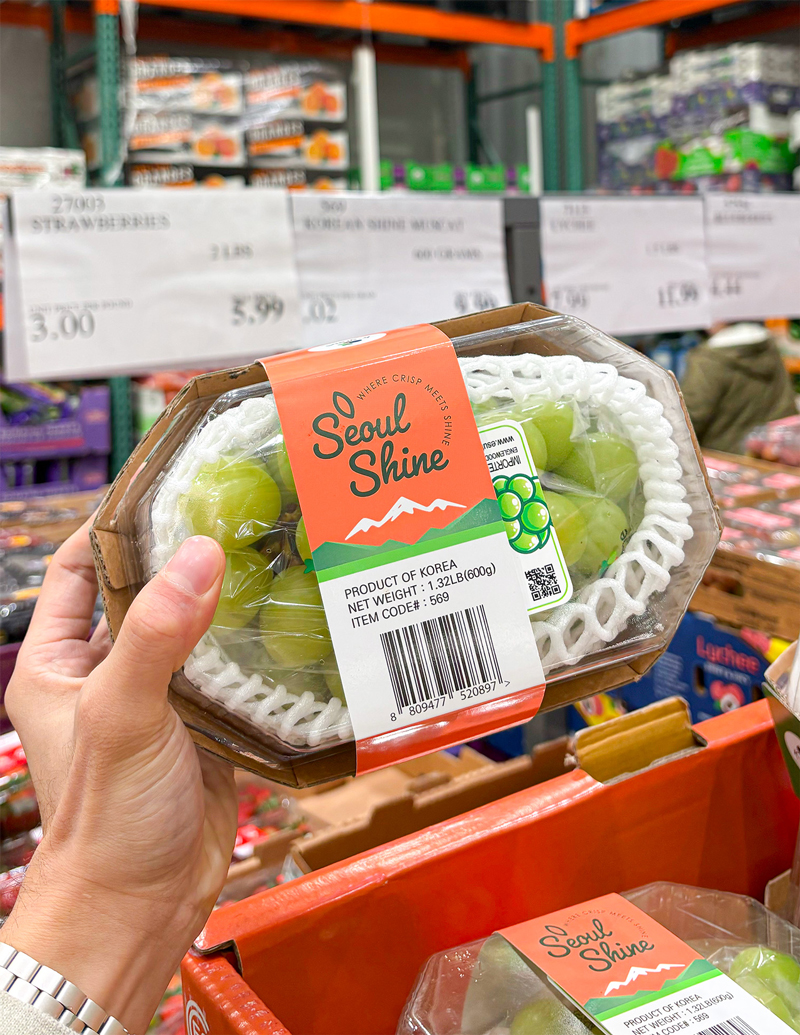 During the 2025 season, ESU’s Shine Muscats launched in select big-box and large-format retailers at price points structured to support volume movement and repeat demand. According to ESU, the shift was driven by operational efficiencies rather than quality tradeoffs.
“This was really about leveraging advanced production systems and export-focused logistics in South Korea,” said Danny Yi, director of procurement. “We have a very disciplined growing and packing procedure, which allows us to maintain consistency at scale.”
From a product standpoint, ESU’s Shine Muscats deliver on key retailer priorities: premium packaging, seedless berries, firm texture, high Brix levels, large berry size and a distinctive aromatic profile that differentiates the variety from standard green grapes.
Supply reliability has been a core focus of the program. ESU Korea has built long-term partnerships with South Korean growers and agricultural organizations, including formal cooperation with the Korea Grape Export Association (K-Grape), supported by coordinated export programs from South Korean agricultural agencies.
“That level of alignment gives us long-term consistency and reliability,” said Daniel Lee, director of strategy at ESU.
A major milestone came in late 2025, when Summit Produce, ESU Korea’s distribution partner, launched ESU Korea’s Shine Muscats into a national big-box retailer program.
“That was a huge validation moment,” said Franco Pruzzo, general manager of Summit Produce. “We are now in talks with our Tier-1 retailers for the upcoming season.”
Early performance has been strongest in major metropolitan markets such as New York and Los Angeles, driven by high consumer awareness and diverse shopper demographics. ESU expects geographic expansion to continue as the brand gains wider exposure.
“This isn’t a trend grape,” Lee said. “It’s built for long-term retail demand.”
Looking ahead, ESU Korea expects increased volumes during the October–March export window, alongside continued expansion of its grower operations and U.S. distribution footprint.
“For us, this is about more than these premium grapes,” said Tommy Suh, CEO of ESU. “It’s about building sustainable premium categories — not one-off programs — by pairing exceptional product with disciplined execution. And we’re just getting started.”
For more information on ESU’s Seoul Shine Muscat program, contact Daniel Lee at [email protected].