Doreva Produce leans into growth as sweet potato momentum continues
Doreva Produce leans into growth as sweet potato momentum continues
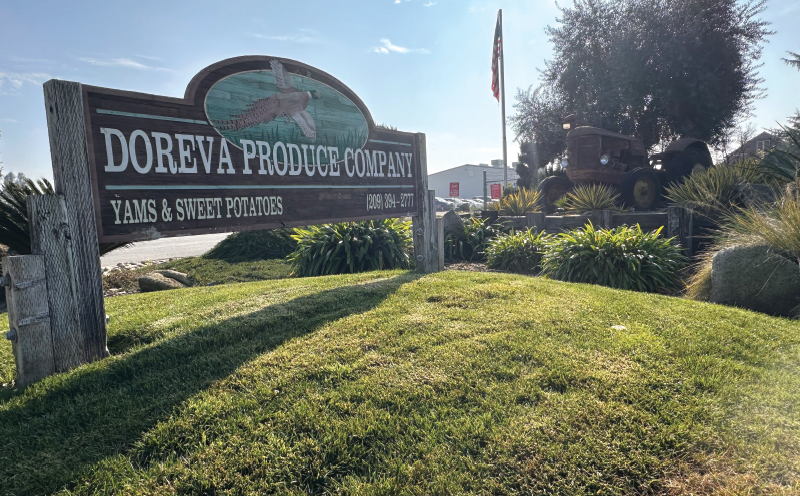
After several turbulent years for the foodservice-driven sweet potato industry, Doreva Produce Co. Inc. is entering 2026 with renewed strength and a sharpened focus on retail growth, specialty varieties and next-generation automation.
For Benjaman J. Silva, the company’s longtime leader, the story of the past year has been about resilience meeting opportunity.
“Business has rebounded dramatically since the post-COVID slowdown, when foodservice sales cratered and many California growers were forced to rethink operations,” he said. “We were down a good 15–20 percent on the foodservice side, and now much of that business has all come back—and then some.”
Located in California’s Central Valley, once home to more than 20,000 acres of sweet potatoes before acreage tightened sharply, Doreva has been one of the operations absorbing demands as other growers exited or shifted crops.
“We’ve had some pretty tremendous growth spurts,” Silva said. “We picked up some of the slack for growers who called it quits or moved out of California.”
With that in mind, the company has seen consistent double-digit increases year over year, and that momentum is expected to continue.
“Post-COVID, we’ve seen at least 10 to 15 percent growth year over year,” Silva said. “For a small niche market like sweet potatoes in our area, that’s really good.”
While demand across the category remains solid, the strongest gains for Doreva have come from retail.
“That’s the area we’ve concentrated on the last couple of years,” Silva said. “Wholesale buyers have become increasingly price-sensitive, making retail a steadier and more strategic channel.”
Organic sweet potatoes remain one of the company’s healthiest growth engines.
“Our organic program is something we’ve been focusing on for the last 15 years or so,” Silva said. “We see organic year over year with at least an 8 to 10 percent steady incline.”
Additionally, value-added items—particularly microwavable formats and steamer bags—continue to generate interest as consumers look for convenience. Specialty varieties, however, are where demand truly spikes.
“Our oriental and purple varieties are extremely strong,” Silva said. “We can’t keep some of those in inventory very long. Once they’re packed, they’re gone the same or next day.”
While the traditional orange, red, and white types remain staples, retailers are increasingly leaning into these differentiated offerings to stand out.
Looking toward 2026, Silva noted Doreva’s single biggest initiative is exploring automation—both in-field and in the packinghouse. But sweet potatoes present unique challenges.
“Our commodity isn’t round like an orange,” he said. “They are irregularly shaped. It’s hard to pack that in a fully automated platform.”
California buyers also expect a cleaner, more premium look than what’s typical in Eastern markets, making precision even more important.
Silva is paying close attention to emerging robotics and packing-line technologies that could reduce labor demand without compromising quality.
“You see these packing lines that don’t require 30 or 40 people—maybe five or 10 doing oversight while automation does the work,” he said. “That’s the biggest thing we’re trying to transition into going into 2026.”
When it comes to success in the category, there’s no great secret.
“I don’t care if it’s sweet potatoes or any other category, you’ve got to show up to work with a positive attitude,” Silva said. “You’re trying to help your buyers because they’re trying to help their customers. Persistency is the key.”
It’s a philosophy that has clearly shaped Doreva’s comeback and its expansion. With strong retail demand, booming organic interest and a forward-looking approach to automation, the company is positioned to remain a leader in California’s evolving sweet potato sector.