Key industry associations meet to exchange views on cut flower market
Key industry associations meet to exchange views on cut flower market
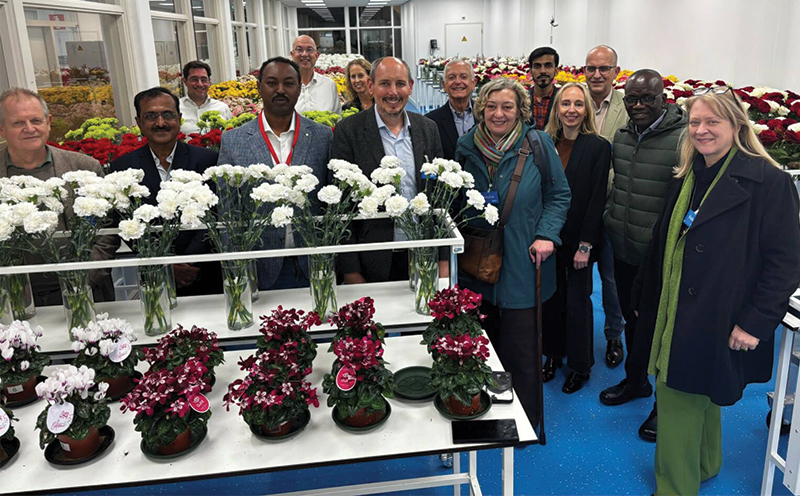
Senior presidents and CEOs from global cut flower industry associations met at Chrysal International BV in the Netherlands to exchange perspectives on market developments and strengthen collaboration on issues shaping the future of cut flower production, trade and consumption.
The meeting, held Nov. 3, 2025, in Naarden, brought together senior representatives from AIPH (International Association of Horticultural Producers), Union Fleurs (International Flower Trade Association), grower and wholesaler associations, and industry suppliers from Africa, Asia, Europe and Latin America.
Global challenges prompt dialogue and collaboration
Participants reviewed the range of challenges facing the sector worldwide, including rising production and transportation costs, climate change impacts, increasing plant health risks, complex regulatory environments and geopolitical uncertainty. Delegates noted that these interconnected factors continue to disrupt the cut flower market and place pressure on operators throughout the supply chain.
“The challenges facing flower producers today are interconnected and increasingly global,” said Tim Briercliffe, secretary general of AIPH. “None of us can tackle plant health, climate pressure or market instability alone. What we saw in this meeting was a genuine desire to collaborate to face these challenges.”
Despite economic uncertainty in key markets such as Germany and the United States, participants agreed that strengthening consumer demand — particularly among occasional and younger buyers — remains critical. The growing market share of artificial flowers was cited as a concern, underscoring the need for proactive communication about the benefits, sustainability performance and emotional value of fresh flowers.
Promoting fact-based storytelling and sustainability
Delegates reviewed initiatives from the Plants & Flowers Foundation Holland, including new consumer campaigns focused on well-being and environmental progress, as well as “issue files” designed to provide clear, fact-based information for media and policymakers. The discussion highlighted the importance of coordinated, proactive messaging to support consumer confidence and continued market development.
Chrysal International also presented its roadmap toward 2040, outlining targets for carbon reduction, recyclable packaging and biobased formulations, reinforcing the industry’s commitment to measurable environmental improvement.
“Sustainability is not optional for our industry — it is essential,” said Remko Muntinga, CEO of Chrysal International BV. “We must reduce our environmental footprint while supporting growers and the supply chain to thrive economically in the long term. Collaboration across the entire flower chain is not just beneficial; it is the only way forward.”
Participants also pointed to the Floriculture Sustainability Initiative as a key platform for aligning industry ambitions and advancing long-term sustainability goals.
Recognizing the role of industry associations
Looking ahead, attendees agreed that continued dialogue and collaboration among umbrella industry associations is vital, while respecting each organization’s distinct role and strengths.
“Industry associations, at both international and national levels, each play an essential role that benefits the industry as a whole,” said Augusto Solano, executive president of Asocolflores and president of Union Fleurs. “They address issues of common interest and cross-cutting challenges with a clear vision and long-term perspective, and they must continue to be actively supported to deliver meaningful impact for the industry.”