Forrence Orchards finds strength in quality, consistency and new variety growth
Forrence Orchards finds strength in quality, consistency and new variety growth
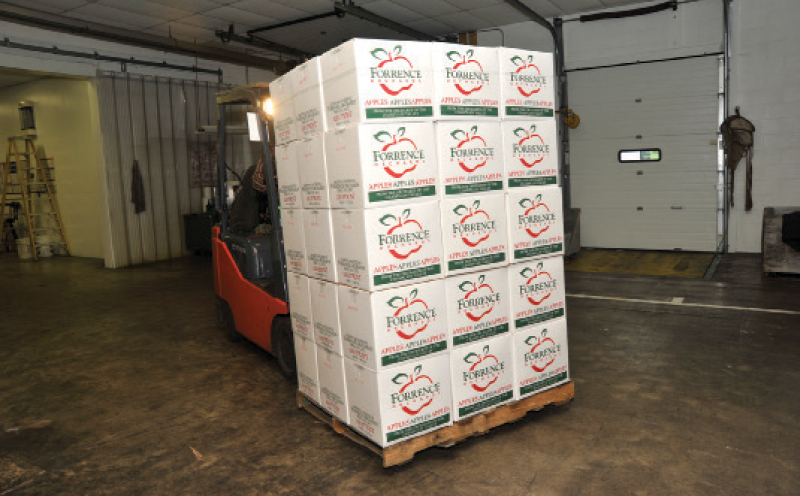
Forrence Orchards, one of the premier apple growers in New York’s Champlain Valley, started growing apples in 1833. The fourth-generation company grows approximately 500,000 to 600,000 bushels annually.
As growers and packers, the company deals in McIntosh, Cortland, Empire, Paul Red, Delicious, Gala, Ginger Gold and Honeycrisp apples.
The company is entering 2026 with cautious optimism, steady demand and a renewed focus on efficiency as the industry navigates tight margins and shifting market pressures.
“The new year brings a mix of bright spots and challenges, but overall there is a sense that movement is healthy and some key varieties are showing encouraging momentum,” said Henry Forrence, packinghouse manager and a fourth-generation family worker for the Peru, NY-based company. “The Honeycrisp price has improved. It hasn’t improved a lot, but it has improved a little, which is good.”
Stronger movement is helping set a positive tone early in the year.
“Some of the newer varieties — SnapDragon, Wild Twist, RubyFrost — have seen increases in volume, which is good,” Forrence said. “There’s excitement there. Some of the heritage varieties continue to move well too.”
Like many New York growers, Forrence Orchards benefits from the natural advantages of the Champlain Valley, a region known for cool nights, slow fruit maturation and consistent color development. Those conditions give local apples a distinctive edge in flavor and appearance.
“I think we have a superior flavor profile that really shows up in some of the higher-quality SnapDragon and Honeycrisp we grow,” Forrence said. “We also have superior coloring conditions. Color is usually not something we struggle with, and that allows us to be more successful day-to-day when we’re packing.”
Retail behavior in the apple category remains heavily influenced by Honeycrisp supply and pricing. Forrence, who doesn’t deal directly with retail buyers, still sees clear patterns.
“One thing that’s pretty obvious is that when there are Honeycrisp around, it has a downward effect on the rest of the category,” he said. “The dominance of the variety can affect pricing expectations and retailer decisions across the board.”
Forrence Orchards’ long-standing customer relationships are rooted in dependability, especially in fulfilling orders on time and meeting the exact specifications buyers require.
“You’ve got to be able to satisfy the orders,” Forrence said. “That’s my challenge on a day-to-day basis. You’ve got to be able to get customers what they want. If you don’t, somebody else will. You’ve got to figure out how to get the job done.”
As a multigenerational family operation, Forrence Orchards relies on a century and a half of accumulated knowledge to guide its decisions, but that experience is balanced with the understanding that growing apples remains both a science and an art.
“You have a breadth of experience to draw from,” Forrence said. “There are parts of the business that are regimented, so we know what to do. Then there are parts that are more art than science. Thinning is the best example. There are so many factors involved that you really have to hope you get it right. Thankfully, with years of experience, we usually do.”
Technology is playing a growing role in operations as well, particularly as new varieties demand more precise packing standards. Forrence noted that the company is “mildly satisfied” with its investment in a TOMRA external and internal grading system.
“The internal system does work and is a necessary part of the process now that we’re packing more of the newer varieties,” he said. “You need to feel confident that when you put that product out there, it’s going to get to the shelf in a way that’s satisfactory for the customer.”
Forrence believes 2026 will be another with tight margins and careful cost management.
“Managing costs is a big part of what we’re doing right now,” he said. “It’s very tight. The pressures on the industry are real and there’s no easy answer. We’ve just got to make it through as best we can.”