Produce innovation a goal of Sprouts local sourcing team
Produce innovation a goal of Sprouts local sourcing team
Finding new products for its curious customers is one of the pillars that drive the various procurement teams at Sprouts Farmers Market. While this pursuit might seem more suited for the consumer packaged goods sections of the store, the retailer does have a group of produce buyers devoted to the task.
Meghan Diaz, who has been with Sprouts for a decade, heads up the team as senior director of local and strategic sourcing and innovation. She agreed that innovation does look a bit different in the produce department as locally grown, first to market, seasonality and new varieties can be the difference makers. It’s not often that a brand-new commodity enters the marketplace.
Diaz said there is much potential for Sprouts to differentiate in the produce department, and in fact, she and her team are working even at the breeder level for new discoveries. “We are focused on long term growth, increasing produce consumption and finding opportunities to innovate,” she said. “We work with seed companies looking for new varieties and improvements. In fact, I am very excited about some of the items they are working on.”
In the produce breeding arena, Diaz said Sprouts’ innovation focus centers around flavor and the eating experience. She pointed to table grapes as one of the industry’s best success stories. Over the past decade, breeders have come up with many new varieties that delight customers, most of which feature large, crunchy, sweeter berries than were the norm a decade or two ago.
Sprouts can’t take credit for developing these varieties, but Diaz said the grocer does have an early adopter and first-to-market mind set. If the innovation team finds something new, it’s not afraid to move forward. “We are the pioneers,” she said.
She pointed to the Moon & Stars watermelon variety as an example of the work her team does. It is a unique, hybrid watermelon variety known for its dark green rind speckled with yellow “stars” and larger “moons.” It offers sweet, deep and red, flesh with a rich flavor. It is a new variety and is a favorite of home gardeners. The local produce procurement team discovered it at a seed company’s Florida field day trial and loved it. Diaz said they convinced some of their grower partners to trial it and they looked at the results over a two-to-three-year period.
She added that in evaluating the variety for retail sales, it checked all the boxes. “Shoppers buy with their eyes and this variety has a dark, dark green rind with yellow stars and white moons. It has positive attributes for the grower and was good for the supply chain,” she said. “After trialing it, we read the numbers and said go for it.”
Since then, it has become a favorite commodity of its customers. “We were first to market and initially took 100 percent of the growers’ production,” she said. “We now have many growers producing it and we grow and sell it all over the country.”
Diaz revealed that working directly with growers is one of the strengths of her local sourcing team. “We are the grower’s retailer,” she said, adding that their goal is to build a great relationship with the farmers in the field and work as their partners as they try new varieties and attempt to bring them to market.
A very successful example of that work involves a 40-acre organic strawberry farm in Florida, run by a husband-and-wife team. Diaz said that as a small grower operation the couple believed their economic viability required direct sales to the retailer. They couldn’t afford the costs associated with having so-called middle men representation. “My team worked very closely in partnership with them to help them succeed,” Diaz said. “We did not just send them a vendor packet. We were with them every step of the way.”
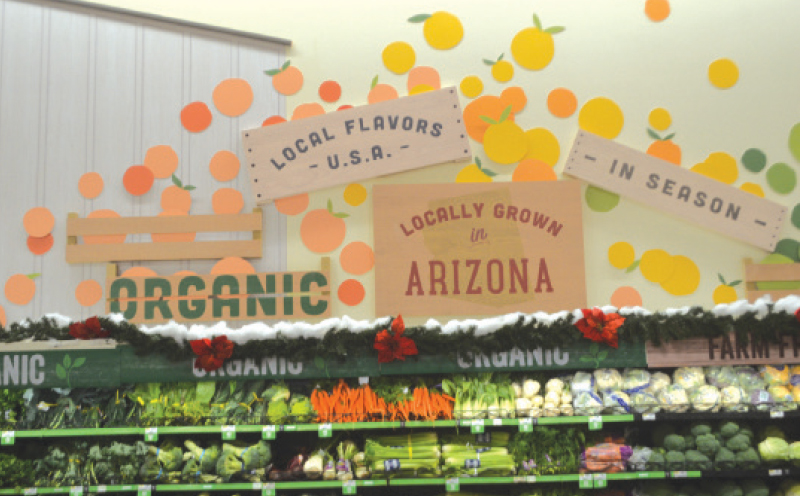
Diaz said even as Sprouts has grown into a coast-to-coast retailer with plans for even greater growth, it is not too big to work with smaller growers. “That is one of our strengths,” she offered. “We are nimble; we can be very flexible. That’s what makes us unique. We can work directly with small seasonal suppliers. In fact, we lean into seasonal opportunities and seasonal events. We love to highlight Peak Season within stores during the local growing season.”
She added that the Farmers Market banner on the storefront is not an idle moniker. It represents Sprouts culture. The chain relishes the connection it makes between its stores and the traditional farmers market feel.
Diaz admitted there are inherent challenges in striving for innovation. “To gets something truly unique, it doesn’t happen overnight. It has to be a labor of love and you have to be focused on the long game,” she said.
To bring it to market, her team has to build the supply chain and create a robust pipeline. All these factors make it especially difficult for fresh produce. “Produce is not an easy thing to master,” she said, noting that is why it is so exciting when it works.
As Diaz and her team go about their job of finding new products, they also keep an eye on food trends. Organics is Sprouts top differentiator in the produce department and Diaz believes the trend toward that sector is as strong as ever. “There continues to be positive momentum in organics,” she said, noting that many suppliers are moving in that direction or at least talking about it. “Clearly our customers prefer it. The demand is there.”
Diaz also noted that sourcing a wide assortment of organic produce has its challenges. “The organic grower’s toolbox (for crop protection) is limited.”
She expects science and technology to come into play to expand that toolbox over time and make it easier for organic production to thrive.
At the store level, Diaz also sees challenges for fresh produce in general. While produce and the other fresh departments at Sprouts are its main customer drivers, the younger generations are not inclined to do a lot of cooking. She said GenZ’s and Millennials are attribute driven and they are always looking for something new. “The best way to attract them is with in-store sampling,” she said. “It’s worth its weight in gold.”
She said utilizing the sampling piece is the best way to tell the story while giving these time-challenged consumers a taste of something new. Diaz noted that Sprouts has found success reaching out to consumers with sampling items such as Autumn Frost and Honey Nut, two flavorful winter squash varieties currently on their produce shelves.
Autumn Frost is a hybrid of butternut and kabocha squash, with a rich, nutty flavor and silky, sweet flesh. It can be used in many dishes, including soups, pies, or roasted as a side. Honey Nut is a cross of butternut and buttercup squash. It has dark tan to orange skin with orange fleshy pulp. When ripe, it turns from green to a deep orange and becomes sweeter and richer. “Sampling is the best way to engage the customer,” she added.
Diaz was very intent on giving a shout out to her own field team as the nuts and bolts behind produce innovation. “It is the people that surround me that is the magic,” she noted. “When you walk in a field with our team, you feel the magic. I’ve got the best job in the world.”