Smith’s Farm values partnerships to help meet year-round demand
Smith’s Farm values partnerships to help meet year-round demand
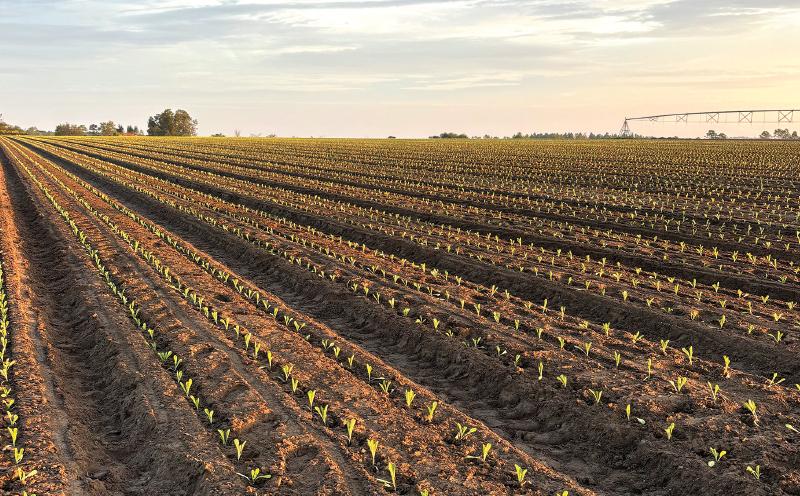
Smith’s Farm, an East Coast grower of broccoli and cauliflower, has a robust program in the Southeast that plays a crucial role in helping it meet the year-round needs of its retail clients.
Tara Smith, President of Smith’s Farms Sales, said the company is currently transitioning to Southeast production from its summer production in Maine.
“We’re coming off a successful Maine season and will have a robust holiday harvest in Georgia for November and December before our Florida deal comes on in late December,” said Smith. “Having production in the Southeast is crucial for us to meet the seasonal needs of our year-round contracts with our customers.”
Smith explained that both the farm and the customer are looking for predictability and reduced risk. Annual contracts on primary volumes for retailers’ best business has changed the landscape for suppliers.
“Most retailers now want contracts to ensure supplies and quality throughout the year, which makes offers on single-season programs more challenging than ever,” she said. “At the same time, no one wants to see the small family farms with their unique seasons be marginalized, and that’s where we come in.”
She said the development of this continuous market readiness is key to Smith’s vision to give its customers access to the best of local, regional seasonal produce.
“We aim to be experts in all of our items, regions and seasons by building collaborative growing outlines that connect regional growing operations to offer seamless transitions to our customers,” she said.
Smith added that growing broccoli and cauliflower in the Southeast is a much different endeavor than growing in the cooler northern climate, and the company has endured trials and tribulations aplenty during the 25 years it has grown in the region. The Smith’s team is now dialed in to best growing practices in the Southeast, but it still relies on the expertise of its partners.
She added that partnerships that make up the network like the one Smith’s has in Georgia and Florida are forged on trust and transparency, as well as being properly aligned on values related to quality and standards.
“Proper communication is really the key,” she said. “Both sides need to be aware of what to expect from each other as well as any challenges that need to be overcome in order to have a productive partnership. This takes time, but if we are aligned on values and respect for the jobs we each have to do, always striving to be better and listening to each other, then success follows.”
Smith’s Farm is building on this foundation to expand the knowledge base throughout its growing network to facilitate growth and create new opportunities.
“We can build into each other’s strengths and take advantage of what we can offer each other, whether it is on the farming side or with making inroads into new areas,” said Smith. “It’s a massive matrix and tough to manage at times, but when it clicks and we get into a groove of helping each other, and ultimately serving the customer with consistent supplies of high-quality product, it’s a beautiful thing.”
Smith said the next growth-related challenges she is facing are on the technical and logistics fronts. She said Smith’s Farm has now fully integrated technology to enhance its inventory and quality-control processes for real-time reports on field conditions across ship points.
On the logistics side, she said Smith’s strategic partnerships and automation are key goals on logistics for the next 12 months.
“Expertise, simplicity and automation are the target investments to reduce costs, create speed and improve accuracy,” she said. “Many of our programs are sold on a delivered basis, so delivery requires the same attention and integrity that we put into our products.”
Regarding the upcoming season in Florida, which runs for 15-16 weeks into April, Smith said everything is lining up for another great season.
“We will be coming off another strong season in Georgia, paving the way for a great season in Florida,” she said. “We have had some strong yields out of Florida the last few years — even last year after having planting delayed by a hurricane — and I’m expecting mor of the same this year. Something I’m especially proud of is that last year in Florida, despite weather challenges to development, we finished with zero quality reductions. Credit for that goes to our talented field managers and crew leaders, and the experienced harvest crews who know what to put in the box. Fall is here, and we are excited and ready to go.”