Industry Viewpoint: Fresh Field Catalyst's innovation and impact
Industry Viewpoint: Fresh Field Catalyst's innovation and impact
As 2025 advances, the Fresh Field Catalyst Accelerator is building momentum. This year’s cohort is pushing boundaries in sustainable packaging, traceability, shelf-life extension and waste reduction. With Demo Day behind us and the Global Produce & Floral Show on the horizon, the program is delivering on its promise to connect technological innovation with the real challenges of the fresh produce and floral industries.
The Fresh Field Catalyst was launched in 2022 by the International Fresh Produce Association to bring innovators, some in early stages of development, others with market ready applications in adjacent industries, into the produce and floral value chain. The mission: accelerate solutions that address the industry’s greatest challenges.
While the produce and floral industry is constantly responding to challenges from extreme weather to resource reduction and management, the emerging regulatory pressures around packaging has come to the forefront. Consumers expect sustainable packaging, governments are enacting bans and retailers are under pressure to reduce waste.
In response, IFPA and The Foundation for Fresh Produce sought partnerships with Clemson University, the Foundation for Food & Agriculture Research and the U.S. Department of Agriculture to create the Sustainable Packaging Innovation Lab with grant support from the USDA’s Assisting Specialty Crop Exports initiative.
The 2025 Fresh Field Catalyst Accelerator was one of three Sustainable Packaging Innovation Lab initiatives this year, transforming the accelerator into an engine of innovation for the industry. The cohort this year includes: Akorn Technology, SAVRpak, Corumat, Kwik Lok, Nat4Bio, NNZ Inv, PakItGreen, PeelON and Sway. Their innovations focus on several critical areas including:
- Sustainable and reusable packaging that can meet import/export regulations
- Traceability systems
- Shelf-life extension and food waste reduction
In addition, webinars and mentorship with industry leaders, along with access to IFPA’s data and analytics, regulatory guidance to support efforts to scale their technology, there were two major events for the cohort.
Immersion Week: a weeklong tour in May of the West Coast, including both field and corporate visits, to see firsthand the realities of operations across the supply chain in produce. These visits provide opportunities to meet experts in roles across organizations to see first-hand the conditions and realities on the ground.
Demo Day: On Aug. 20 of this year, IFPA hosted the Demo Day at Taylor Farms’ office in Salinas, CA. Demo Day is a crucial gathering for the Fresh Field Catalyst Accelerator’s 2025 cohort, a moment when innovators in sustainable produce packaging share their progress with industry leaders, regulators and peers.
Each company delivered a 10-minute presentation followed by a Q&A session, showcasing solutions like compostable films, edible coatings, moisture‐barrier packaging and space-saving designs. The event also features expert panels on regulation, sustainability and scaling new technologies, and is designed to foster partnerships, spark further investment and help these companies move from prototype to commercial impact.
The capstone experience is still to come at this year’s Global Produce & Floral Show in Anaheim, CA, Oct. 16-18. The Fresh Field Catalyst cohort will move from Demo Day into the spotlight, particularly during the What’s New in Tech? session on Saturday, Oct. 18. There, the cohort will deliver a rapid-fire Q&A featuring their sustainable packaging solutions, discussing how they plan to develop, scale and adopt the innovations they’ve been working on.
Beyond that, the cohort members will benefit from access to the expo floor to network with buyers, regulators and supply chain leaders, participating in Food Safety & Tech X-Change sessions and exhibiting in the Tech Accelerator Pavilion, allowing them to showcase their technologies in person and gain exposure to the global produce and floral community.
Looking ahead, the fresh produce packaging industry is at a crossroads: evolving regulatory demands, rising consumer expectations for sustainability and increasing pressures around food safety, product freshness and waste reduction are converging to force change.
Key challenges include designing materials that are both compliant with import/export rules and economical to manufacture; creating packaging that maintains freshness while minimizing environmental impact; scaling innovations from pilot to commercial level; and building supply chains that support compostability, reuse or bio-based materials.
Without a meaningful partnership between industry and innovators, we may not be able to keep up with the changing marketplace pressures. The urgency of the moment could not be more clear.
We look forward to seeing everyone in Anaheim to join the conversation and be a partner in the solution for eliminating single use plastic while maintaining profitability, differentiation and the high quality our consumers come to expect from our products.
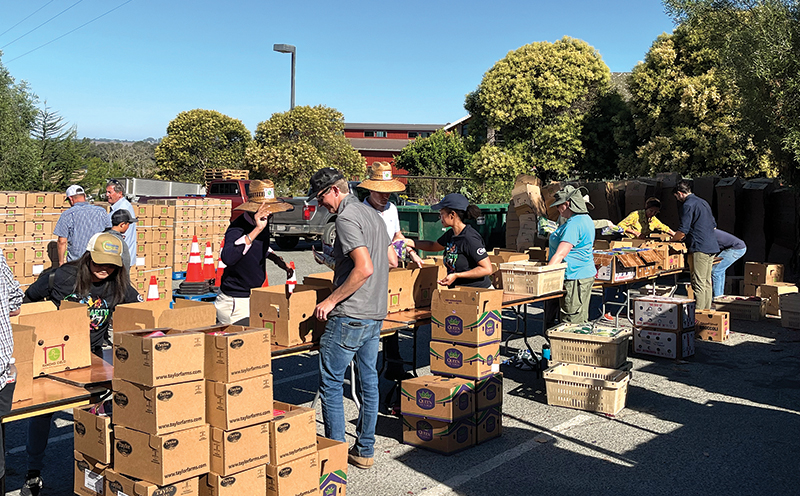
Photo: On Aug. 20 of this year, IFPA hosted the Demo Day at Taylor Farms’ office in Salinas, CA. Demo Day is a crucial gathering for the Fresh Field Catalyst Accelerator’s 2025 cohort, a moment when innovators in sustainable produce packaging share their progress with industry leaders, regulators and peers.