Retail dietitians: The produce industry’s ally for driving demand and consumer trust
Retail dietitians: The produce industry’s ally for driving demand and consumer trust

At first glance, the fresh produce industry and retail dietitians may seem to be operating in separate worlds. One operates at the scale of global supply chains, logistics and category sales. The other connects directly with consumers in the aisles, guiding them toward healthier choices.
The two groups operate along parallel paths, both driving produce consumption, yet their interactions remain infrequent or nonexistent. When they do connect, however, we discover that at the intersection of these two worlds lies an untapped and powerful opportunity: retail dietitians, already a trusted resource for consumers, can be transformative allies in driving fruit and vegetable consumption at scale.
This is why The Foundation for Fresh Produce brings together 20 retail dietitians for an immersive experience at the International Fresh Produce Association’s Global Produce & Floral Show each year. This October in Anaheim, CA, retail registered dietitians will explore the full spectrum of the produce industry — from consumer trend insights and global trade dynamics to guided visits with innovative suppliers. By the end, participants will be uniquely equipped to transform these insights into shopper-facing strategies that not only encourage healthier eating but also deliver measurable business impact.
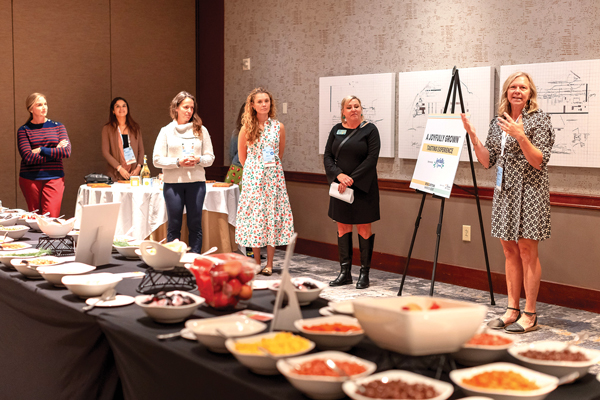
produce to consumers.
RDs bring not only access, but an elevated understanding to consumers as well as the barriers to consumption of produce. Consumers already know that fruits and vegetables are healthy. Surveys consistently find that more than three-quarters of shoppers recognize produce as the most nutritious food category. Yet recognition doesn’t always translate into behavior: 9 out of ten Americans still fail to meet daily fruit and vegetable intake recommendations.
Why the gap? Research shows that taste is the top driver of food choice. Consumers may appreciate the nutritional value of produce, but they buy what appeals to their senses — what tastes good, what looks fresh and what feels satisfying. At this year’s Retail RD Immersion event attendees will participate in sensory science training that reframes fruits and vegetables not only as healthy choices but as crave-worthy ones.
“Health messaging has gotten us far, but it isn’t enough on its own,” said The Foundation for Fresh Produce President Lauren M. Scott. “When RDs can highlight the flavor, texture and enjoyment of produce, they tap into the emotional drivers of purchase — and that’s where we see lasting behavior change.”
From demonstrating how roasting transforms the flavor of Brussels sprouts to spotlighting the crunch of celery or the creaminess of avocado, retail dietitians can bring these sensory insights back to their stores and inspire shoppers to choose produce more often. The role of the RD, in partnership with the industry and professionals like the produce managers, can amplify the value, flavor and genuine feel-good power of fruits and vegetables with consumers.
The IFPA show floor is a living laboratory of produce innovation, and by immersing them through this program RDs become great industry ambassadors. During pre-scheduled booth visits, RDs will meet with growers, shippers and marketers unveiling new varieties, value-added formats and packaging innovations. These encounters often spark the ideas that later come to life in retail promotions.
Think citrus-tasting campaigns, nut-and-fruit pairing stations, or in-store education about local supply chains. Some RDs have the power to go back and say, “I want this apple in our stores and here’s why.”
By bridging what they see at the show with what resonates in their stores, retail RDs act as connectors between suppliers and shoppers. They help translate global supply chain context into local relevance, and in doing so they align with retailer health and wellness strategies while boosting produce category performance.
The impact is measurable. Retail RDs report that campaigns born from supplier partnerships often increase sales during promotion windows and drive sustained interest in produce categories. More importantly, these activations position retailers as trusted health allies — an increasingly important brand differentiator in a competitive grocery landscape.
This alignment between consumer education and retailer business goals reflects a larger truth: Retail dietitians are an underleveraged asset in advancing both public health and produce industry growth.
The Foundation for Fresh Produce emphasizes that the greatest barriers to fruit and vegetable consumption are not just about access but also appeal and attitudes. Retail RDs are uniquely positioned to influence all three. They can advocate for increased availability of fresh produce in retail settings, elevate the appeal of fruits and vegetables through sensory education and positively shape consumer attitudes about incorporating more produce into daily diets.
By equipping retail RDs with global context and supplier connections, the foundation’s Retail RD program helps unlock this potential. When they return home, dietitians bring more than just new knowledge; they carry the tools to design programs that inspire shoppers, support retailer objectives and most importantly encourage people to eat more fruits and vegetables.
For produce suppliers and retailers alike the return on investment in retail RDs is clear. Shopper-facing campaigns informed by RDs can increase sales, elevate brand equity and build shopper loyalty. At the same time, they serve the broader mission of improving human health by helping consumers overcome barriers to fruit and vegetable consumption.
This is where business goals and public good align. As the foundation reminds us, eating more produce is one of the simplest and most powerful steps individuals can take to improve their health. By positioning retail RDs as key partners, the produce industry can accelerate both measurable ROI and meaningful impact on global health.
The 2025 Global Produce & Floral Show represents more than an event; for businesses and individuals alike it is a catalyst. For retail RDs it’s a chance to step beyond the health aisle and onto the global stage of the produce industry. For suppliers and retailers it’s a reminder that the most powerful advocates for fresh produce may already be working in their stores.
Retail dietitians are more than nutrition experts; they are storytellers, strategists and connectors. With the right tools and partnerships, they could become the produce industry’s most untapped ally and a driving force in shaping a healthier, more produce-powered world.
I hope you get a chance to meet them at the Show in October.