Ideal conditions bring record-matching Washington apple crop forecast
Ideal conditions bring record-matching Washington apple crop forecast

The Washington State Tree Fruit Association is forecasting a record-matching 2025 Washington fresh apple crop of 142-million 40-pound boxes, with Cosmic Crisp breaking into the top five varietals.
Whether the entire crop will be harvested, however, is unknown, with growers pointing to the possibility of labor shortages and market conditions driving the number down, according to the WSTFA.
 The high production forecast comes despite a record drought in Washington that cut water supplies to some orchards, according to the association. WSTFA President Jon DeVaney said the current forecast matches the state’s record fresh apple crop in 2014, but West Coast port shutdowns left growers without the ability to reach some markets, so production was actually higher than fruit utilization.
Growers reported ideal growing conditions, a welcome reprieve over the past two seasons. Extreme cold cut production in 2023 and extreme heat in summer 2024 affected that fall’s crop,
“Weather conditions have been phenomenal for apple growth this summer, and throughout the growing season,” said Brianna Shales, marketing director at Stemilt Growers, in mid-August. “Harvest is happening slightly ahead of last year on most varieties and size, flavor and color development are strong because of the consistent and not-overly-hot weather we’ve had this summer.”
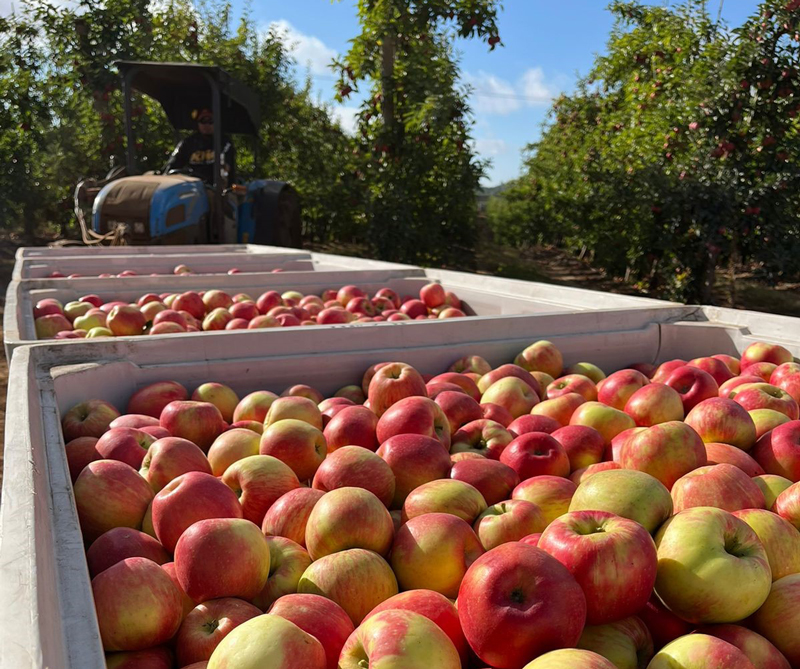
Harvest kicked off in early August with Gala and Honeycrisp, joined by more varieties in mid-August. Pink Lady wraps up the harvest in November.
Catherine Gipe-Stewart, director of marketing at Superfresh Growers, said optimal weather and minimal pest pressure created several months of ideal growing conditions.
“While there were some reduced watering timeframes, which tend to have a greater impact on organics due to the inability to use certain chemical growth applications, organic fruit generally trend toward a smaller size peak regardless,” Gipe-Stewart said.
Dave Gleason, Superfresh Growers horticulturist, said the crop is exhibiting a wide range of fruit sizes.
“While thorough hand thinning will remove most of the smallest fruit, sizing may be more varied than in past years,” Gleason said. “Overall, we expect fruit to be larger than last season. All varieties seem to have this widespread. We will not know the full spread until all the fruit is in the barn in December.”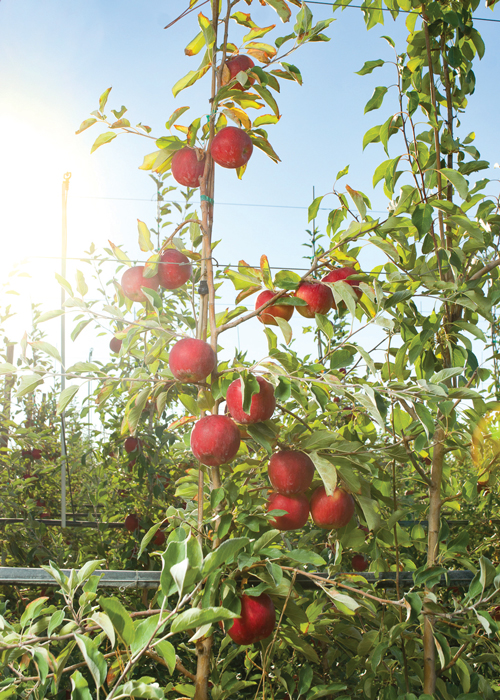
Kaci Komstadius, marketing manager for CMI Orchards, described what conditions bring a robust crop to Washington’s apple orchards: long, warm summers, mild winters, reliable irrigation and steady sunlight.
“This year’s growing season has been especially favorable, supporting strong fruit development and balanced harvest timing,” Komstadius said. “While periods of high heat have occurred, they’ve been brief, minimizing crop stress and protecting fruit quality.”
Top Washington varieties
The WSTFA’s annual forecast puts Gala as the volume leader, at 18 percent of production, followed by Honeycrisp at 15 percent — bypassing Red Delicious and Granny Smith for the first time. Granny Smith production is forecast at 14.7 percent, Red Delicious at 12 percent, and Cosmic Crisp enter the top five at 9.6 percent. According to the association, Cosmic Crisp production was just 1 percent of the state’s tonnage in 2020 and 6 percent in 2023.
Other top apples, in order, are Fuji, Cripps Pink, Envy and Golden Delicious.
The organic apple crop is expected to be 15 percent of the overall crop again. Washington state produces more than 90 percent of the nation’s organic apples, according to the WSTFA forecast.DeVaney said retailers have supported and encouraged the move towards new varieties to meet consumers’ evolving taste preferences.
“We are currently seeing some movement towards fewer varieties in stores as retailers face pressures to control their own operating costs,” he said. “However, the apple category overall remains highly visible and important in produce departments.”
Labor
The WSTFA is working with partner organizations including the Northwest Horticultural Council, the U.S. Apple Association and the National Council of Agricultural Employers to communicate the need for agricultural labor reform and the critical importance of the workforce to Congress and the Trump administration, DeVaney said.
He said there is increasing bipartisan recognition the current isn’t working well for growers or workers and is adversely affecting the competitiveness of American agriculture.“We are encouraged that the president has recognized the importance of the agricultural workforce and has indicated interest in working on solutions,” DeVaney said. “While uncertainty about the nature of these potential solutions remains, this is a valuable opportunity to provide input on our needs and concerns before a proposal is fully formed.”