National Mango Board holds outreach meeting in Brazil
National Mango Board holds outreach meeting in Brazil
PETROLINA, BRAZIL -- As part of an ongoing outreach program with its member countries, the U.S.-based National Mango Board held an informational meeting for Brazilian growers, shippers and exporters, here, Friday, July 25, in conjunction with an agriculture show that took place in the country's top mango-producing region.
In Brazil on an information-gathering trip at the invitation of the country's fruit promotion board, The Produce News was present at the mango board meeting, which was attended by scores of participants. The meeting was conducted by William Watson, executive director of the board, and Isabel Freeland, vice president and chief financial officer of Coast Tropical in San Diego, CA, who is this year's chairman of the board.
Mr. Watson and Ms. Freeland presented a detailed look at the board's multi- faceted promotion, public relations and merchandising effort. Many in the crowd listened to the English presentation with headsets as it was translated into their native Portuguese. Both the board representatives continually commented on the significant progress that the program has made during its three-year life, but they also cautioned that it is a long-term effort that is designed to double mango consumption in the United States within the next five years.
During the question-and-answer period, the crowd seemed particularly interested in how the board allocated the timing of its promotional dollars to make sure that each contributing production area got its fair share.
The National Mango Board collects assessments from importers of mangos from Brazil, Mexico, Peru, Ecuador, Guatemala, Costa Rica and Haiti, as well as any other country that chooses to export mangos to the United States.
Mr. Watson said that the promotion dollars are spent on a quarterly basis designed to match the level of imports. For example, about 15 percent of mango imports come in during the final quarter of the year, when Brazil is actively shipping. Hence, 15 percent of the promotional dollars are spent in that quarter.
Ms. Freeland said that Brazilian exporters are actually the beneficiaries of the heavy promotional time periods, which are in the second and third quarters of the year. About 65 percent of the promotional dollars are spent during those six months, which dovetail into the heavy Brazil shipping period of mid- September through October.
The board chairman said that promotion always has a residual effect, so sales in the late summer and early fall get a big boost from the summer-long promotions.
Mr. Watson told The Produce News that the board had conducted an outreach meeting in Guatemala in early July and would follow this meeting with one in Ecuador later in the year. He said that a meeting has been conducted in Mexico, but considering the many production areas in that country, more regional meetings would be conducted next year.
He said that these meetings are a great opportunity to keep producers informed on a first-hand basis and to hear about their concerns.
While there were quite a few questions and comments made during the formal presentation, Mr. Watson said that he was looking forward to the informal interactions during the reception that followed.
"That's when they really tell you what they think," he quipped.
The meeting here was held in conjunction with Fenagri, a well-attended three-day expo and seminar program held in July each year in the state of Pernambuco, in the northeast part of the country.
Although it is winter in this region, the tropical weather results in daylong seminars held inside an air-conditioned exhibition hall followed by the nighttime exposition held outdoors in a fairground next to the expansive Sao Francisco River.
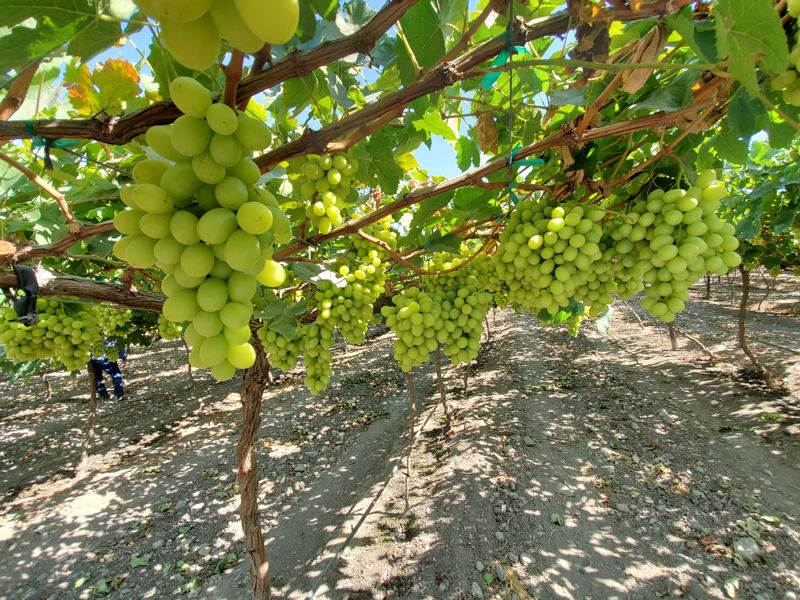
Many well-known companies, including international shipping lines and chemical firms, had large booths among the couple of hundred exhibitors. The vast majority of the country's mango and grape production and exports come from this region.
In Brazil on an information-gathering trip at the invitation of the country's fruit promotion board, The Produce News was present at the mango board meeting, which was attended by scores of participants. The meeting was conducted by William Watson, executive director of the board, and Isabel Freeland, vice president and chief financial officer of Coast Tropical in San Diego, CA, who is this year's chairman of the board.
Mr. Watson and Ms. Freeland presented a detailed look at the board's multi- faceted promotion, public relations and merchandising effort. Many in the crowd listened to the English presentation with headsets as it was translated into their native Portuguese. Both the board representatives continually commented on the significant progress that the program has made during its three-year life, but they also cautioned that it is a long-term effort that is designed to double mango consumption in the United States within the next five years.
During the question-and-answer period, the crowd seemed particularly interested in how the board allocated the timing of its promotional dollars to make sure that each contributing production area got its fair share.
The National Mango Board collects assessments from importers of mangos from Brazil, Mexico, Peru, Ecuador, Guatemala, Costa Rica and Haiti, as well as any other country that chooses to export mangos to the United States.
Mr. Watson said that the promotion dollars are spent on a quarterly basis designed to match the level of imports. For example, about 15 percent of mango imports come in during the final quarter of the year, when Brazil is actively shipping. Hence, 15 percent of the promotional dollars are spent in that quarter.
Ms. Freeland said that Brazilian exporters are actually the beneficiaries of the heavy promotional time periods, which are in the second and third quarters of the year. About 65 percent of the promotional dollars are spent during those six months, which dovetail into the heavy Brazil shipping period of mid- September through October.
The board chairman said that promotion always has a residual effect, so sales in the late summer and early fall get a big boost from the summer-long promotions.
Mr. Watson told The Produce News that the board had conducted an outreach meeting in Guatemala in early July and would follow this meeting with one in Ecuador later in the year. He said that a meeting has been conducted in Mexico, but considering the many production areas in that country, more regional meetings would be conducted next year.
He said that these meetings are a great opportunity to keep producers informed on a first-hand basis and to hear about their concerns.
While there were quite a few questions and comments made during the formal presentation, Mr. Watson said that he was looking forward to the informal interactions during the reception that followed.
"That's when they really tell you what they think," he quipped.
The meeting here was held in conjunction with Fenagri, a well-attended three-day expo and seminar program held in July each year in the state of Pernambuco, in the northeast part of the country.
Although it is winter in this region, the tropical weather results in daylong seminars held inside an air-conditioned exhibition hall followed by the nighttime exposition held outdoors in a fairground next to the expansive Sao Francisco River.
Many well-known companies, including international shipping lines and chemical firms, had large booths among the couple of hundred exhibitors. The vast majority of the country's mango and grape production and exports come from this region.