Depressed market led to new direction for Tanimura & Antle Inc.
Depressed market led to new direction for Tanimura & Antle Inc.
SALINAS, CA -- By the end of May, the largest U.S. lettuce shipper will have cut 40 percent of its top management positions, closed its Mexican growing operation, ceased growing and selling lettuce destined for conventional fresh-cut processing, and greatly reduced its asparagus shipping program.
Rick Antle, president and chairman of the board of Tanimura & Antle Inc., based here, said that five years of depressed prices is the main reason for the surprising moves. "We know this is a cyclical business," he said, "but the troughs are continuing to expand and good times are not lasting nearly as long."
In the meantime, Mr. Antle said that costs are continuing to rise and it is getting much harder to make a profit on a day-to-day basis.
In a wide-ranging interview with The Produce News in early May, Mr. Antle elaborated upon the factors that have changed the vegetable industry dynamic to the point that it is difficult to see a silver lining in the many clouds overhead.
He said that compliance with the new Leafy Greens Marketing Agreement, rising labor rates, and skyrocketing increases in petroleum-based products such as packaging and seeds have caused costs to rise faster than the company's ability to keep up with them through production gains or an increased f.o.b. price. In fact, production gains have probably worked to the industry's detriment, he said.
Mr. Antle explained that the acreage being devoted to Iceberg lettuce has not substantially changed in recent years, but growers have changed their growing practices in many instances that ultimately produces greater yields, or if not greater yields, then better utilization of the crop.
For example, it is a fact that a significant percentage of acreage is devoted to packaged salads. On that acreage, growers typically plant more plants per acre, as the goal is pounds per acre as opposed to perfect heads of lettuce. Not only does an acre produce more pounds, but also those pounds are most likely utilized more efficiently. Mr. Antle said that a head of lettuce sold to a consumer would yield fewer salads than the same amount of lettuce sold in a fresh-cut package. And that fresh-cut salad in a bag is only 85 percent lettuce, with the other 15 percent of the weight being carrots and cabbage.
At the end of the day, it means that America needs fewer carton equivalents of lettuce to make the same number of salads as a generation ago. Mr. Antle said that this is reflected in the market, as there is essentially an oversupply of product on a continuing basis.
T&A has addressed the situation by cutting staff and non-profitable divisions in an effort to reduce costs and "run a tighter ship." It has also reduced its own acreage to meet the demand it perceives is there. Mr. Antle freely admits that the company was top heavy, as it anticipated significant growth and was staffed to handle that growth, which has not come.
Several years ago, T&A merged its fresh-cut business with Ready Pac Produce Co. "because we recognized that you had to be a national player to compete in that business," he said.
As that part of the business disappeared, Mr. Antle said that he fully expected to replace that dollar volume with traditional business as the company refocused its efforts on its core carton business of Iceberg lettuce and other crops. It expanded its growing operations to Mexico, expecting to reap the benefits of lower costs -- especially on the transportation end of the business. Costs were lower, but he said the firm's customers wanted to enjoy those savings. Ultimately, the foray into Mexico did not warrant the expense and the other issues involved in managing operations thousands of miles away.
Although Mr. Antle admits that he is concerned about the future of the industry, T&A does have a strategic plan to survive and thrive in this changing environment. The company is more heavily promoting its products, and it also has launched its artisan line of specialty lettuce products, which are higher-end lettuce varieties that consumers seem to prefer over the standard Iceberg and Romaine heads.
Another corrective step has been the re-establishment of his father, Bob Antle, in the firm's sales office. Bob Antle is a well-respected and longtime member of the industry, who serves as the company's vice chairman but gave up day-to-day responsibility to his son many years ago.
"He has always been in the office on an everyday basis, but he hasn't been involved in sales for a long time," said Mr. Antle. "There are not too many people who know the business as well as he does, so he is going to oversee sales and mentor our staff."
Mr. Antle said that "sales is a lost art," and his father is going to "brush up" the sales staff on some of the finer points of that art. "For example, rule number one is every sale has to be profitable. You don't quote a price below our costs."
He added that T&A would not harvest the crop if the sales price does not warrant it.
When expressing this point, Mr. Antle said that the market unfortunately is often determined by others who may have a lower cost structure or don't have an accurate picture of their own costs. He said that the market price for lettuce for the processors clearly falls into this latter category. The price that processors are paying to growers has dropped below the cost to grow, he said. Hence, T&A will no longer participate in that market.
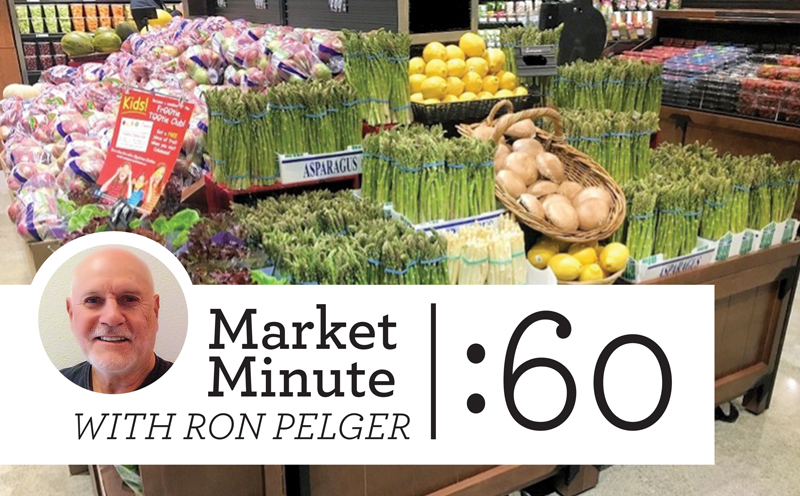
The asparagus deal has the opposite problem. Mr. Antle said that growers control that market, and while the f.o.b. is typically healthy, growers tend to overcontract their production and a bidding war ensues for their daily output. This creates a good situation for the grower, but as a shipper, T&A found that it was not a profitable business. The company does have some of its own production, which it will continue to sell to the fresh market.
Mr. Antle said that there have been some bright spots during the past year. T&A has a one-third ownership stake in Earthbound Farm, the San Juan Bautista, CA-based organic producer, packer and shipper. "The organic business is doing very well," he said. [Earthbound Farm] continues to have double-digit growth every year. We will continue to grow lettuce for the organic fresh-cut business that we do with Earthbound."
The company is also venturing into the local food movement with a new greenhouse operation in Tennessee. The production from that facility will be sold in the surrounding market with the "local" angle emphasized on the packaging.
While Mr. Antle is obviously hopeful that the industry will return to a profitable state, he did not express a great deal of optimism that it will happen without casualties.
"If you look around, most of the companies that were in business when we started T&A in 1982 are no longer around or at least no longer in the shipping business," he said, predicting that a similar turnover will occur over the next 25 years.
Presumably, T&A will survive, but Mr. Antle said that it is very frustrating and "very tiring" trying to make a decent living in current economic times. He said that there appears to be no relief in sight for the cost of the petroleum- based inputs, and growers continue to overplant.
A case in point, he said, is the lettuce plants that are already in the ground for summer harvest. T&A has had about a 15 percent marketshare year in and year out for the past decade. As the company was plotting its strategy for the summer, he took a look at demand and adjusted the planting schedule accordingly. He said that it does not appear that others did the same, which could result in another summer of overproduction.
Last year, the late-summer vegetable deal was not very good, to say the least.
Thus, he said that it appears as if only a disaster can bring supply and demand in sync and return profitability to the grower-shipper sector.
Rick Antle, president and chairman of the board of Tanimura & Antle Inc., based here, said that five years of depressed prices is the main reason for the surprising moves. "We know this is a cyclical business," he said, "but the troughs are continuing to expand and good times are not lasting nearly as long."
In the meantime, Mr. Antle said that costs are continuing to rise and it is getting much harder to make a profit on a day-to-day basis.
In a wide-ranging interview with The Produce News in early May, Mr. Antle elaborated upon the factors that have changed the vegetable industry dynamic to the point that it is difficult to see a silver lining in the many clouds overhead.
He said that compliance with the new Leafy Greens Marketing Agreement, rising labor rates, and skyrocketing increases in petroleum-based products such as packaging and seeds have caused costs to rise faster than the company's ability to keep up with them through production gains or an increased f.o.b. price. In fact, production gains have probably worked to the industry's detriment, he said.
Mr. Antle explained that the acreage being devoted to Iceberg lettuce has not substantially changed in recent years, but growers have changed their growing practices in many instances that ultimately produces greater yields, or if not greater yields, then better utilization of the crop.
For example, it is a fact that a significant percentage of acreage is devoted to packaged salads. On that acreage, growers typically plant more plants per acre, as the goal is pounds per acre as opposed to perfect heads of lettuce. Not only does an acre produce more pounds, but also those pounds are most likely utilized more efficiently. Mr. Antle said that a head of lettuce sold to a consumer would yield fewer salads than the same amount of lettuce sold in a fresh-cut package. And that fresh-cut salad in a bag is only 85 percent lettuce, with the other 15 percent of the weight being carrots and cabbage.
At the end of the day, it means that America needs fewer carton equivalents of lettuce to make the same number of salads as a generation ago. Mr. Antle said that this is reflected in the market, as there is essentially an oversupply of product on a continuing basis.
T&A has addressed the situation by cutting staff and non-profitable divisions in an effort to reduce costs and "run a tighter ship." It has also reduced its own acreage to meet the demand it perceives is there. Mr. Antle freely admits that the company was top heavy, as it anticipated significant growth and was staffed to handle that growth, which has not come.
Several years ago, T&A merged its fresh-cut business with Ready Pac Produce Co. "because we recognized that you had to be a national player to compete in that business," he said.
As that part of the business disappeared, Mr. Antle said that he fully expected to replace that dollar volume with traditional business as the company refocused its efforts on its core carton business of Iceberg lettuce and other crops. It expanded its growing operations to Mexico, expecting to reap the benefits of lower costs -- especially on the transportation end of the business. Costs were lower, but he said the firm's customers wanted to enjoy those savings. Ultimately, the foray into Mexico did not warrant the expense and the other issues involved in managing operations thousands of miles away.
Although Mr. Antle admits that he is concerned about the future of the industry, T&A does have a strategic plan to survive and thrive in this changing environment. The company is more heavily promoting its products, and it also has launched its artisan line of specialty lettuce products, which are higher-end lettuce varieties that consumers seem to prefer over the standard Iceberg and Romaine heads.
Another corrective step has been the re-establishment of his father, Bob Antle, in the firm's sales office. Bob Antle is a well-respected and longtime member of the industry, who serves as the company's vice chairman but gave up day-to-day responsibility to his son many years ago.
"He has always been in the office on an everyday basis, but he hasn't been involved in sales for a long time," said Mr. Antle. "There are not too many people who know the business as well as he does, so he is going to oversee sales and mentor our staff."
Mr. Antle said that "sales is a lost art," and his father is going to "brush up" the sales staff on some of the finer points of that art. "For example, rule number one is every sale has to be profitable. You don't quote a price below our costs."
He added that T&A would not harvest the crop if the sales price does not warrant it.
When expressing this point, Mr. Antle said that the market unfortunately is often determined by others who may have a lower cost structure or don't have an accurate picture of their own costs. He said that the market price for lettuce for the processors clearly falls into this latter category. The price that processors are paying to growers has dropped below the cost to grow, he said. Hence, T&A will no longer participate in that market.
The asparagus deal has the opposite problem. Mr. Antle said that growers control that market, and while the f.o.b. is typically healthy, growers tend to overcontract their production and a bidding war ensues for their daily output. This creates a good situation for the grower, but as a shipper, T&A found that it was not a profitable business. The company does have some of its own production, which it will continue to sell to the fresh market.
Mr. Antle said that there have been some bright spots during the past year. T&A has a one-third ownership stake in Earthbound Farm, the San Juan Bautista, CA-based organic producer, packer and shipper. "The organic business is doing very well," he said. [Earthbound Farm] continues to have double-digit growth every year. We will continue to grow lettuce for the organic fresh-cut business that we do with Earthbound."
The company is also venturing into the local food movement with a new greenhouse operation in Tennessee. The production from that facility will be sold in the surrounding market with the "local" angle emphasized on the packaging.
While Mr. Antle is obviously hopeful that the industry will return to a profitable state, he did not express a great deal of optimism that it will happen without casualties.
"If you look around, most of the companies that were in business when we started T&A in 1982 are no longer around or at least no longer in the shipping business," he said, predicting that a similar turnover will occur over the next 25 years.
Presumably, T&A will survive, but Mr. Antle said that it is very frustrating and "very tiring" trying to make a decent living in current economic times. He said that there appears to be no relief in sight for the cost of the petroleum- based inputs, and growers continue to overplant.
A case in point, he said, is the lettuce plants that are already in the ground for summer harvest. T&A has had about a 15 percent marketshare year in and year out for the past decade. As the company was plotting its strategy for the summer, he took a look at demand and adjusted the planting schedule accordingly. He said that it does not appear that others did the same, which could result in another summer of overproduction.
Last year, the late-summer vegetable deal was not very good, to say the least.
Thus, he said that it appears as if only a disaster can bring supply and demand in sync and return profitability to the grower-shipper sector.